Can a Heat Pump Work With My Radiators?
Most heat pumps can't drive Long Island radiators. One new system can. Here's how heat pumps work with existing radiators and what's actually changed in 2026.
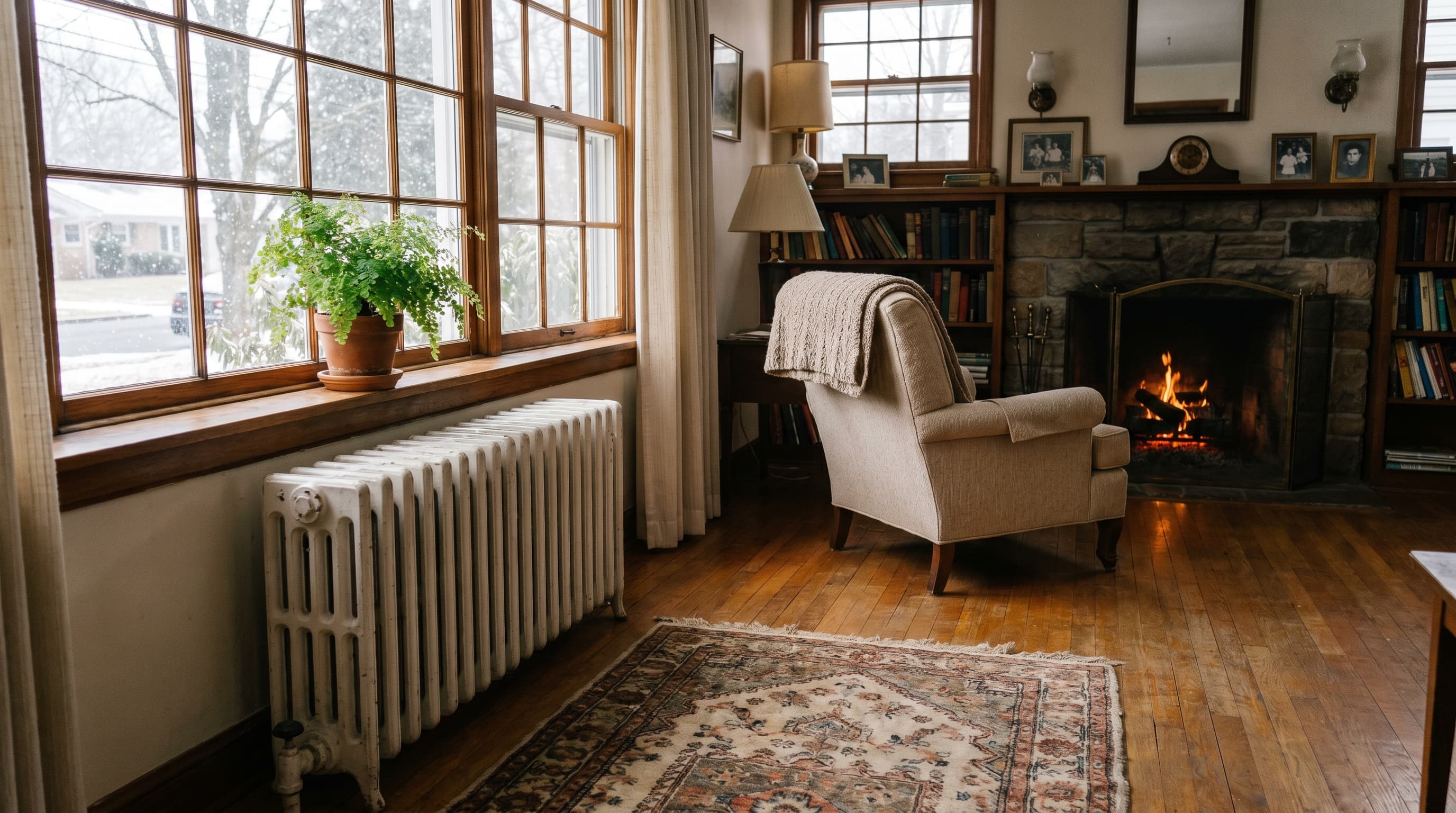
If you live in an older Long Island house with radiators or baseboards, you have probably been told by at least one contractor that a heat pump will not work for you. Until recently, that was basically true. The story has changed in 2026, and the change is big enough that it is worth understanding before you replace your boiler.
Here is the honest answer to whether a heat pump can work with your existing radiators, why almost every cold climate heat pump on the market falls short, and what is actually different about the air-to-water heat pump that just hit the Long Island market.
Why Most Heat Pumps Can't Drive Radiators
A radiator works by sending hot water through it. The water comes out of your boiler at somewhere between 150 and 180 degrees, depending on how cold it is outside and how your system is set up. That high water temperature is what lets a relatively small piece of cast iron throw enough heat into a room to keep it comfortable.
The standard air source heat pump that goes in most Long Island homes is built to make warm air, not hot water. The few cold climate heat pump systems that do make hot water (sometimes called air to water heat pumps) have historically topped out around 120 degrees of flow temperature. That is plenty for underfloor heating, where the entire floor is the heat emitter and the surface area is enormous. It works fine for fan coils, which use a small radiator and a blower to move the heat around. But 120 degree water hitting a cast iron radiator that was sized for 170 degree water just does not produce enough heat. Your house gets cold.
This is why for most of the last decade, the standard advice for homeowners with hydronic heat has been: if you want a heat pump, you also need new radiators (much larger panel radiators sized for the lower flow temperature), or you need to tear up your floors for radiant, or you need to convert the whole hot water distribution system to ductwork. All of those are real projects on top of the heat pump itself. The path of least resistance, until now, has been keeping the boiler running with repair work and waiting for better technology.
What Changed in 2026
A new generation of heat pump technology has finally produced a unit that hits the same flow temperature as a boiler. The Daikin Altherma 3 H HT is a high temperature air source heat pump that puts out water up to 158 degrees, down to 5 degrees ambient outside, all on the heat pump alone with no electric backup needed. It keeps producing usable hot water at 150 degrees even at 18 below zero. Suffolk County has never been close to that cold.
That number, 158 degrees, is the number that matters. It is hot enough to drive your existing radiators or baseboards without resizing them. You do not have to swap your cast iron radiators for larger panel radiators. You do not have to rip out the floor. You keep the heat emitters you already have and you lose the boiler.
The system uses an outdoor unit, a wall mounted indoor box about the size of a combi boiler, and a separate hot water tank. One outdoor unit replaces your boiler, your air conditioner, and your water heater. The same machine that heats your radiators in February cools your house through fan coils or a hydronic air handler in August, and makes your domestic hot water year round. All electric, no fossil fuel in the house at all.
What Kind of Radiators Will Work
Pretty much all of them. Cast iron radiators are the classic Long Island case, and yes they work fine. Steel panel radiators work. Hydronic baseboard works. Existing fin tube baseboard works. Whether your particular setup has enough radiation to carry the house on a cold night is the part that needs a real look, and that is exactly what our heat pumps for radiators fit check covers.
What changes is the efficiency, not the comfort. A heat pump pushing 150 degree water into cast iron radiators is operating at a coefficient of performance (COP) of around 2, which means roughly two units of heat for every one unit of electricity. That is still meaningfully cheaper than oil at current prices on Long Island, and it does not require any retrofit work on the radiators themselves.
If you are willing to mix and match, the same heat pump can also run a few of the more efficient emitter types in different zones at lower flow temperatures. Underfloor heating in a finished basement gets to a COP of 5 or 6. Fan coil convectors in bedrooms run around COP 3 to 4. The system can drive zones at different temperatures simultaneously, so you do not have to pick one. Existing radiators on the main floor, radiant in the basement, convectors upstairs, all on one outdoor unit.
What This Actually Looks Like in a Long Island House
The retrofit is simpler than most people expect. The hydrobox bolts to the wall where your old boiler was. Your existing radiator piping connects to the hydrobox. The outdoor unit sits where your central AC condenser sits today (or where it would sit if you do not have central air yet). The hot water tank goes wherever your old water heater is.
Most of the existing radiator piping in older homes is fine to reuse, especially if it was a forced hot water system rather than steam. Steam radiators are a different story and need to be converted to hot water, but on a steam system most of the iron is reusable. The compressor sound at the outdoor unit is about 38 dBA in normal mode and 35 dBA in low sound mode, measured at 10 feet. For comparison, a typical AC condenser is around 60. You can stand next to it during a phone call.
Cold climate performance is the part people doubt most, and the part where this product separates itself from anything else available. At 5 degrees outside, the Altherma puts out around 40,000 BTU on the larger unit. The next best brand on the market in the same category puts out around 18,000 BTU at that temperature. That difference is the difference between a heat pump that quietly carries the whole house through a Long Island January and one that quietly hands the load off to backup electric strips.
The Rebate Picture in 2026
Worth being honest about this. The federal 25C tax credit that used to cover heat pumps expired on December 31, 2025 and is not available for new systems installed in 2026 or later. That changes the math for any heat pump conversion this year. The state and utility programs are still active though, and on Long Island they are the bigger numbers anyway.
The Altherma qualifies as a cold climate heat pump under the PSEG Long Island residential heat pump rebate. PSEG administers the NYS Clean Heat money out here, so that is one rebate, not a PSEG amount plus a separate Clean Heat amount. Because the Altherma also makes domestic hot water, there is an open question about whether one install can draw on more than one incentive category. We are not going to promise you that before we have confirmed it for your project, but we will tell you exactly where it lands before you sign anything.
Is This The Right Move For Your House?
If you have radiators and an aging oil or gas boiler, this is the first time in a long time that a real oil to electric conversion has actually been on the table for you. We are one of the few Long Island contractors authorized to install the new Altherma at launch, and we are happy to walk through what it would actually look like in your house, what the rebate lands at, and whether it is the right move for your situation or whether something else makes more sense.
If you want the full breakdown of the system itself, we wrote a whole page on it: the Altherma hub covers what is inside the system, how cold weather performance actually plays out here, and what the project looks like start to finish. For the broader rebate landscape, rebates and savings has every program that currently applies to a heat pump install in Suffolk County.
Or just give us a call or text at 631-209-7090. We will come look at what you have, run the numbers, and tell you straight whether this is the right swap for your house. No pressure, no oversell. If a different system would actually serve you better, we will tell you that too.
Frequently Asked Questions
Yes, but only the right kind of heat pump. A standard air-source heat pump makes warm air, not hot water, so it cannot feed a radiator at all. Older air-to-water heat pumps make hot water but top out around 120 degrees, which is not hot enough for a cast iron radiator sized for 170 degree boiler water. What changed in 2026 is a high-temperature air-to-water heat pump that produces water up to 158 degrees, hot enough to drive your existing radiators without resizing them. On Long Island we install the Daikin Altherma 3 H HT for exactly this.
In most cases yes, and without replacing the radiators. A high-temperature air-to-water heat pump connects to the same piping your boiler used and sends hot water through the radiators you already own. You do not have to swap cast iron for larger panel radiators, tear up floors for radiant, or convert the house to ductwork. Whether your specific home works comes down to how much radiation you have and how much heat the house loses, which is what a fit check measures.
Yes. Cast iron radiators are the classic Long Island case and they work fine. Steel panel radiators work, hydronic baseboard works, and existing fin tube baseboard works. Most existing radiator piping in older homes is reusable, especially on a forced hot water system. Steam is the exception: a steam system needs converting to hot water first, though most of the iron itself is still reusable.
Not through the radiators themselves. Radiators only heat. But the same air-to-water heat pump that heats them can also run in reverse and send chilled water to fan coils or a hydronic air handler for cooling. So one outdoor unit heats through your radiators in winter and cools through fan coils in summer, and on the Altherma it makes your domestic hot water year round too.
An air-to-water air source heat pump can. That is the distinction that matters. Air-to-air heat pumps, which is what most American installs are, blow conditioned air and cannot serve a hydronic system. Air-to-water models heat water instead, which is the same thing a boiler does, so they drop into a radiator or baseboard system in place of the boiler. Europe has run radiator central heating on air source heat pumps for over a decade.
Less efficient than a heat pump running low-temperature emitters, but still well ahead of oil. Pushing 150 degree water into cast iron radiators puts the system around a coefficient of performance of 2, meaning roughly two units of heat for every unit of electricity. Underfloor heating reaches a COP of 5 or 6 and fan coil convectors run about 3 to 4. The system can drive different zones at different temperatures at once, so existing radiators on the main floor and radiant in the basement can share one outdoor unit.
Related Articles
Ductless Mini Split vs Central Heat Pump: Your Next System Probably Is Not Ductless
Ductless mini split vs central air heat pump on Long Island? If your Suffolk County home has radiators, there is a third option most contractors never quote.
What Size Heat Pump Do You Need for a Long Island Winter?
Heat pump size on Long Island: what size heat pump do you need for your home, and why BTUs at 17 degrees matter far more than the ton printed on the label.
Your Heat Pump Is Rated at 47 Degrees. Long Island Winters Are Not.
A cold climate heat pump loses heating capacity as it gets colder. What Long Island homeowners should check at 17 degrees before signing any proposal.