Heat Pump Installation: What to Expect
Here's what to expect during a heat pump installation on Long Island, from initial walkthrough through commissioning. Timeline, rebates, install day details.
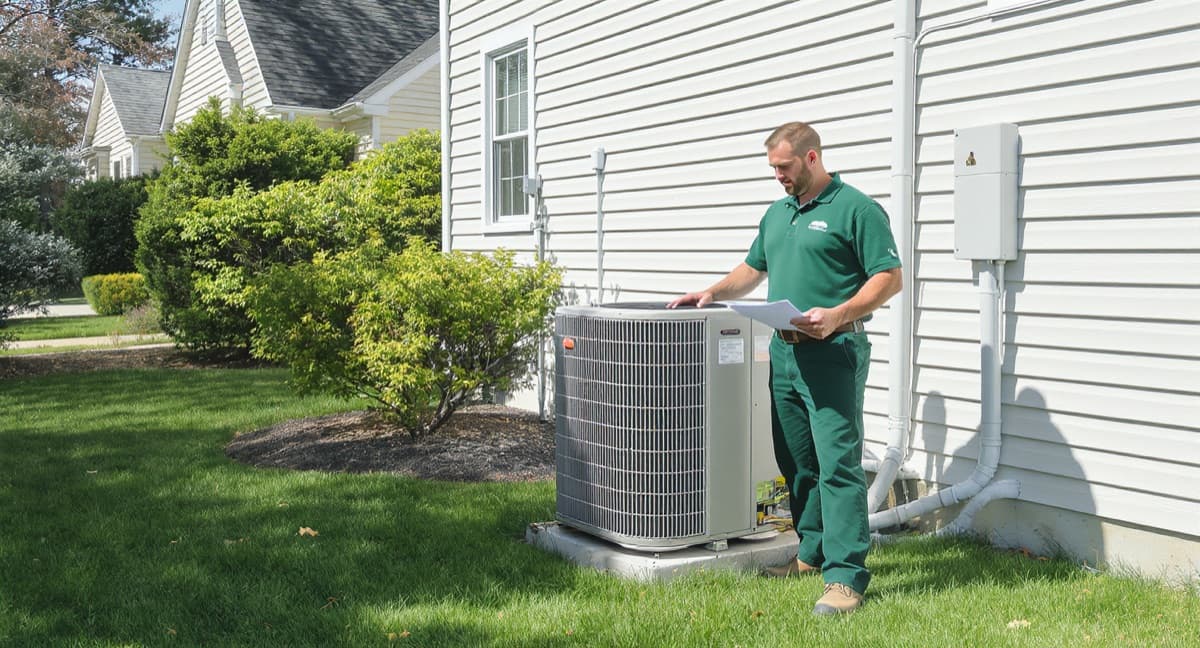
You signed the proposal. Now what?
So you signed off on a heat pump install and now you're sitting on a quote, wondering what actually happens next. For most people we work with this is the biggest mechanical change they've ever made to their house, and it doesn't look anything like the day a tech swapped out their old central air. Searching for heat pump installation near me gets you a list of contractors, but it doesn't tell you what the next 4 to 8 weeks are going to look like. Here's the whole arc, start to finish, so nothing catches you off guard.
Step 1: The walkthrough and load calculation
Before any reputable contractor hands you a real number, they should be inside your house with a tape measure. A proper heat pump installation begins with a Manual J load calculation. That's the engineering math that tells us exactly how much heating and cooling your house actually needs, based on square footage, insulation, window count and orientation, and air leakage. A lot of older homes out here in Suffolk County, especially the 1960s and 70s ranches and capes, were originally sized off rough rules of thumb, and most of those existing HVAC systems are 30 to 40% oversized. Heat pumps don't tolerate oversizing the way furnaces do. Too big and you get short cycling, humidity problems, and an early failure. The walkthrough also includes a look at your existing ductwork and your electrical panel, since most installs need a new dedicated 240V circuit.
Step 2: Equipment selection and the proposal
After the walkthrough we come back with one or two equipment options. For most Long Island homes we're recommending an ENERGY STAR certified, high-efficiency variable-speed heat pump from Mitsubishi, Daikin, Fujitsu, or Goodman. The variable-speed part matters because it lets the heating and cooling system run at low capacity most of the time, which is far more efficient and a lot more comfortable than a single-stage system banging on and off all day. If you're still on the fence about switching from oil at all, our oil-to-heat-pump cost breakdown walks through the actual math on a typical Suffolk County home. A real proposal from a qualified dealer should list equipment make and model, indoor and outdoor unit specs, ductwork modifications, electrical work, permits, manufacturer warranty terms, and a line-item breakdown of labor and materials. If you're getting a one-page estimate with a single lump-sum number, ask for more detail.
Step 3: Permits, rebates, and getting on the schedule
Every heat pump installation on Long Island needs a permit pulled with the local town or village. We handle that, but it adds about 1 to 2 weeks to the timeline. Same with PSEG, which needs a rebate application and pre-approval before the install if you want the full incentive. The current PSEG Long Island rebate is a flat $4,000, $5,000, or $7,500 depending on your household income tier, for a qualifying whole-home, NEEP-listed cold-climate heat pump. The federal 25C credit expired at the end of 2025 and is not available for 2026 installs. We break the programs down in our PSEG heat pump rebate guide for 2026. From signed proposal to install day, plan on 3 to 6 weeks during normal season and 6 to 10 weeks during peak summer or winter. The savings are real, but the paperwork takes time.
Step 4: Heat pump installation day
Most full installs run 1 to 3 days depending on whether we're doing a straight swap or a bigger system change. A simple ducted swap where the existing ductwork stays is usually a single day. Adding ductwork, running new electrical, or doing a hybrid setup with a ducted system downstairs and ductless heads upstairs can push to two or three days. Plan on the crew arriving around 7:30 or 8 in the morning with a service van and a second truck for the equipment. They'll need access to your basement or utility room, the outdoor unit location, and your electrical panel. Most of the day they're in and out, but it does get loud during cut-in and the refrigerant line work. We tell customers to plan for the kids and pets to be somewhere else if possible.
Step 5: Commissioning and the walkthrough
This part gets skipped too often by lower-cost installers, and it shouldn't. Commissioning means pressure-testing the refrigerant lines, pulling a deep vacuum, charging the system precisely, then running it through a full heating and cooling test cycle while the certified technician measures airflow, refrigerant pressures, and electrical draw. A heat pump that wasn't commissioned properly can work fine on day one and then quietly underperform for the next 15 years. Before the crew leaves they should walk you through the thermostat, the filter schedule, the outdoor unit, and what's normal versus what means call us back. They should also leave you with everything you need for your rebate submission and your manufacturer warranty registration.
The first few months
A heat pump doesn't blow the 100-degree blast of air a furnace does, and it doesn't blow icy 50-degree air the way a window AC does. It runs longer at gentler temperatures, which is exactly what makes it efficient and comfortable. Your first full PSEG bill might surprise you in either direction depending on the season and your thermostat habits. Give it a couple cycles to settle in before judging it. If something doesn't feel right, call us. The first-year warranty service visit is usually included with our installs and that's the right time to dial in anything that needs adjustment.
Frequently asked questions
What is the average cost to install a heat pump on Long Island? A whole-home cold-climate, high-efficiency heat pump installation in Suffolk County typically runs $12,000 to $30,000 before rebates. A straight swap of an existing central system lands at the lower end. A full oil-to-electric conversion with new ductwork and electrical work pushes higher. The PSEG Long Island rebate takes a flat $4,000 to $7,500 off that sticker price depending on your income tier.
What is the $5,000 rule for HVAC? It's a formula you'll see online: multiply the age of your existing system by the estimated repair cost, and if the result clears $5,000, lean toward replacing. The rule we use is the 50 percent rule, which is simpler to run. If the repair costs more than half of what replacement would cost, replace it. Age is context on top of that, since half of a replacement is a very different bet on a six-year-old system than on a sixteen-year-old one.
How long does a heat pump installation take? Most installs are 1 to 3 days of on-site work. Add 3 to 6 weeks for permits, rebate pre-approval, and equipment ordering before that. Peak season can stretch the front end to 6 to 10 weeks.
Ready to start?
If you're trying to figure out whether a heat pump makes sense for your home, where the rebates land, or how soon we could get you on the schedule, we're happy to walk through it. Head over to our heat pump installation page for more on what we install and how we do it, or give us a call or text at 631-209-7090 and we'll set up a free in-home estimate.
Frequently Asked Questions
A whole-home cold-climate, high-efficiency heat pump installation in Suffolk County typically runs $12,000 to $30,000 before rebates. A straight swap of an existing central system lands at the lower end. A full oil-to-electric conversion with new ductwork and electrical work pushes higher. The PSEG Long Island rebate takes a flat $4,000 to $7,500 off that sticker price depending on your income tier.
It is a formula you will see online: multiply the age of your existing system by the estimated repair cost, and if the result clears $5,000, lean toward replacing. The rule we use is the 50 percent rule, which is simpler to run. If the repair costs more than half of what replacement would cost, replace it. Age is context on top of that, since half of a replacement is a very different bet on a six-year-old system than on a sixteen-year-old one.
Most installs are 1 to 3 days of on-site work. Add 3 to 6 weeks for permits, rebate pre-approval, and equipment ordering before that. Peak season can stretch the front end to 6 to 10 weeks.
Related Articles
What Is a Heat Pump? A Simple Long Island Guide
Learn how heat pumps work and why Long Island homeowners are choosing them. A plain-English guide to heat pump installation for Suffolk County homes.
Heat Pump vs Oil Furnace on Long Island
Heat pump vs oil furnace for Long Island homes. Real fuel costs, efficiency data, and the rebates that help Suffolk County homeowners decide which to install.
What Size Heat Pump Do You Need for a Long Island Winter?
Heat pump size on Long Island: what size heat pump do you need for your home, and why BTUs at 17 degrees matter far more than the ton printed on the label.