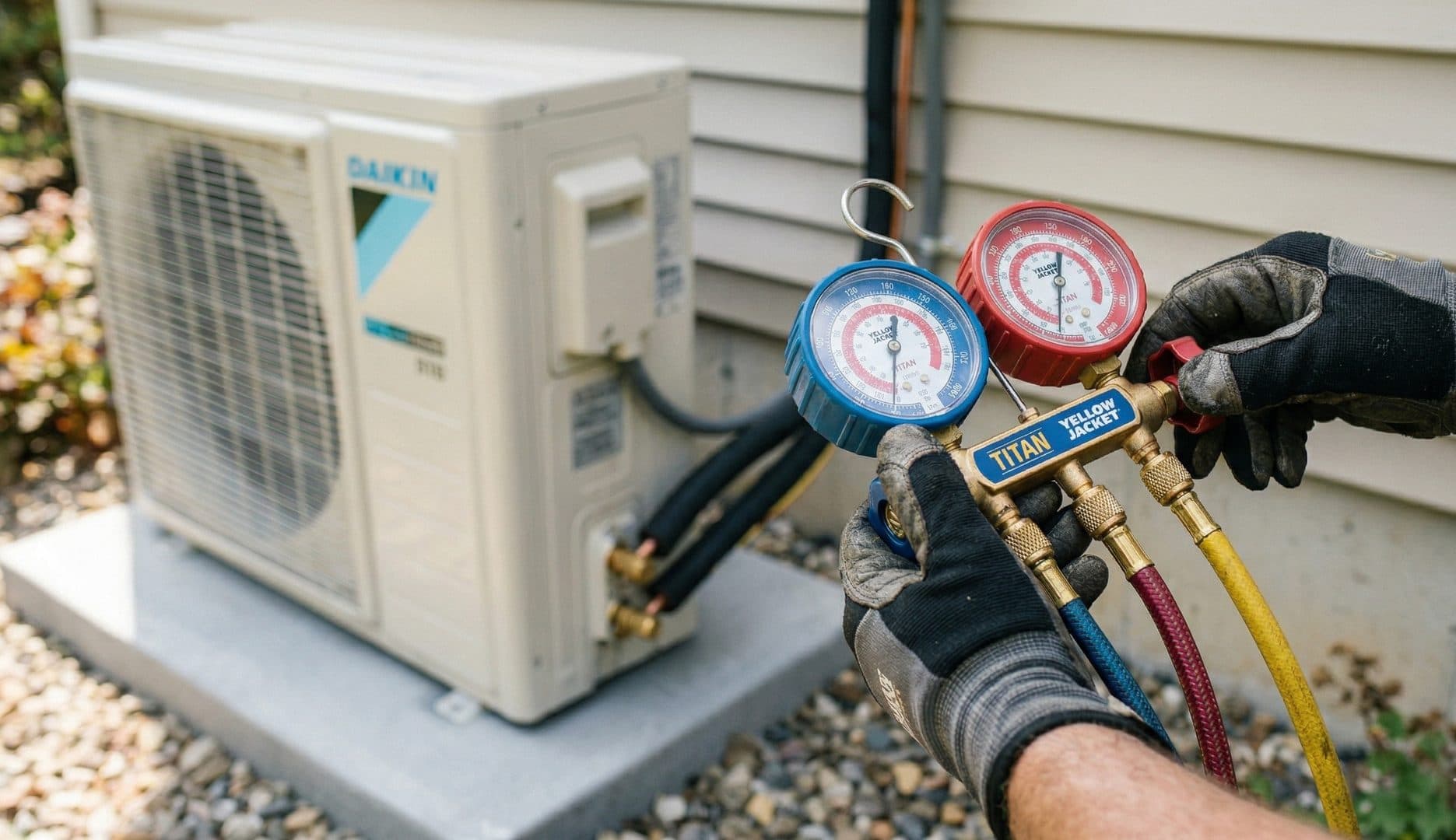
The Complete Guide
Heat Pumps for Long Island and Suffolk County Homeowners
Everything you need to know about heat pumps on Long Island: how they work, what they cost, which rebates you qualify for, and whether they can handle our winters. One page, no jargon.
By Andrew Blom, HVAC pro since 2007, including nine years at Daikin
New for 2026 · Authorized Installer
Lose the boiler. Keep the radiators.
A cold-climate heat pump that can actually drive existing cast iron radiators and baseboards. One system replaces your boiler, AC, and water heater. We are a certified Altherma installer, and very few contractors on Long Island have completed the certification so far.
What's in This Guide
The Basics
What Is a Heat Pump?
A heat pump is an electric system that heats and cools your home using one piece of equipment. In winter, it pulls heat from the outdoor air and moves it inside. In summer, it reverses and works like an air conditioner, pulling heat out of your home.
Because a heat pump moves heat instead of generating it by burning fuel, it uses 2-3x less energy than an oil furnace or gas boiler. That translates directly to lower utility bills. And since it handles both heating and cooling, you don't need a separate furnace and AC unit.
Want a deeper dive? Read our full explainer on how heat pumps work, or see our heat pump installation services.
Why Heat Pumps
Why Long Island Homeowners Are Switching
Heat pump adoption on Long Island has accelerated in the last few years. Here's what's driving it.
Lower Energy Bills
Heat pumps are far more efficient than oil or gas. On the conversions we have documented, heating costs came down roughly 34%. Estimates only, subject to change.
One System, Year-Round
Heats in winter, cools in summer. Replaces both your furnace and air conditioner with a single system.
Thousands in Rebates
Most homeowners qualify for the PSEG Long Island heat pump rebate, a flat $4,000 to $7,500 by income tier.
Cleaner, Quieter Comfort
No combustion, no oil tank, no carbon monoxide risk. Modern heat pumps run whisper-quiet.
Curious how the numbers actually compare? Read our heat pump vs. oil furnace breakdown.
System Types
Types of Heat Pump Systems
There's no single “best” heat pump. The right system depends on your home's layout, existing ductwork, and comfort goals.
Ductless Mini Splits
Ideal for homes without existing ductwork, additions, and zone-by-zone comfort. Wall-mounted indoor units connect to a single outdoor compressor with no major renovation needed.
Read the ductless mini split guide→Ducted Heat Pumps
Uses your existing ductwork to heat and cool your entire home from one system. A direct replacement for traditional furnace and AC setups with dramatically lower energy bills.
See ducted options→Hybrid / Dual-Fuel
Pairs a heat pump with your existing oil or gas furnace. The heat pump handles mild weather efficiently, and your furnace kicks in during the coldest nights. Best of both worlds.
Explore hybrid systems→Heat pumps also show up outside the house. A pool heat pump uses the exact same refrigerant circuit and compressor to move heat into pool water instead of indoor air. We do pool heat pump repair and service across Suffolk County, same techs and same diagnostic tools.
The #1 Question
Do Heat Pumps Work in Long Island Winters?
This is the question we hear most often, and the short answer is yes. Modern cold-climate heat pumps from Mitsubishi and Daikin hold close to rated capacity down to about 5F and keep producing usable heat down to roughly -13F. Long Island winters typically bottom out in the teens or single digits, well within that range.
The heat pumps being installed today are not the same technology that struggled in cold weather 10-15 years ago. Variable-speed compressors adjust output continuously based on demand, which means they maintain consistent comfort even as temperatures drop.
If you want extra peace of mind, a hybrid/dual-fuel system keeps your existing oil or gas furnace as a backup. The heat pump does the heavy lifting most of the year, and the furnace kicks in only on the coldest nights. Many homeowners start with a hybrid setup and eventually go full electric once they see the performance firsthand.
We go deeper on this in our heat pump vs. oil furnace comparison, including real operating cost numbers for Suffolk County homes.
Costs & Rebates
What Heat Pumps Cost on Long Island (and How to Pay Less)
A whole-home heat pump system typically runs $12,000-$30,000 before incentives. If your home already has central air ducts in place, it's largely an equipment swap and can come in below that range. Long Island homeowners also have access to one of the best rebate programs in the country. Here's how it breaks down. See our heat pump cost guide for the by-job-type breakdown.
Thousands
In rebates and savings
PSEG Long Island
$4,000 to $7,500
Home Comfort heat pump rebate: $4,000 market rate, $5,000 if your address is in a disadvantaged community, $7,500 if you meet the low income limit. You can elect PSEG's direct-pay option so the rebate comes to us and comes off your project instead of you waiting on a check. It is an election, not automatic, and PSEG deducts any account arrears from the rebate first.
Rate 580
45% off usage
An ongoing rate discount, not a rebate: 45% off your electric usage above 400 kWh a month, October through May, once you're on a heat pump.
NYSERDA EmPower+
Income-qualified
A NYSERDA-administered weatherization program for income-eligible households: insulation, air sealing, and related energy improvements at no cost or reduced cost, plus a free home energy assessment. It is weatherization money, not heat pump money, but it makes a heat pump work better in your house.
Oil-to-Electric
Switching From Oil to a Heat Pump
If you're heating with oil, you're probably paying more than you need to. Oil prices on Long Island have been volatile for years, and the cost per BTU is significantly higher than what a heat pump delivers. The switch is one of the most common projects we do.
Oil-to-electric conversions also qualify for the highest rebate tiers. PSEG prioritizes these projects, and income-qualified homeowners can qualify for the $7,500 tier of the PSEG Long Island heat pump rebate.
You don't have to go all-in right away either. A hybrid system lets you keep your oil boiler as backup while the heat pump handles the majority of your heating. Many homeowners start here and go fully electric later.
If you are ready to look at the work itself, see our oil-to-electric conversion service or, if your home heats with radiators or baseboard, our oil boiler to heat pump conversion.
If you want to keep the radiators themselves and only change what heats the water going into them, that is its own path. See heat pumps for radiators for what we check before recommending it, or how an air-to-water heat pump drives existing baseboard and cast iron.
We break down the real cost comparison in our heat pump vs. oil furnace article.
Equipment
Brands We Install
We recommend equipment based on your home, not a manufacturer contract. These are the brands we trust and install most.
Mitsubishi
Industry leader in cold-climate ductless and ducted systems. Best-in-class efficiency ratings.
Daikin
Top-tier cold-climate performance with whisper-quiet operation. Excellent for whole-home systems.
Goodman
Reliable, budget-friendly systems. A strong value option for homeowners who want dependable comfort without premium pricing.
The Process
What to Expect During Installation
No surprises. Here's the short version of how it goes, from first call to finished install. For the full walkthrough, pricing, and financing, see our heat pump installation service.
Free Assessment
We visit your home, evaluate your current system, measure your space, and perform a Manual J load calculation to determine the right system size.
Custom Proposal
You get a detailed quote with equipment options, rebate breakdown, and financing options. No pressure, no sales pitch.
Installation Day
Our team installs your system in 1-3 days depending on complexity. We handle permits, electrical work, and cleanup.
Commissioning
We test every zone, walk you through the controls, and make sure everything is running perfectly before we leave.
After Installation
Maintaining Your Heat Pump
Heat pumps are low-maintenance compared to oil or gas systems, but they still need regular attention to perform at their best. The basics: change your filter every 1-3 months, keep the outdoor unit clear of debris, and schedule professional tune-ups twice a year (once for heating season, once for cooling). And when something does go wrong, our heat pump repair service covers every brand, ducted and ductless, and same-day service is often available.
Our maintenance plans cover your tune-ups, priority scheduling, and repair discounts. For homeowners who want hands-off peace of mind, our Premier plan adds a free Ecobee thermostat, filters at every visit, weekend service, and a 12-month repair warranty, so the system is fully handled.
Common Questions
Heat Pump FAQ
For most homes here, yes. On the conversions we have documented, heating costs came down roughly 34%, which worked out to about $1,000 a year on a 3-ton oil-to-heat-pump job and about $1,100 a year on a 4-ton propane job. Against a typical project that is a 10 to 20 year payback on energy savings alone, so the honest pitch is not a fast payback, it is a lower bill plus air conditioning you did not have and no more oil deliveries. The PSEG Long Island heat pump rebate, a flat $4,000 to $7,500 set by household income and whether your address is in a disadvantaged community, takes a chunk off the upfront cost. All figures here are estimates, subject to program eligibility and change, and we confirm your final numbers in writing before contract.
Modern cold-climate heat pumps from Mitsubishi and Daikin hold close to rated capacity down to about 5F and keep producing usable heat down to roughly -13F. Long Island winters rarely drop below the teens, well within that range. Hybrid systems can pair a heat pump with a backup furnace for the coldest nights.
A whole-home heat pump system typically costs $12,000-$30,000 before incentives. Homes that already have central air ductwork in good shape are largely an equipment swap and can come in below that range. After the PSEG Long Island heat pump rebate, a flat $4,000 to $7,500 by income tier, most homeowners pay $8,000-$26,000 out of pocket. PSEG confirms which tier your household and address qualify for. Note that the federal 25C tax credit expired at the end of 2025 and is no longer available for 2026 installs.
Absolutely. A hybrid or dual-fuel system pairs your new heat pump with your existing oil boiler. The heat pump handles heating efficiently most of the year, and the boiler kicks in only during extreme cold snaps. This is a popular choice for homeowners who want lower bills without removing their boiler right away.
We install Mitsubishi, Daikin, and Goodman heat pumps. Mitsubishi and Daikin are top performers in cold climates with the best efficiency ratings, and Goodman is a strong value option. We recommend brands based on your home, not a one-size-fits-all answer.
Most installations take 1-3 days. A single-zone ductless mini split can go in one day. A whole-home ducted or multi-zone system typically takes 2-3 days. If electrical panel upgrades or oil tank removal are involved, add a day. We walk you through the timeline during your estimate.
Have more questions? See our full FAQ or text us at (631) 209-7090 or call us.
Service Area
Heat Pumps Across Suffolk County
Based in Patchogue, we install heat pumps across the south shore and surrounding Suffolk County communities.
Ready to Get Comfortable?
Text or call us today. No pressure, no surprises. Honest HVAC service from your Patchogue neighbors.