What Does an AC Tune-Up Actually Include?
What's actually included in an AC tune-up and is it worth the cost? Here's what Long Island HVAC techs check, clean, and test during a proper visit.
You paid for it, so you should know what you're getting
Everybody in this business tells you to get the system checked once a year. Ours is a flat $149, no trip fee on top. But when a tech shows up, spends an hour around your air conditioner, and tells you it looks good, most homeowners have no idea what actually happened in that hour. That makes it awfully hard to tell a real visit from a quick walk-around.
So here is the whole list: what gets checked, what each step is for, and whether the money is worth it. If you'd rather just see what we charge for this and everything else, our pricing is posted.
The outdoor ac unit: where most of the work happens
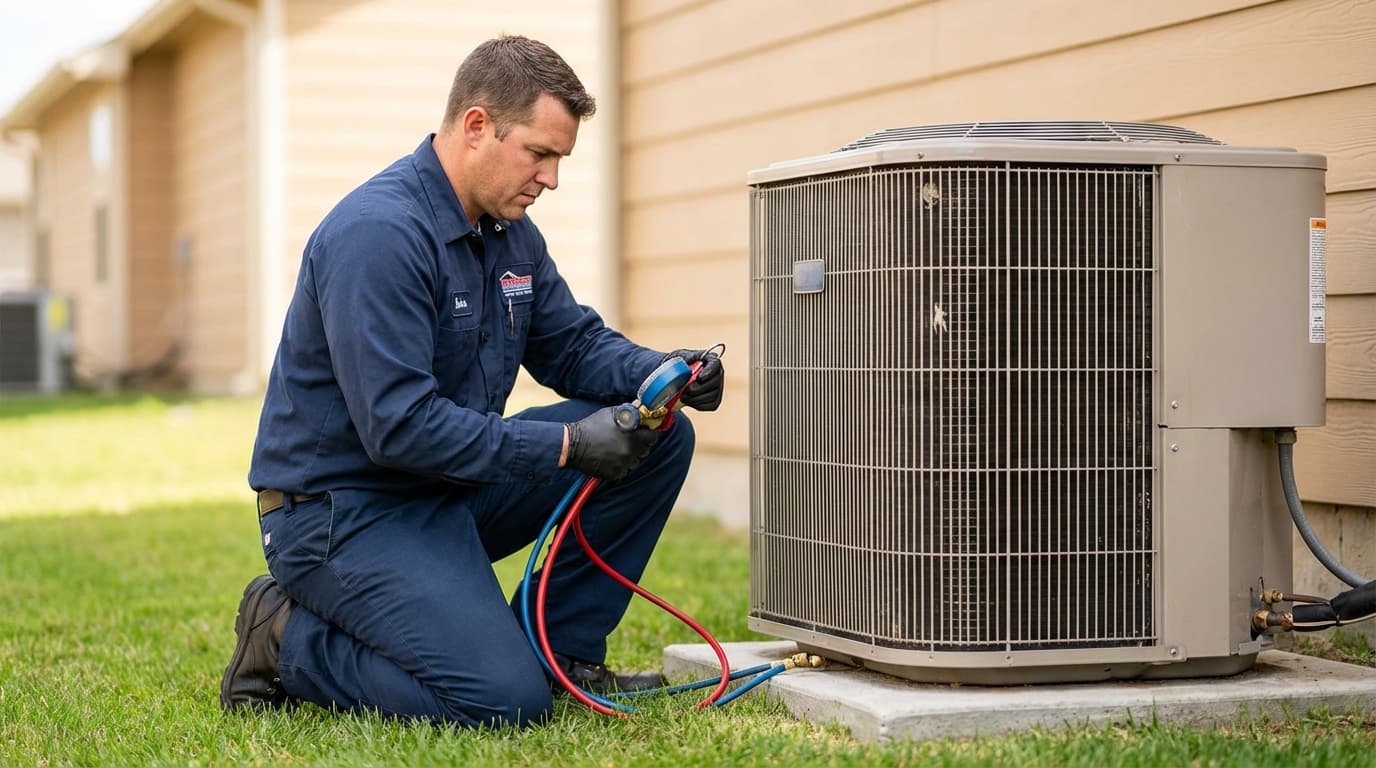
Your condenser unit sits outside year-round, baking in the sun, getting buried in leaves, and dealing with whatever Suffolk County weather throws at it. That's where the technician spends the most time during a tune-up.
First, they'll clean the condenser coils. Dirt, pollen, and grass clippings pack into the aluminum fins over a season. Dirty fins mean the system can't dump heat, so it runs longer and costs you more on your PSEG bill. Cleaning them makes a difference you can measure at the gauges, and it should be part of any visit you pay for.
Next, the technician will check refrigerant levels. Low refrigerant means weak cooling, every time. This is especially important for older systems still running R-22. If your tech finds a leak, they should tell you and discuss options, not just top it off. Refrigerant is not part of the $149. That's separate work and we'll price it before we do it.
They'll also inspect the electrical components and connections, check the capacitor with a meter, measure amp draw on the motors, and make sure the contactor isn't pitted or burned. A weak capacitor is the single most common July repair we run, and catching it in April costs a lot less than catching it on the hottest day of the year.
The indoor unit: the part most people forget about
Your evaporator coil, blower motor, air handler, and condensate line all live inside, usually in a closet, basement, or attic. Skipping the indoor half is the easiest way for a company to make an hour look like a tune-up.
The evaporator coil is where the cooling actually happens. Air passes over the cold coil, heat gets absorbed, and cooler air gets pushed through your ductwork. When it gets dirty you lose capacity and the condensation stops draining right, which is how you end up with water damage or mold. The tech should look at it and clean it if it can be reached.
The condensate line is another big one. This PVC pipe carries moisture away from the evaporator coil and clogs more often than you'd think, especially in humid Long Island summers. A clogged drain will shut the system down on a safety switch, or worse, back water up into your ceiling. We wrote a full guide on clearing your condensate drain line if you want to handle this yourself between visits.
The technician will also check your blower motor, apply lubrication where needed, and verify that airflow is working properly through the ductwork.
Thermostat and controls
The tech should check that the thermostat reads temperature accurately, that the system answers a call for cooling the way it should, and that the wiring behind it is solid. If you're still running a basic programmable thermostat from 2010, an upgrade to something like an Ecobee or Honeywell Home could save you 10-15% on your energy bills.
They'll also check the system's startup and shutdown sequence, making sure the compressor and fan engage in the right order and everything cycles off cleanly. That sequence is where a lot of small electrical problems show themselves first.
The air filter: simple but critical
Your tech should pull the filter and tell you straight whether it needs changing. Between visits, changing the filter yourself is the easiest thing you can do for the system. A dirty one starves airflow, makes the equipment work harder, and shows up on your electric bill. Check it every 30 days in summer.
What it costs on Long Island
Ours is a flat $149 for the full inspection and cleaning, no trip fee. Plenty of shops advertise a low number and then bill parts, refrigerant, and anything else on top, so ask what the price actually buys before you book.
If you want both sides of the system covered, our Comfort plan bundles two visits a year for $39 a month on the first system, and Premier adds filters and a bigger repair discount. If you only run cooling and want the basics covered, Essential is $19.
When you're comparing quotes, compare the scope. A $79 visit that is a look-around and a filter swap is not the same job as coil cleaning, refrigerant check, amp draw testing, and a real electrical inspection.
So is it worth it?
Here's the math. Most everyday July repairs land between $150 and $600, on top of the $129 diagnostic. A compressor replacement runs $1,800 to $3,500. A full air conditioner replacement is $5,000 to $12,000 depending on the system type. A yearly visit catches the cheap problems before they become the expensive ones: low refrigerant, a weak capacitor, a plugged condensate line, a filthy coil quietly dragging your capacity down.
Under 10 years old and running fine, a yearly visit keeps it that way. At 12 to 15 years it matters more, not less, because those are the years where a skipped season turns into a no-cool call. Book the cooling tune-up before the heat arrives and pair it with a heating tune-up in the fall and you've got the whole system covered. Call or text us at 631-209-7090 and we'll get you on the books.
Most manufacturers also require proof of annual maintenance to honor warranty claims. Skip the tune-up and you might be on the hook for a repair that would have been covered.
If you're on one of our maintenance plans, your annual ac tune-up is already included and we handle the scheduling. If not, give us a call or text at 631-209-7090 and we'll get you booked before the summer rush.
Related Articles
How to Clear Your AC Condensate Drain Line
How to clear a clogged AC condensate drain line yourself, and how to keep it clear. Prevent water damage, mold, and shutdowns in your Long Island home.
HVAC Preventative Maintenance: Prep Your System for Fall
HVAC preventative maintenance for Long Island homes. What to check on your heating and cooling system before fall, and what a visit costs in Suffolk County.
5 Signs Your Central Air Needs a Tune-Up
Catch AC problems while they are still cheap. Five warning signs your central air needs a tune-up, and what Long Island homeowners should expect from one.