How to Clear Your AC Condensate Drain Line
How to clear a clogged AC condensate drain line yourself, and how to keep it clear. Prevent water damage, mold, and shutdowns in your Long Island home.
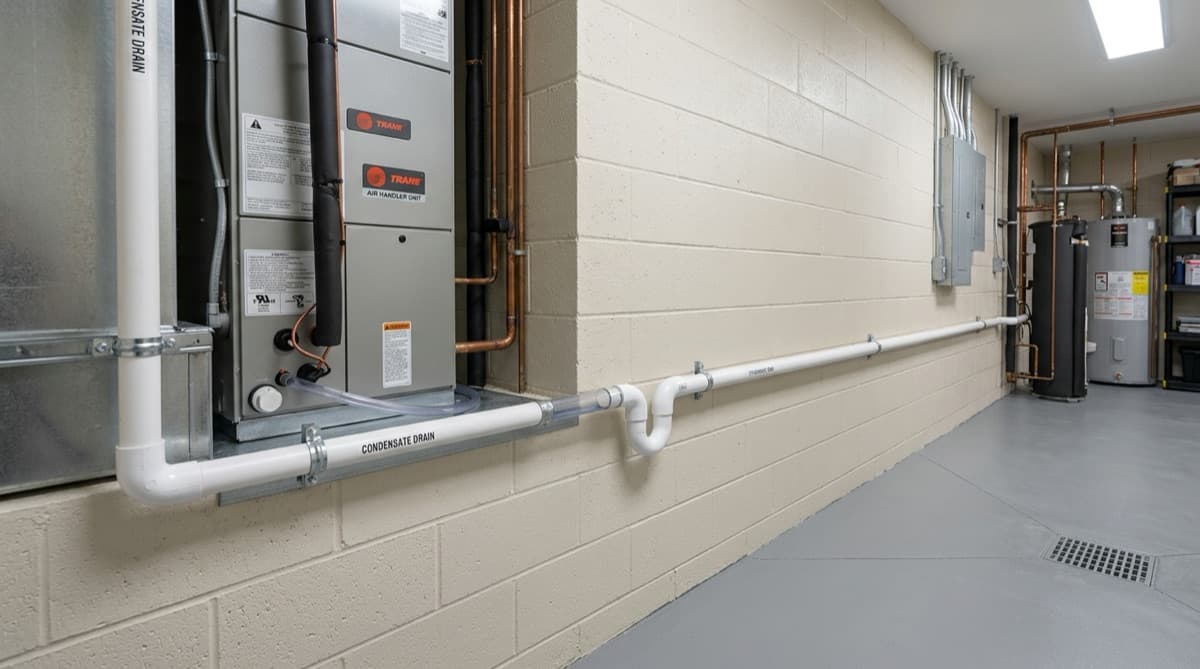
Most homeowners on Long Island never think about the condensate drain line until there's water on the floor or the system shuts itself off on the hottest day of the year. Twenty minutes of work, done at any point before that, prevents the whole thing.
It's also the item people most often leave off a maintenance checklist. This guide covers what the drain line does, why it clogs, and exactly how to clear it, plus the rest of the AC maintenance checklist so you can go through the whole system in one pass.
The Complete Air Conditioner Maintenance Checklist
Before we get into the condensate drain specifically, here's what a full air conditioning maintenance checklist covers. Go through each item when you inspect your central air conditioner each spring.
Change air filters. A dirty filter restricts airflow and strains the blower motor. It also lets more dust reach the evaporator coil, where it bakes on and cuts efficiency. For most central air systems, a MERV 8 pleated filter is the right balance of filtration and airflow. Inspect the filter monthly during the cooling season and replace it at least once before the season starts.
Inspect and clean the evaporator coil and condenser coil. Dirty coils are one of the main drivers of higher energy costs. Dust on the evaporator coil acts as insulation, forcing the system to run longer to cool the air. The condenser coil outside collects pollen, cottonwood, and debris. Clean evaporator and condenser coils annually. A coil cleaning is typically part of any spring AC tune-up.
Check for signs of refrigerant leaks. Low refrigerant isn't a maintenance item you recharge on a schedule. It means there's a leak somewhere in the refrigerant lines. Signs of a refrigerant leak include warm air from the vents, ice on the coil, and higher energy bills. An HVAC technician can inspect the system, identify the leak location, and repair it before the cooling season.
Tighten all electrical connections. Loose electrical connections cause heat buildup, reduce system lifespan, and create safety hazards. Tighten all electrical connections and inspect wiring for wear during a spring tune-up. This is a task for a licensed HVAC technician, not something to DIY.
Test the thermostat. Inspect thermostat settings and verify it's reading the indoor temperature accurately and switching between cooling and heating modes correctly. A thermostat that's off by a few degrees causes the system to short-cycle or run longer than necessary, which leads to increased energy costs and unnecessary wear.
Inspect the blower and airflow path. A restricted blower causes warm air to back up and reduces the system's ability to cool the space. Inspect the blower wheel for debris buildup and verify the airflow path through the system is clear.
Inspect ductwork. Leaky ductwork pushes conditioned air into unconditioned spaces. Inspect visible ductwork in the basement or utility areas for disconnected sections or obvious gaps. Duct leaks quietly raise energy costs and reduce indoor air quality by pulling in dust and humidity from unconditioned areas.
Lubricate moving parts. The blower motor and other moving parts in the air handler need lubrication to reduce friction and extend the lifespan of the system. This is typically part of annual AC maintenance done by a professional HVAC technician.
Flush the condensate drain. This is the maintenance task we see Long Island homeowners skip most often, and it's the one that causes the most summer service calls. It's also the one item on the air conditioner maintenance checklist you can do yourself without any tools.
What the Condensate Drain Line Does
Your central air conditioner pulls humidity out of the air as it cools your home. That's why the air inside feels cleaner and more comfortable on a hot, humid Long Island afternoon when the AC is running. You're removing both heat and moisture. The humidity levels drop because the system is actively wringing water out of the air.
That water condenses on the evaporator coil and drips into a drain pan underneath the air handler. From there, it flows out through the condensate drain line, typically a 3/4-inch PVC pipe that runs to a floor drain, utility sink, or exits outside. When the line is working correctly, the drain pan stays dry and you never think about it.
When it clogs, water backs up into the drain pan and overflows, which means water damage to floors, walls, or ceilings depending on where your air handler is installed. Most systems have a float switch that shuts the system off when the pan fills up, which is how most homeowners discover the problem, on the hottest day of the year when the system is no longer cooling.
Why Condensate Lines Clog
The drain line creates a warm, moist, dark environment that algae thrives in. Over a full cooling season, algae, mold, and biofilm build up along the inside of the pipe. Dust that makes it past the air filter settles into the drain pan and adds to the blockage. By October, when you shut the system down for the season, there's months of buildup sitting in that line.
When you start the system again in late May, that buildup is already there. For homes in Suffolk County with older drain runs or pipes that weren't perfectly sloped during the original installation, persistent clogs are common. If your drain pan has overflowed before, it'll happen again without regular maintenance to keep the line clear.
How to Tell If the Drain Is Clogged
The float switch shutdown is the most obvious indicator, but quieter signs show up earlier. A musty smell from the vents when the AC first kicks on in spring is often condensate-related. Inspect the drain pan directly. Pull the front panel of the air handler and look. If there's standing water or visible slime from last season, the line isn't draining properly.
Mold or algae buildup visible at the end of the drain line outside is another sign. If it's at the exit point, it's throughout the line.
How to Clear It Yourself
This is one of the few items on any air conditioning maintenance checklist a homeowner can reliably handle without calling a professional HVAC technician.
Find the condensate drain access cap or T-fitting near the air handler. Pour about a cup of distilled white vinegar into the opening. Vinegar kills algae and mold without damaging the PVC. Let it sit 30 minutes, then flush with water. As part of annual AC maintenance, doing this once at the start of each season prevents buildup from ever reaching clog level.
If the line is already fully blocked, use a wet/dry shop vac. Hold the hose tightly over the drain line exit outside and run it for a few minutes. It'll pull the clog out toward the exit. Then flush from the top with vinegar and water. If the drain pan still fills after this, there's a harder obstruction or a pipe slope issue that needs a technician.
What a Clogged Drain Costs You
Water damage from a drain pan overflow runs from several hundred to several thousand dollars depending on the extent. Drywall, flooring, and potential mold remediation add up quickly. Even without overflow, a pan that stays wet creates ongoing mold that reduces indoor air quality and keeps the air inside your home from being as clean as it should be.
The float switch protects against the worst case, but it means your cooling system is down when you need it most. A service call in July, when every HVAC company on Long Island is booked out, is a frustrating and costly situation compared to a 20-minute maintenance task in April. (Curious what those repairs actually cost? Here's our AC repair cost breakdown.)
When to Call a Pro
If the drain has overflowed before, if there's visible mold in the pan, or if you have a system with a condensate pump, it's worth having a professional HVAC technician handle it during a spring tune-up. Maintenance services that include a drain flush, coil cleaning, refrigerant check, filter replacement, and full system inspection keep the system running smoothly all season and prevent the costly repairs that come from deferred maintenance.
We offer maintenance plans that put your visits on a consistent schedule. Comfort and Premier cover two visits a year, spring and fall, so your central air conditioner and heating system both get serviced.
Give us a call or text at 631-209-7090 to get on the schedule before the summer rush.
Related Articles
What Does an AC Tune-Up Actually Include?
What's actually included in an AC tune-up and is it worth the cost? Here's what Long Island HVAC techs check, clean, and test during a proper visit.
HVAC Preventative Maintenance: Prep Your System for Fall
HVAC preventative maintenance for Long Island homes. What to check on your heating and cooling system before fall, and what a visit costs in Suffolk County.
5 Signs Your Central Air Needs a Tune-Up
Catch AC problems while they are still cheap. Five warning signs your central air needs a tune-up, and what Long Island homeowners should expect from one.