Goodman vs Carrier vs Trane AC: Long Island Guide
Comparing Goodman, Carrier, and Trane central air systems for Long Island homes. Real costs, efficiency ratings, and which brand fits your budget.
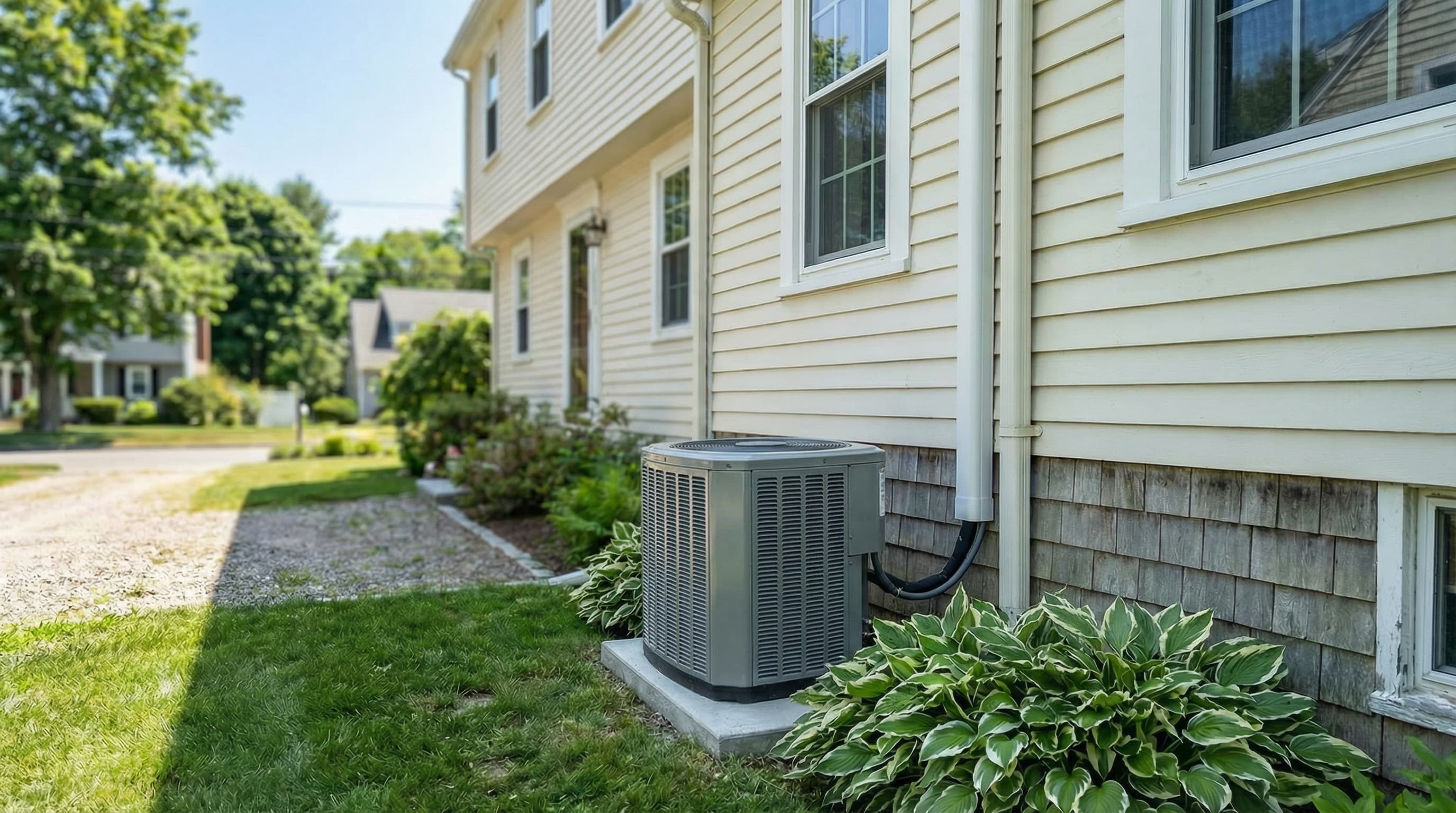
Three AC brands, three price points, one question
If you're shopping for a new central air conditioner on Long Island, you've probably seen three names come up over and over: Goodman, Carrier, and Trane. These are the most commonly installed residential HVAC brands in Suffolk County, and each one has built a reputation in the heating and cooling industry. Goodman is the affordable pick. Carrier is the legacy name in air conditioning. Trane is the premium option built for durability.
But the "best" air conditioner depends on your home, your budget, and how long you plan to stay.
We install Goodman and Daikin, and we service just about every brand on Long Island, so we get a look at how all of these hold up once they've been running a few summers. Here's the honest read.
Goodman AC unit: the budget-friendly workhorse
The Goodman brand gets a bad rap in some circles, and a lot of that reputation is outdated. Goodman Manufacturing was acquired by Daikin in 2012, and the build quality of Goodman air conditioners has improved significantly since then. For a straightforward cooling job in a ranch or cape on Long Island, a Goodman AC unit gets the job done at a price point that's hard to argue with.
A 3-ton Goodman central air conditioner installed typically runs $4,500 to $6,500 in the Suffolk County market, depending on the complexity of the job. Goodman's current air conditioner lineup runs on the newer low-GWP refrigerants and reaches into the high-teens SEER2 at the top end, which is solid energy efficiency for the price. Warranty is where Goodman genuinely stands apart: on registered equipment they offer a 10-year unit replacement limited warranty, meaning if the compressor fails in that window you get a replacement unit, not just a replacement part. Carrier and Trane typically cover 10 years on parts with registration, which is a real warranty but a different animal. A parts warranty sends you a compressor and leaves you paying the labor to install it. Neither approach covers labor by default, so ask any contractor what they cover on their end.
On the heating side, the Goodman heat pump lineup and their gas furnace package units give you options for whole-home heating and cooling in one system. Their customer support and dealer network have also improved under Daikin ownership.
Where the Goodman AC unit falls short is in the details. The cabinet construction isn't as robust as Carrier or Trane. The compressor in their base models is single-stage, which means less precise temperature control and more on-off cycling. If you're sensitive to humidity swings during those muggy Long Island summers, that matters. Goodman does offer two-stage and variable-speed air conditioners in their higher-end lines, but at that price point you're competing directly with Carrier's mid-tier. For a closer look at how Goodman stacks up against its premium sibling on the heat pump side, see our guide on Daikin vs Goodman heat pumps.
A Goodman air conditioner is a smart pick if you're replacing a system in a home you might sell in the next 5-7 years, or if budget is the primary driver and you want reliable, energy-efficient cooling without the premium price tag.
Carrier air conditioners: the name everyone knows
Carrier practically invented modern air conditioning, and they've been riding that reputation for over a century. On Long Island, Carrier is probably the most commonly installed HVAC brand. Most heating and cooling contractors carry it, parts are everywhere, and homeowners recognize the name.
A 3-ton Carrier system installed runs $5,500 to $8,000 depending on the model line. Their Infinity series tops out around 24 SEER2 with a variable-speed compressor. The Performance series sits around 17 SEER2. Carrier also makes furnace systems, heat pump systems, and air handlers that pair with their condensers for complete heating and cooling solutions.
Carrier's strength is the breadth of their air conditioning and heating lineup. Their variable-speed systems are genuinely quiet and do a great job managing humidity, which matters if you live near the water in Patchogue, Bellport, or Sayville. They also offer add-ons like a whole-home dehumidifier and solid evaporator coil and condenser pairings designed to work as an integrated HVAC system.
The downside? You're paying a premium for the name. A mid-tier Carrier and a comparable Goodman AC unit are often built with similar components, and the Goodman AC unit cost is significantly lower. That said, higher-end Carrier systems with variable-speed compressors are in a different league from anything in Goodman's residential products lineup.
Trane: built to last, priced to match
Trane's reputation is durability and reliability, and the units we get called out to service tend to back that up. Their air conditioners and heat pump systems tend to outlast the competition by a few years when properly maintained. The Spine Fin evaporator coil resists corrosion better than conventional coils, which matters on Long Island where salt air is a factor, especially south of Sunrise Highway.
A 3-ton Trane system installed runs $6,000 to $9,500. Their XV series with variable-speed technology is the top of the line for energy efficiency. The XR series sits around 16-17 SEER2, competitive with Carrier's Performance line. Trane's warranty covers the compressor and major components for 10 years with registration, on a parts basis rather than the unit replacement coverage Goodman offers.
Trane also makes efficient gas furnace and heat pump options, making them a one-stop shop if you're upgrading your entire heating and cooling system. Their dual fuel systems that pair a heat pump with a gas furnace are popular for homeowners looking to cut heating costs.
Trane's weakness is availability. Not every contractor carries Trane HVAC units, and parts can take longer to source compared to Carrier's wider distribution network on Long Island.
If you're in your "forever home" and plan to run the same system 18-20 years with regular maintenance, the higher upfront cost spreads out over enough years that total cost of ownership can land close to a mid-tier system. Whether that math works depends on how long you actually stay, and most homeowners move sooner than they expect.
What actually matters more than the brand
Here's the thing most homeowners don't hear: the quality of the installation matters more than the brand on the box, something ASHRAE and the rest of the industry have said for years. A Trane air conditioner installed by a crew that cuts corners on ductwork or oversizes the unit is going to underperform a basic Goodman installed correctly.
Make sure your contractor or dealer does a Manual J load calculation so the BTU output matches your square footage and cooling needs. A lot of the older homes in Medford, Holbrook, and Ronkonkoma were built with undersized or oversized systems because the original installer eyeballed it. Getting the sizing right is the single biggest factor in comfort and energy efficiency for any HVAC system.
Also look at SEER ratings when comparing models. Higher SEER2 numbers mean more energy-efficient cooling, but the cost difference between a 16 SEER2 and a 20 SEER2 unit can be $2,000 or more. For most Long Island homeowners, a mid-range 16-18 SEER2 hits the sweet spot between efficiency and affordability.
Consider what refrigerant the system uses too. R-410A is on its way out, and anything you buy new in 2026 will come charged with either R-32 or R-454B depending on the manufacturer. Daikin and Fujitsu went R-32. Carrier, Trane, Lennox, Goodman, and Rheem went R-454B. Both are A2L refrigerants and both will be supported long-term, so this isn't a reason to pick one brand over another. We break down the difference in R-410A vs R-32.
What we install, and why
We settled on Daikin and Goodman, and the reason is less exciting than it sounds: they're the same company. Daikin bought Goodman in 2012, and both lines are built at the Daikin Texas Technology Park outside Houston. They share engineering and parts.
That gives us one ladder instead of three. Goodman covers the budget end. Daikin covers mid-range through premium, including the cold-climate heat pumps that qualify for the PSEG Long Island rebate. When a part fails in year six, it comes off the same shelf either way, which is the difference between a same-day fix and waiting a week.
We also install Mitsubishi and Fujitsu for ductless and mini-split work, where both are stronger than anything in the Goodman or Daikin ducted lineup.
The bottom line for Long Island homeowners
If you want affordable, reliable cooling, especially in a smaller home or one you may not keep long-term, a Goodman AC unit is hard to beat on price. If you want variable-speed performance, better humidity control, or a heat pump that earns the PSEG rebate, Daikin is where we'd point you.
Carrier and Trane both make good equipment too, and if you've already got one, we'll keep it running for you. For a new install, Daikin and Goodman are what we put in, for the parts and support reasons above.
All of these brands will do the job if they're sized right and installed properly. The install matters more than the badge, and that's the part worth being picky about. If you're not sure which direction makes sense for your home, give us a call or text at 631-209-7090 and we'll help you figure out what fits.
Frequently Asked Questions
Trane is the more durable, more expensive system. A 3-ton Trane installed runs about $6,000 to $9,500 on Long Island against roughly $4,500 to $6,500 for a comparable Goodman. You are paying for heavier build quality, the corrosion-resistant Spine Fin coil that holds up well in South Shore salt air, and variable-speed options in the XV series. Better depends on how long you stay. If you plan to run the same system 18 to 20 years, the Trane premium spreads out. If you may sell in 5 to 7 years, the Goodman is the smarter buy. Worth noting that Goodman actually has the stronger warranty structure: a 10-year unit replacement warranty on registered equipment versus Trane parts coverage.
At the top of the lineup, yes. Carrier Infinity systems reach about 24 SEER2 with a variable-speed compressor and are genuinely quiet with strong humidity control, which is in a different league from anything in Goodman's residential lineup. In the middle of the lineup the gap narrows a lot. A mid-tier Carrier and a comparable Goodman are often built with similar components, and the Goodman costs significantly less. A 3-ton Carrier installed runs about $5,500 to $8,000 against roughly $4,500 to $6,500 for the Goodman. Some of the Carrier premium is the name.
No. Goodman is owned by Daikin Industries, not Carrier. Daikin acquired Goodman Manufacturing in 2012 and also owns Amana. Carrier is a separate company with no ownership stake in Goodman, and the two compete directly. Goodman and Daikin equipment is built at the same plant in Texas and shares parts and platforms, which is why Goodman build quality improved after the acquisition.
No. They are separate companies and direct competitors. Goodman is owned by Daikin Industries, which acquired it in 2012. Trane is its own brand under a different parent. The two sit at opposite ends of the price range, with Goodman as the value option and Trane as the premium, durability-focused one.
Yes, with realistic expectations. The old reputation is outdated. Since Daikin acquired Goodman in 2012 the build quality improved noticeably, and the warranty is genuinely strong: 10-year unit replacement coverage on registered equipment, meaning a failed compressor in that window gets you a replacement unit rather than just a part. Where it gives ground is the details. Cabinet construction is lighter than Carrier or Trane, and base models use a single-stage compressor, so temperature control is less precise and humidity swings are more noticeable. For a straightforward cooling job on Long Island it is a good system at a price that is hard to argue with.
Related Articles
Window AC vs Central Air: When to Upgrade
Window AC vs central air on Long Island. When window unit repair makes sense, when it's time to upgrade, and what Suffolk County homeowners should expect.
What Size Heat Pump Do You Need for a Long Island Winter?
Heat pump size on Long Island: what size heat pump do you need for your home, and why BTUs at 17 degrees matter far more than the ton printed on the label.
Your Heat Pump Is Rated at 47 Degrees. Long Island Winters Are Not.
A cold climate heat pump loses heating capacity as it gets colder. What Long Island homeowners should check at 17 degrees before signing any proposal.