8 Ways to Lower Your PSEG Bill This Summer
Cut your PSEG summer bill on Long Island without sweating it out. 8 ways to run a power efficient AC and keep your Suffolk County home cool for less.
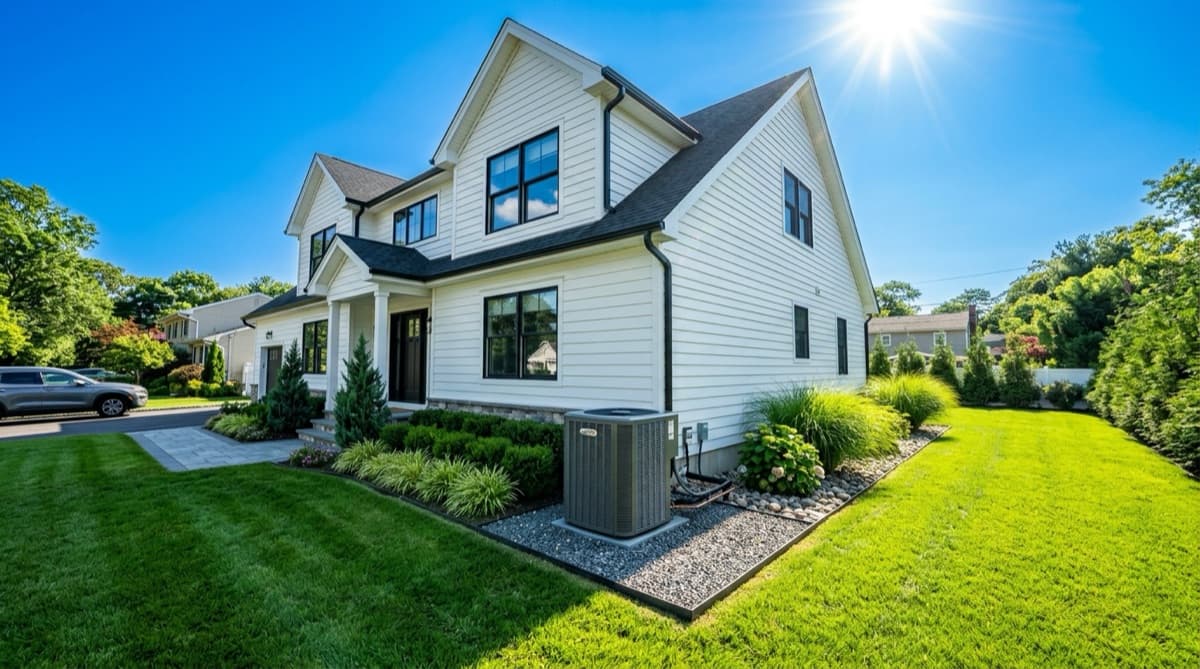
Your PSEG bill is about to get expensive
Every year around mid-June we start getting the same call. Homeowner opens their PSEG bill, sees a number that's double what it was in May, and wants to know what the heck happened. The answer is almost always the same. Central air conditioning is by far the biggest electric load in a Long Island home during summer, and even small inefficiencies in your cooling system add up fast when it's running 10 to 14 hours a day.
The good news is you don't have to sit in a hot house to bring that number down. Here's what actually moves the needle on your cooling costs without buying a brand new energy efficient air conditioner tomorrow.
1. Get the central air conditioner tuned up before June
A dirty evaporator coil, low refrigerant, or a tired compressor capacitor can quietly steal 15 to 20 percent of your cooling efficiency without your air conditioner failing. You just feel it as higher energy costs and a house that's never quite as cool as you want. A proper tune-up catches all of that in about an hour. If you're not sure whether your system needs one, we wrote up the 5 signs your AC needs a tune-up worth checking before the weather turns. The tune-up itself is a flat $149 with us, no trip fee, and pays for itself before August. Folks who'd rather lock in both the spring and fall visits up front usually go with one of our residential maintenance plans instead of paying per visit.
2. Change air filters every 30 to 60 days in summer
This is the single cheapest thing you can do and almost nobody does it often enough. A clogged filter makes your blower work harder and restricts airflow across the evaporator coil, which drives up energy use because the whole system runs longer to hit the same temperature. In peak summer with pets or allergy season in full swing, 30 days is not too often. A $15 filter can save you real money on your PSEG bill, improve air quality in your home, and add years to the life of your equipment.
3. Raise the thermostat a few degrees when you're out
You don't need to keep the house at 70 while you're at work. Every degree you bump the thermostat up when nobody's home cuts roughly 3 percent off your cooling costs. Bump it from 72 to 78 during the workday and you're looking at an 18 percent reduction in runtime for that window. That's real energy savings over a full Long Island summer.
The easiest way to do this is with a smart thermostat that handles it automatically. We broke down the math in our post on smart thermostats and summer energy bills, and it's one of the best ROI upgrades for most Suffolk County homes, central air or ductless.
4. Close blinds on south and west-facing windows
Solar heat gain through windows is massive. A single sunny west-facing window in the afternoon can dump thousands of BTUs of heat into a room. Your central air conditioner has to work to pull all of that back out, which drives up your energy consumption for no good reason. Drawing the blinds or curtains before the sun hits those windows dramatically cuts the cooling load. If you want to get fancy, cellular shades or low-E window film help even more, but just closing what you already have is free and effective.
5. Run ceiling fans in occupied rooms
Ceiling fans don't actually cool the air. They move it across your skin, which makes you feel 3 to 4 degrees cooler through evaporative effect. That means you can set the AC a few degrees higher without noticing a difference. Just remember to turn them off when you leave the room. Running fans in empty rooms wastes electricity without providing any benefit since they're not cooling anything, just moving warm air around.
6. Seal the obvious leaks
A lot of the 1960s and 70s housing stock out here in Patchogue, Medford, Bellport, and Sayville leaks air like crazy. Around attic hatches, recessed lights, rim joists, and where pipes or wires penetrate walls. Cool air you paid to produce sneaks out, humid hot air sneaks in, and your air conditioning system runs more to keep up. Caulk and weatherstripping are cheap. Spray foam in the right spots is cheap. If you want the bigger picture fix, a blower door test and some targeted air sealing from a contractor will pay back faster than most people expect. Improving the efficiency of your building envelope helps your HVAC far more than most homeowners realize.
7. Don't run the dryer or oven during peak hours
This one sounds minor but it isn't. A gas or electric dryer dumps a ton of heat and humidity into the house when it runs. Same with the oven. Doing laundry and cooking in the afternoon on a 90 degree day is basically asking your AC to undo all that heat. Shift dryer loads to morning or evening and use the grill, slow cooker, or microwave when it's hot. Your cooling system will use less energy and your PSEG bill will reflect it.
8. If your AC is 15+ years old, consider an energy efficient air conditioner
Here's the honest one. If your central air conditioner is from 2010 or earlier, it's probably a 10 or 13 SEER unit. A modern energy efficient air conditioner runs 16 to 20+ SEER, and the best Energy Star rated models push even higher with variable speed inverter compressors that can cut cooling costs 30 to 50 percent compared to a standard air conditioner. The seasonal energy efficiency ratio (SEER2) rating on the yellow EnergyGuide label tells you how efficiently an air conditioner operates across a whole cooling season, not just at peak load.
Combine those efficiency ratings with the PSEG Long Island heat pump rebate, a flat $4,000 to $7,500 by income tier, and the math can get interesting fast. A new central air system or a built-in heat pump replacement isn't cheap up front, but if you're already looking at a major repair on an old unit, running the numbers on a power efficient AC or heat pump is worth doing. The federal 25C credit expired at the end of 2025, so the local programs are where the money is now.
We're not trying to talk anyone into equipment they don't need. Plenty of 12 year old systems have another few good years in them with proper maintenance. But if yours is limping along and your energy bills keep climbing, don't throw good money after bad.
The bottom line on energy savings
You can cut your summer PSEG bill meaningfully without turning your house into a sauna. Tune-up, clean filter, smart thermostat, close the blinds, and be a little smarter about when you run hot appliances. That alone will save most Long Island homeowners a few hundred bucks over the course of a summer without spending anything on a new air conditioner.
If you want us to come out and take a look at your cooling system before the heat hits, or talk through whether an energy efficient air conditioner upgrade makes sense for your home, give us a call or text at 631-209-7090 and we'll get you on the schedule.
Related Articles
Solar and Heat Pumps: A Match Made in Heaven, With One Winter Catch
Solar and a heat pump pair well on Long Island, but solar panel output bottoms out in December when heating load peaks. The honest math on sizing both.
How to Get the Most Out of Your Pool Heat Pump This Summer
Improve pool heat pump efficiency on Long Island: covers, pump timing, and pool heating settings that cut what your pool heater costs to run each month.
Keeping Your Home Cool in a Long Island Heat Wave
Practical ways Long Island homeowners keep the house cool in a heat wave without blowing up the PSEG bill or burning out the air conditioner outside.