Keeping Your Home Cool in a Long Island Heat Wave
Practical ways Long Island homeowners keep the house cool in a heat wave without blowing up the PSEG bill or burning out the air conditioner outside.
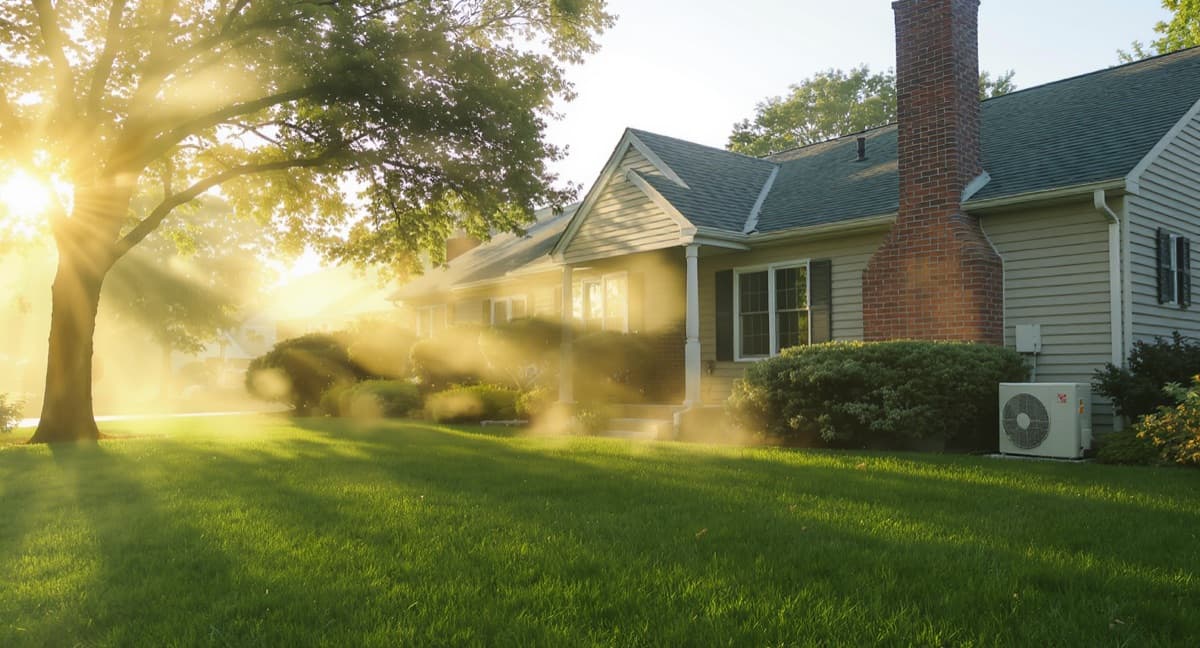
When Long Island hits 95 plus for three days running, every central air conditioner on the South Shore is fighting for its life. The compressor is running almost nonstop, the inside of the house is creeping up two degrees no matter where you set the thermostat, and the next PSEG bill is going to sting. A heat wave is when the phone rings most, and most of those calls are not actually broken air conditioners. They're systems being asked to do something they were never designed to do.
A residential central air conditioner is sized to drop your indoor temperature about 20 degrees below outdoor temperature. That's the design ceiling. When it's 97 outside, the absolute best your air conditioning system can do, even brand new and perfectly tuned, is hold the house at 77. That's not a defect, that's physics. Once you understand that, the goal during a heat wave shifts. You're not trying to make the house arctic. You're trying to keep your air conditioner from breaking, keep cooling costs reasonable, and keep your family comfortable enough to sleep. Here's how to actually do it without wrecking your AC or your power bill.
Set the thermostat smart, not low
The biggest mistake homeowners make in a heat wave is dropping the thermostat to 68 because the house feels warm. The air conditioner can't get there. All you're doing is forcing the compressor to run continuously without ever satisfying. That's how you burn out a capacitor, ice up the cold coil, or kill the compressor mid August. It also crushes your air conditioning energy use for no benefit.
Set the thermostat at 76 to 78 during the day when nobody's home, and 72 to 74 at night. If you've got a programmable or smart thermostat, this is what it was built for. We covered the right thermostat settings for summer efficiency on Long Island in more detail, but the short version is: every degree below 76 costs you roughly 6 to 8 percent more on your cooling costs, and during a heat wave that math gets uglier because the system is already maxed.
If you have a smart thermostat with a "comfort mode" or "extreme heat" setting, turn it on. These adjust the cycle pattern to keep the compressor from frying when outdoor temps spike, and they help keep your AC running closer to its rated energy efficiency.
Pre-cool the house before the heat hits
This is the trick most people don't use. If tomorrow is supposed to hit 98, run the air conditioner harder overnight when outdoor temperatures are in the 70s. Drop the house to 70 by 7am. Then as the day heats up, the central air system is starting from a cooler baseline and doesn't have to fight as hard to hold a reasonable temperature when it's 95 outside.
Pre-cooling works because the walls, floors, and furniture in your house store cold the same way they store heat. Get the thermal mass of the house cold in the morning, and it acts as a buffer all afternoon. By 4pm when the outdoor unit is begging for mercy, your house is at 76 and not climbing. As a bonus, you're shifting some of your AC's energy use to off-peak hours, which lowers your overall cooling costs on PSEG.
Close the blinds, especially on the west side
Direct sunlight through a window can add 10 to 15 degrees of heat to a room. South and west facing windows during the afternoon are the worst offenders, and any air conditioner is going to lose ground if it's fighting that load. Close the blinds, drop the shades, hang a light colored sheet if you have nothing else. Blackout curtains pay for themselves the first heat wave you use them.
If you've got rooms that get hammered with afternoon sun, those are the rooms most likely to feel hot even when the rest of the house is fine. The thermostat is reading the hallway, not that bedroom. Closing the blinds in there evens things out without asking your air conditioning system to overcool the rest of the house.
Use ceiling fans and box fans the right way
Fans don't cool the air. They move it across your skin so sweat evaporates faster, which makes you feel about 4 degrees cooler. That means a fan in an empty room is doing nothing but using electricity. Run fans only in rooms you're actually in.
Ceiling fans should spin counterclockwise in summer, which pushes air down. There's usually a little switch on the motor housing. If yours is set to clockwise (the winter setting), flip it.
A box fan in an upstairs window blowing out at night can pull cooler outside air through the house once temps drop below 75. Combine that with the air conditioner off and a window open downstairs and you're using zero electricity to cool the house overnight. This only works if outside temps actually drop below your indoor temp, which on Long Island happens most nights even in July. It's the simplest energy savings move during a heat wave.
Don't add heat to the house
The oven is a heat wave's best friend and your air conditioner's worst enemy. Cooking dinner at 6pm in the middle of a heat wave dumps thousands of BTUs into the kitchen right when your central air system is already underwater. Use the grill outside, eat cold dinners, run the slow cooker on the porch, get takeout. Whatever it takes.
Same goes for the dryer. Run it at night, or hang clothes outside. Run the dishwasher after 9pm when electric rates drop and the kitchen has cooled down. PSEG's time-of-use rate plans actually reward you for shifting heavy energy use out of peak hours, which is its own form of energy savings.
The other big one is the showers. A long hot shower in a closed bathroom dumps a ton of moisture into the house, which the air conditioner then has to remove. Crack the bathroom window, run the bath fan, or shower lukewarm during peak heat.
Change your filter and clear the outdoor unit
A dirty filter strangles airflow. The air conditioner can't move enough air across the cold coil, the coil starts running too cold, and eventually it ices over and stops cooling entirely. A frozen coil from a clogged filter is one of the most common heat wave calls there is, and five minutes and a $15 filter would have prevented it.
Check the filter. If you can't see light through it, replace it. During a heat wave you should be checking it weekly. A clean filter is the cheapest energy efficiency upgrade you can make to any central air system.
Walk outside and look at the condenser unit. Pull any leaves, mulch, or grass clippings away from it. Make sure there's at least two feet of clearance on all sides. A condenser sucking air through a tangle of mulch is going to overheat and trip its high pressure switch. We covered the basics of what to do when your AC is running but not cooling if you want a full diagnostic walkthrough, but during a heat wave, dirty filter and choked condenser are the top two causes by a wide margin.
If you have a hose handy, gently rinse the outdoor coil from the outside in. Don't use a pressure washer, you'll bend the fins. Just regular hose pressure. A clean coil can drop your outdoor unit's running temperature by 10 to 15 degrees and gives you back real cooling capacity. It also brings the air conditioner closer to its rated SEER number, which is where the actual energy savings live.
Close off the rooms you're not using
If you're not sleeping in the guest bedroom and not using the formal dining room, close the doors and partially close those vents. Don't fully close them, that throws off system balance and can damage the blower, but cutting them down by 50 percent redirects cool air to the rooms that matter. Same for closets and basements that don't need 72 degrees.
This is the closest thing to zone cooling you can get without actually installing a zoned system. It's free, it works, and most homeowners have never tried it. A ductless mini split with multiple heads gives you the same control with way more energy efficiency, but for an existing central air conditioner, vent management is the next best thing.
Run the dehumidifier mode if you have it
Many newer systems and smart thermostats have a "dry" or "dehumidify" mode that runs the compressor at a slower cycle to pull humidity without overcooling. On a humid 95 degree day, dropping the indoor humidity from 65 percent to 50 percent feels like you dropped the temperature 5 degrees, even though the thermostat reads the same number. That's a real comfort gain with almost no extra energy use.
If your air conditioning system doesn't have a humidity setting, a portable dehumidifier in the main living area works almost as well. We broke down whether you actually need a whole-home dehumidifier or a portable will do for the situations where a portable makes sense.
Why an energy efficient air conditioner matters during a heat wave
If your central air conditioner is more than 12 years old, you are paying a heat wave tax every summer. The federal minimum SEER rating in 2026 is 14 in the Northeast, and a lot of energy star certified central air conditioners now run a SEER rating of 16 to 20 plus. The difference between an old SEER 10 system and a new SEER 18 model is roughly 40 percent less power consumed for the same amount of cooling.
That gap shows up the most during a heat wave. An older system runs almost nonstop in the heat. A newer high efficiency air conditioner with a variable speed compressor or an inverter compressor runs at a lower speed for longer, which uses less power, removes more humidity, and holds the house steadier. It also doesn't grind itself to death the way an older single stage compressor does when it's forced to short cycle in 95 degree weather.
When you shop, the basic things to look for in an energy efficient air conditioner are an Energy Star label, a SEER2 rating of 16 or higher, an EER2 (energy efficiency ratio) above 12, and a variable speed compressor or two stage compressor. Air conditioner size matters as much as efficiency rating. An oversized unit short cycles and fails to dehumidify, an undersized one runs forever and never satisfies. Get a Manual J load calculation done before you buy. The right air conditioner for your home is the one that matches the actual cooling load, not the biggest one a salesman can sell you.
Ductless mini splits are another option, especially for additions, finished basements, or any room the central system never quite reaches. They use inverter compressors and consistently rate among the most energy efficient cooling options on the market. Window units and portable air conditioners have their place too, mainly for spot cooling a single room when central air conditioning is down or doesn't reach. Window AC and room air conditioner units have come a long way on energy efficiency standards in the last few years and the better ones now carry an Energy Star label as well.
The PSEG Long Island heat pump rebate can knock thousands off a high efficiency upgrade, a flat $4,000 to $7,500 depending on your income tier. We laid out the current heat pump and air conditioner rebates available on Long Island so you can see what your project actually qualifies for.
Know when to call for service and when to wait
If your air conditioner is running but not cooling, before you panic, check three things. Is the filter clean. Is the outdoor unit clear and the fan spinning. Is the thermostat set correctly. If all three check out and the house is still climbing, then you've probably got a real issue: low refrigerant, a failing capacitor, or a compressor on its last legs.
The thing we tell every customer during a heat wave: every HVAC company on Long Island is buried. Wait times stretch to 5 or 7 days. We book during business hours and we do not run an after-hours or weekend emergency line, so if you call us at noon on the second day of a heat wave we'll get you on the schedule, but it might not be that day. Plan ahead. If you've been hearing weird noises, seeing weak airflow, or noticing your bill creep up over the spring, get the air conditioner looked at before the heat hits, not during. Here's how we handle AC repair calls on Long Island when something does go down mid-summer.
If your system is fully down and your house is climbing past 85, treat it seriously and don't wait on us to fix it that hour. Cool one room with a window air conditioner or a portable air conditioner if you have one, hang out at the mall or a movie, and don't sit in a hot house if you have anyone vulnerable in the family. Heat is a real medical risk for elderly relatives and small kids. A cheap room air conditioner you can throw in a bedroom window will keep one room livable until your central air conditioning is back.
The longer term move
Most of what makes a heat wave miserable in a Long Island house comes down to insulation, windows, and an air conditioner that was probably undersized or poorly installed 15 years ago. If you're consistently uncomfortable when it gets hot, it's worth thinking about whether your central ac actually fits your house. We deal with undersized AC systems constantly on Long Island, and the symptoms are exactly what you feel during a heat wave: runs constantly, never satisfies, big electric bills.
Heat waves on Long Island are getting longer and hotter. Three day stretches in the 90s used to be rare. Now we get one every July. If your air conditioner is more than 12 years old, it's worth getting a load calculation done and seeing whether a properly sized energy efficient air conditioner, or a heat pump that handles both heating and cooling, would actually save you money over the next decade.
For now, follow the basics: smart thermostat settings, pre-cool the house, close the blinds, kill the heat sources, change the filter, clear the condenser. That'll get you through the next heat wave without a service call and without setting your power bill on fire.
If you want us to take a look at your air conditioner before the next stretch of 90s hits, call or text 631-209-7090. Text is usually fastest. We're booking ac tune-ups now and the schedule fills up fast once the first real heat wave hits.
Related Articles
Solar and Heat Pumps: A Match Made in Heaven, With One Winter Catch
Solar and a heat pump pair well on Long Island, but solar panel output bottoms out in December when heating load peaks. The honest math on sizing both.
How to Get the Most Out of Your Pool Heat Pump This Summer
Improve pool heat pump efficiency on Long Island: covers, pump timing, and pool heating settings that cut what your pool heater costs to run each month.
Best Thermostat Settings for LI Summer Efficiency
What temperature should you set your thermostat in summer? The right settings cut cooling costs and take real strain off your Long Island system.