AC Short Cycling: Why Your AC Keeps Shutting Off
AC short cycling on Long Island? The common causes of a short-cycling air conditioner, how to stop it, what the repairs cost, and when to call a pro.
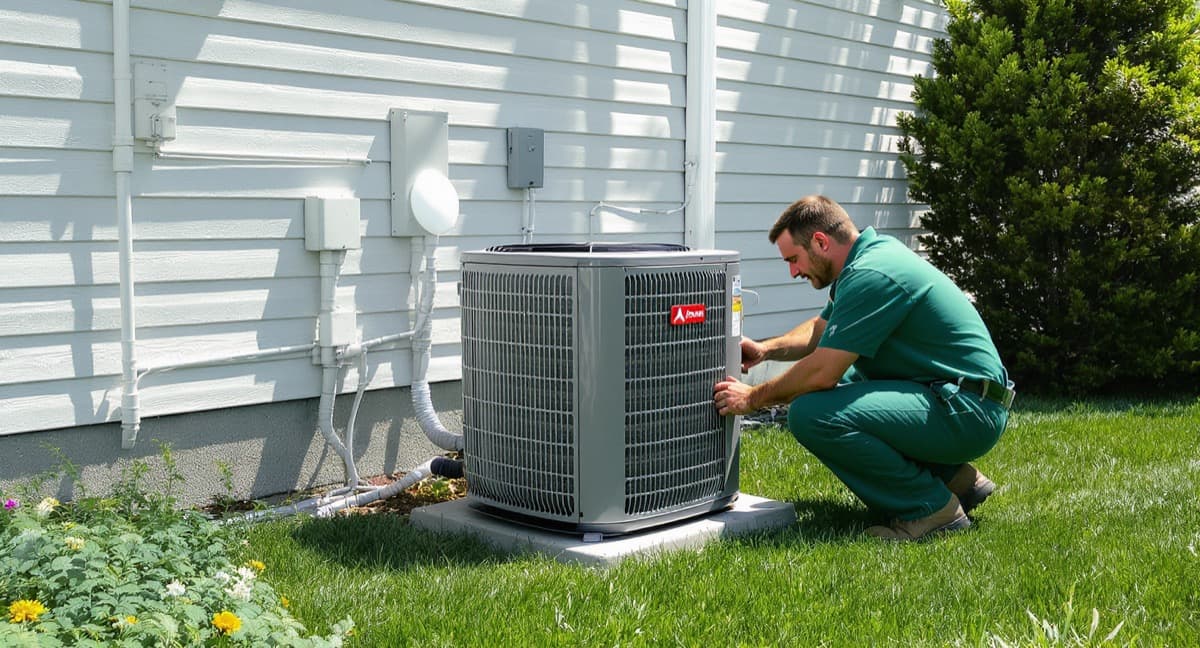
What AC short cycling means
You hear the outdoor unit kick on. A couple minutes later it shuts down. A few minutes after that it starts up again, runs briefly, and stops. The house never really gets comfortable, and the constant clicking on and off is starting to drive you nuts.
That pattern has a name. It's called short cycling, and a short-cycling AC is one of the more common summer repair calls we get on Long Island. A healthy central air conditioner should run in steady cycles of roughly 10 to 20 minutes, long enough to actually cool your home and pull humidity out of the air. When the AC fires up and shuts off every few minutes without completing a full cycle, something is forcing the system to stop early. That's short cycling, and it's almost always worth tracking down quickly.
This guide walks through the common causes of AC short cycling, how to stop your AC from short cycling, what each repair costs, and when to call an HVAC technician.
Why short cycling is bad for your AC
It's tempting to ignore short cycling as long as the house is sort of cool. Don't. Every time your air conditioner starts up, the compressor draws a big surge of current, far more than it pulls during steady running. A system that short cycles every three minutes hits that surge a dozen times an hour instead of two or three. That's hard on the compressor, hard on the start capacitor, and it drives up your energy bills while delivering worse cooling. Short cycling also means the AC never runs long enough to dehumidify, so even when the thermostat reads 74 the house feels clammy. Left alone, a short-cycling air conditioner wears its compressor out prematurely, and the compressor is the most expensive part of the system.
Common causes of AC short cycling
Short cycling almost always traces back to one of a handful of root causes. Here are the common causes, roughly in the order we check them.
Cause 1: a dirty air filter
The most common cause of AC short cycling is also the easiest to fix. A clogged air filter restricts airflow across the evaporator coil. Without enough air moving over it, the coil gets too cold, refrigerant pressures climb out of range, and a safety control shuts the air conditioner down before it can overheat or freeze. A few minutes later the AC restarts, hits the same wall, and shuts down again. That's textbook short cycling.
Pull your air filter and hold it up to a light. If you can't see through it, replace your air filter. Run the AC for an hour and watch whether the cycles get longer. We swap filters every 30 to 60 days during cooling season, and a clean air filter resolves more short cycling calls than any other single fix. A dirty or clogged filter is the first thing every HVAC tech checks.
Cause 2: a frozen evaporator coil
Short cycling and ice go hand in hand. When airflow is restricted or the system is low on refrigerant, the indoor evaporator coil can freeze into a block of ice. The AC then can't move heat, shuts off on a safety, and the cycle repeats. Pop the panel on your air handler or feel the big copper line coming off the indoor unit. If it's frosted or dripping after a thaw, you've found your problem.
Shut the AC off and let it thaw completely, several hours, before running it again. If the coil keeps freezing after the air filter is clean, you're likely dealing with low refrigerant, which is a job for an HVAC technician.
Cause 3: low refrigerant levels from a leak
Refrigerant doesn't get used up. If your levels are low, the system has a leak somewhere. Low refrigerant throws off the pressures the air conditioner needs to run, and the low-pressure safety switch cuts the compressor off, then lets it restart, over and over. Short cycling that comes with ice on the lines, weak cooling, and a hissing sound near the indoor unit usually points to low refrigerant levels.
This one isn't DIY. A tech has to find the leak, repair it, and recharge to spec. On Long Island that typically runs $400 to $800 depending on where the leak is and how much refrigerant the AC takes. R-410A systems cost more to charge than they used to, and you'll see R-32 on newer installs.
Cause 4: a failing capacitor or control board
The capacitor gives your compressor and fan motors the jolt they need to start and keep running. When it weakens, the compressor may start, struggle, and trip off on overload within a minute or two, then try again. That stutter-start is a classic short cycling symptom, and a marginal capacitor is one of the most common culprits. A faulty control board can produce the same on-off behavior by misfiring the start signal. The good news is a capacitor is cheap. A tech tests it with a meter in two minutes, and replacement runs about $180 to $350 installed. We cover the warning signs in our guide to AC capacitor replacement signs and costs, worth a read if your AC is clicking but not catching.
Cause 5: a malfunctioning or badly placed thermostat
Sometimes the air conditioner is fine and the thermostat is the problem. If your thermostat sits in direct sunlight, near a supply vent, or on a wall near other heat sources, it reads the wrong temperature, satisfies the set temperature too early, shuts the AC off, then calls for cooling again moments later. A malfunctioning thermostat with dying batteries or loose wiring causes the same flickering behavior.
Replace the batteries first. If the thermostat is mounted somewhere it's catching afternoon sun or a draft, move it away from heat sources and that alone can stop the short cycling. A smart thermostat with better temperature averaging can also help.
Cause 6: dirty condenser coils outside
The outdoor unit dumps heat from inside your house into the outside air. When the condenser coils are packed with grass clippings, cottonwood fluff, or leaves, that heat has nowhere to go, head pressure climbs, and the high-pressure safety cuts the compressor off. Restart, same wall, shut down again. Hose the outdoor AC unit off gently from the inside out with a garden hose, never a pressure washer, and clear two feet of space around it. It's free, and it's the kind of thing a yearly tune-up catches before it becomes a repair.
Cause 7: an oversized air conditioner
This is the one homeowners never suspect. An air conditioner that's too large for your home cools the space so fast that it satisfies the thermostat in just a few minutes, shuts off, and then the temperature creeps back up and it fires again. Big AC unit, short blasts, all day long. An oversized, improperly sized HVAC system feels powerful but it's inefficient, it never runs long enough to pull moisture from the air, and the frequent cycling wears the compressor out prematurely.
If your AC has short cycled since the day it was installed, and the air filter, refrigerant, and electrical components all check out, an AC that's too large is the likely answer. There's no cheap fix; you correct it at replacement time with a proper load calculation so the next system is sized right. An air conditioner that runs in long steady cycles, like we describe in our guide on why an air conditioner running constantly isn't always a problem, is usually a sign the AC is correctly matched to the home.
How to stop your AC from short cycling
To stop your AC from short cycling, start with what you can do yourself. Replace your air filter, check the thermostat batteries and location, thaw a frozen coil, and hose off the outdoor condenser. Work through those four first. They resolve a real share of short cycling calls and cost nothing. If the air conditioner still short cycles after the air filter is clean and the thermostat checks out, the cause is refrigerant, electrical, or compressor related, and that needs an HVAC technician with gauges and a meter to diagnose.
Should you turn your AC off if it's short cycling?
Yes. If your AC is short cycling and you can't quickly trace it to a dirty air filter, turn the air conditioner off until you or a tech can resolve the issue. Every short cycle stresses the compressor, and continuing to run a short-cycling AC for days is how a $250 repair turns into a compressor replacement. Shut it down, check the air filter, and if that's not it, call for service.
How to prevent short cycling in the future
The best way to prevent short cycling is routine maintenance. Change the air filter on schedule, keep the outdoor condenser clear, and get a yearly tune-up where a tech checks refrigerant levels, the capacitor, and the control board before summer. And if you're replacing the system, insist on a proper load calculation so the AC isn't oversized. Most short cycling we see on Long Island traces back to a skipped filter, a neglected condenser, or an air conditioner that was too large for the home from day one, all of which good maintenance and right-sizing prevent.
What short cycling repairs cost on Long Island
A new air filter is a few dollars. Thawing a frozen coil and cleaning the condenser are free if you do them yourself. From there, our diagnostic is a flat $129 with no trip fee, often all it takes to pin down the cause. Capacitor or contactor replacement is $180 to $350 installed. A refrigerant leak repair and recharge typically lands between $400 and $800. If the diagnosis comes back to a failing compressor on an older system, you're looking at $1,800 to $3,500, and at that point get a replacement quote too. There's an old rule of thumb worth knowing: if the repair runs into the thousands on an aging AC, replacement usually wins, because a new compressor in a 12-year-old air conditioner is rarely worth it.
Don't let it keep running like that
Short cycling won't fix itself, and the longer the compressor takes that abuse the more likely a small repair becomes a big one. If your AC keeps shutting off after a few minutes and the air filter is clean, get it looked at before the next heat wave instead of during it.
Worked through the checklist and your air conditioner is still short cycling? Here's how we handle AC repair, and our pricing page has the flat diagnostic and the common repair ranges. Call or text us at 631-209-7090. We run priority dispatch for maintenance plan customers during heat waves and aim for same-day or next-day appointments for everyone else on Long Island.
Frequently Asked Questions
A healthy central air conditioner should run in steady cycles of roughly 10 to 20 minutes, long enough to actually cool your home and pull humidity out of the air. When the AC fires up and shuts off every few minutes without completing a full cycle, something is forcing the system to stop early. That is short cycling.
Every time your air conditioner starts up, the compressor draws a big surge of current, far more than it pulls during steady running. A system that short cycles every three minutes hits that surge a dozen times an hour instead of two or three. That is hard on the compressor, hard on the start capacitor, and it drives up your energy bills while delivering worse cooling.
Start with what you can do yourself. Replace your air filter, check the thermostat batteries and location, thaw a frozen coil, and hose off the outdoor condenser. Those four resolve a real share of short cycling calls and cost nothing. If the air conditioner still short cycles after that, the cause is refrigerant, electrical, or compressor related, and that needs a technician with gauges and a meter.
Yes. If your AC is short cycling and you cannot quickly trace it to a dirty air filter, turn the air conditioner off until you or a tech can resolve the issue. Every short cycle stresses the compressor, and continuing to run a short-cycling AC for days is how a $250 repair turns into a compressor replacement.
An air conditioner that runs a few minutes and shuts down is hitting a safety control before it finishes a cycle. The most common cause is a dirty air filter choking airflow across the evaporator coil, which drops coil temperature and pushes refrigerant pressures out of range until a safety trips. A frozen evaporator coil, a thermostat in a bad location or with dying batteries, a dirty outdoor condenser, low refrigerant from a leak, or an oversized system that satisfies the thermostat too fast will all do the same thing. Start with the filter, then the thermostat, then the outdoor coil.
An HVAC technician does, and on Long Island that is us. Patchogue Heating and Air Conditioning covers Patchogue and the surrounding Suffolk County towns within about 10 miles. Our diagnostic is a flat $129 with no separate trip fee, which is usually all it takes to pin down why the system is short cycling. Some causes you can rule out yourself first at no cost: change the air filter, check thermostat batteries, and hose off the outdoor unit. If it still short cycles after that, the cause is refrigerant, electrical, or compressor related and needs gauges and a meter. Call or text 631-209-7090.
Our diagnostic is a flat $129 with no trip fee, often all it takes to pin down the cause. Capacitor or contactor replacement is $180 to $350 installed. A refrigerant leak repair and recharge typically lands between $400 and $800. If the diagnosis comes back to a failing compressor on an older system, you are looking at $1,800 to $3,500, and at that point get a replacement quote too.
Related Articles
Why Is My Air Conditioner Running Constantly?
AC running constantly and won't shut off? Why it happens, what you can check yourself in ten minutes, and when an AC that never stops means a real repair.
AC Down on Long Island: What to Do When It Dies
Your central air just quit on a hot day. Here's what to check yourself, how to keep the house livable, and how to get on the schedule for the next business day.
AC Repair Cost on Long Island (2026 Guide)
What AC repair actually costs on Long Island in 2026. Real price ranges for common fixes, when to repair vs replace, and how to avoid overpaying.