Why Is My Air Conditioner Running Constantly?
AC running constantly and won't shut off? Why it happens, what you can check yourself in ten minutes, and when an AC that never stops means a real repair.
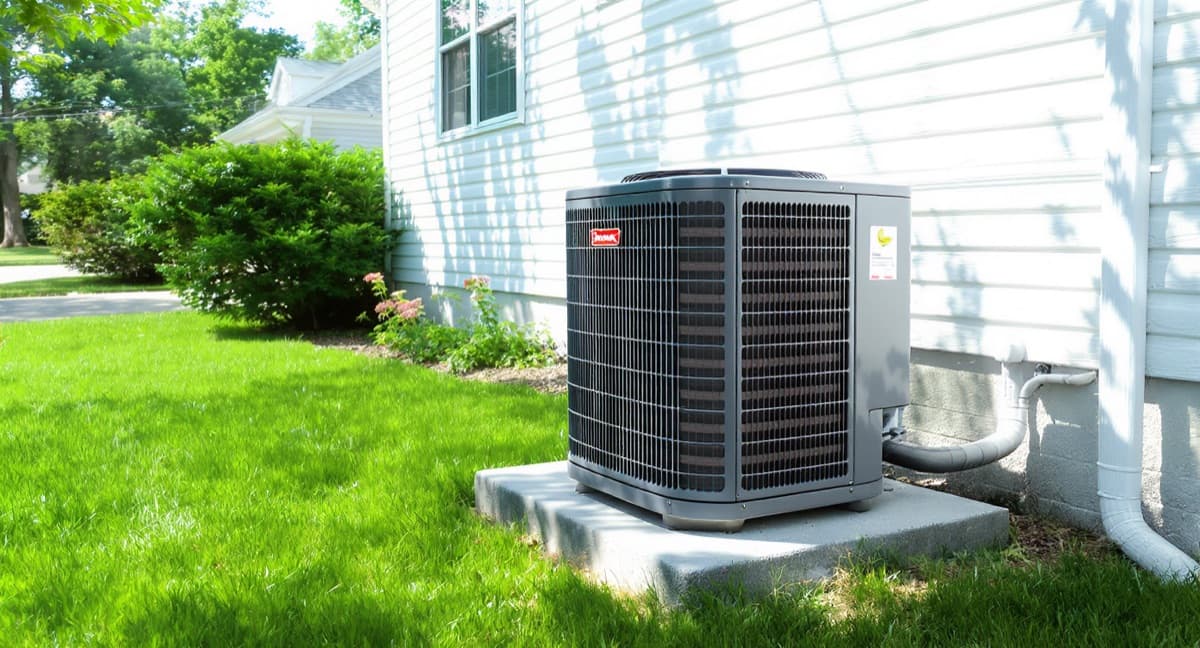
Why is my AC running constantly?
It's 88 degrees outside, your thermostat says 76, and the outdoor unit has been running for four straight hours without a break. The house feels cool-ish but not great. And your next PSEG bill is going to be brutal.
An air conditioner that runs constantly is one of the most common repair calls we get in July and August on Long Island. The good news is that about half the time, an AC that won't cycle off comes down to something you can check in ten minutes. The other half is a real repair. Here's how to tell which one you're dealing with before you pick up the phone.
Is it normal for an AC to run all the time?
Often, yes. On a 90-degree humid day with the thermostat set to 70, your air conditioner is supposed to run almost continuously. That's not a malfunction, that's the equipment working as designed. A properly sized central air conditioner pulls a house down maybe 1 to 1.5 degrees per hour in extreme heat, and on the hottest days of the year it might run 90% of the day to hold setpoint. Long steady cycles also pull more humidity out of the air than short ones, so a unit that runs and runs on a muggy day is doing you a favor.
The real problem is when your AC runs constantly and either can't reach the temperature you set, or it reaches it and kicks right back on within a minute or two. That's when something is off. If it runs all afternoon but the house holds 74 and shuts down once things cool off at night, you're probably fine. If it runs all day and the house never drops below 78 even with the thermostat set to 70, keep reading.
Check your air filter
Nine times out of ten when a unit is working harder than it should, the air filter is the culprit. A dirty filter starves the system of airflow. The blower works harder, the evaporator coil can't release the cold it's producing, and the unit runs longer trying to move the same amount of air. In extreme cases the coil freezes over, airflow drops to nothing, and it just runs and runs without cooling anything.
Pull your filter out and hold it up to a light. If you can't see through it, replace it. This is the single most common cause we run into on Long Island, and it's the first thing every tech checks. We recommend swapping the filter every 30 to 60 days during cooling season, more often if you have pets or run the system around the clock. Our guide on how to change your AC filter and why it matters walks through picking the right MERV rating, and why a higher-MERV filter helps in some houses and starves airflow in others.
If the filter is clean and it's still running nonstop, move down the list.
Check the thermostat
This sounds obvious but we run into it constantly. Someone bumped the thermostat from AUTO to ON, and now the blower runs 24/7 even when the compressor isn't actively cooling. That isn't the air conditioner running constantly, that's the fan running constantly, and it makes a homeowner think the whole thing is broken when it's a switch setting. Put it back on AUTO.
Also check what temperature you actually have it set to. If the kids got into it and dialed it down to 65, the unit is going to chase a setpoint it can't hit on a hot day. On Long Island in summer, 72 to 74 is realistic. 65 is not, and a system trying to hit 65 will run until something breaks.
While you're there, replace the batteries if it's a battery-powered model. Low batteries cause flaky behavior that mimics a real fault, and a new set of AAs is cheaper than a service call. Thermostat location matters too: one mounted in direct sun or above a lamp reads warmer than the room and keeps calling for cooling that isn't needed.
Check airflow at the vents
Walk around the house and put your hand in front of every supply vent. They should all be blowing cold. If some are weak, blocked by furniture, or have closed louvers, the system is fighting itself. Closing vents doesn't save energy on central air, it creates back pressure that makes the blower work harder and keeps the unit running longer.
Same goes for return vents. If your big return grille has a couch shoved against it or a rug covering it, the system can't breathe. Clear it. Proper airflow is half the battle here.
Check the outdoor condenser
Go outside and look at the outdoor unit. Is it covered in grass clippings, leaves, or cottonwood fluff? The condenser coils need to dump heat into the surrounding air, and if the fins are packed with debris, that heat has nowhere to go. The unit runs longer trying to push heat into coils that can't release it.
Hose it off gently with a regular garden hose from the inside out. The fan pulls air in through the coil from outside, so debris packs into the fins from the outer face. Spraying from the inside pushes it back out the way it came instead of driving it deeper. Don't use a pressure washer, you'll bend the fins. While you're out there, make sure nothing is leaning against the unit and there's at least two feet of clear space around it.
If the outdoor fan isn't spinning at all but the unit is humming, that's a different problem and you should shut it off and call. Running it in that state can fry the compressor, which is the most expensive part you own.
Check for ice on the evaporator coil
This one surprises people. An air conditioner running constantly with poor cooling sometimes has ice on the indoor coil or the refrigerant line. Pull the panel off the air handler if you can, or just feel the big copper line running from the outdoor unit. If it's frosty or has visible ice, shut everything off and let it thaw for several hours.
Ice on the coil usually points to one of three things: low refrigerant from a leak, severely restricted airflow (back to the filter), or a failing blower motor. The first needs a tech. The other two you may be able to handle yourself, but you have to thaw the ice completely before running it again or you'll just make it worse.
Why your AC won't stop running: the repairs behind it
If you've checked the filter, the thermostat, the vents, and the outdoor unit, and it's still running constantly without holding setpoint, you've got an actual repair. The usual suspects:
A refrigerant leak. Low refrigerant means the system can't absorb heat properly, so it runs and runs without effectively cooling. You'll often see ice on the lines too, and your electric bill climbing because the compressor is working overtime to deliver less. This needs a tech to find the leak, repair it, and recharge.
Leaky ductwork. If your supply ducts have gaps or disconnections in the attic or crawlspace, you're dumping cold air into places nobody lives. The system runs forever trying to cool the house because a chunk of the output never gets there. This is hard to diagnose without eyes on the ductwork.
A failing blower motor. The blower pushes cold air through the ducts into your rooms. If it's failing or running at reduced speed, the unit stays on trying to deliver air it can't move.
A failing compressor. Older systems lose compressor efficiency over time. The unit runs but the cold output drops, so it never satisfies the thermostat. On a system 12 years or older this is often where replacement makes more sense than repair.
A system that was never the right size. An undersized air conditioner runs constantly by definition, because it physically cannot keep up with the house on a hot day. If yours has run nonstop every summer since it was installed, this is the likely answer rather than anything that broke. Our guide on whether your AC is too small for your home covers how to tell.
What it costs to fix on Long Island
Filter, thermostat, and airflow fixes are free. Cleaning the outdoor coils is free if you do it yourself. If you have us out, the diagnostic is a flat $129 and a full tune-up is a flat $149, with no trip fee on either.
Refrigerant leak repair and recharge typically runs $400 to $800 depending on where the leak is and how much refrigerant the system needs. R-410A is still the most common refrigerant on Long Island systems but the price has climbed, and R-32 systems are starting to show up on newer installs.
Blower motor replacement runs $400 to $900 depending on the part. If the diagnosis comes back to a failing capacitor, that's $180 to $350 all in, though a bad capacitor more often stops a unit from starting than keeps it running.
Compressor replacement is $1,500 to $3,000, and at that price you should also be getting a quote on a full replacement, because a new compressor in a 12-year-old system is throwing good money after bad. The rule of thumb: if the repair costs more than half the price of a new system, replace it instead. Here's how we handle AC repair calls on Long Island so you can see what's included before authorizing work.
When to call a technician
There's a clear point where checking things yourself ends and a service call begins. Call us if any of these are true:
Your outdoor unit is humming but the fan isn't spinning. Keep it off until a tech can look at it.
You see ice on the refrigerant lines or the evaporator coil and the filter is clean. That points to low refrigerant or a deeper airflow problem.
You smell anything burning or melting near the outdoor unit or the air handler. Shut it down and call.
The system is more than 12 years old, has been getting more expensive every year, and now runs constantly without holding temperature. That's a system telling you it's done.
If you've worked through the checks above and the air conditioner is still running constantly, call or text us at 631-209-7090. During heat waves we run priority dispatch for our maintenance plan customers and try to get same-day or next-day appointments for everyone else. If yours is failing in August, you're not alone, and the sooner we look at it the less likely it is to quit completely the day company comes over.
Frequently Asked Questions
On a hot, humid Long Island afternoon, an air conditioner that runs almost nonstop is usually working exactly as designed. It becomes a problem when it runs constantly and still cannot reach the temperature you set. The most common causes, in the order we check them, are a dirty air filter choking airflow, a thermostat left on FAN instead of AUTO or set to a temperature the system cannot reach, blocked supply and return vents, a debris-packed outdoor condenser, ice on the evaporator coil, a refrigerant leak, leaky ductwork, or a system that was undersized for the house from the start.
An air conditioner shuts off when the thermostat is satisfied. If it never shuts off, either it cannot cool the house down to the setpoint or it is not being told to stop. Start with the two free checks: pull the air filter and hold it to a light, and confirm the thermostat fan is set to AUTO rather than ON. A fan set to ON runs the blower 24/7 even when the compressor is off, which feels exactly like an AC that will not stop. If the filter is clean and the fan is on AUTO and it still runs nonstop without holding temperature, something is limiting the system's capacity and it needs a look.
Often yes. On a 90 degree humid day with the thermostat set to 70, continuous operation is normal and is actually the efficient way to run. A correctly sized system pulls a house down roughly 1 to 1.5 degrees per hour in extreme heat and may run 90% of the day just to hold setpoint. Long steady cycles also dehumidify better than short ones. The test is not how long it runs, it is whether it holds the temperature you set. Running all afternoon and holding 74 is fine. Running all day and never getting below 78 is not.
It is bad when it runs all the time without reaching setpoint, because the compressor is working continuously and delivering less than it should. That drives your PSEG bill up and wears the most expensive part of the system. If it runs all the time and does hold the temperature you set on the hottest days, that is normal operation and not something to worry about.
The usual answer is the thermostat fan setting. Switched from AUTO to ON, the blower runs continuously and pushes room-temperature air through the vents even though the compressor has shut off. Set it back to AUTO. If the outdoor unit itself is genuinely still running after the house has reached temperature, the thermostat may be reading the wrong temperature because of its location, direct sun, or dying batteries.
The homeowner checks are free. If you need us out, the diagnostic is a flat $129 with no trip fee, and a full tune-up is a flat $149. From there, a refrigerant leak repair and recharge typically runs $400 to $800, a blower motor is $400 to $900, and a compressor is $1,500 to $3,000. At compressor prices on a system over 12 years old, get a replacement quote at the same time.
Related Articles
AC Short Cycling: Why Your AC Keeps Shutting Off
AC short cycling on Long Island? The common causes of a short-cycling air conditioner, how to stop it, what the repairs cost, and when to call a pro.
AC Down on Long Island: What to Do When It Dies
Your central air just quit on a hot day. Here's what to check yourself, how to keep the house livable, and how to get on the schedule for the next business day.
AC Repair Cost on Long Island (2026 Guide)
What AC repair actually costs on Long Island in 2026. Real price ranges for common fixes, when to repair vs replace, and how to avoid overpaying.