Are HVAC Maintenance Plans Worth It? The Numbers
We ran the numbers on HVAC maintenance plans for Long Island homes. Here's the real ROI math, breakeven point, and when a service agreement actually pays off.
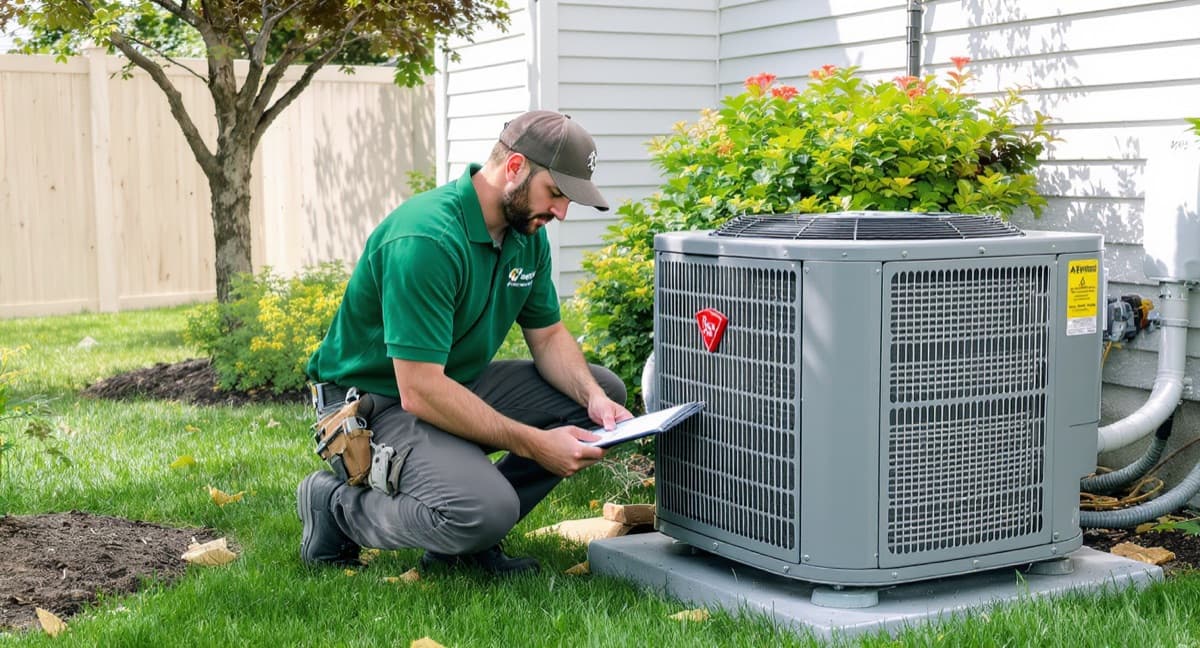
Most homeowners ask the same thing when we pitch a maintenance plan: "Is this actually worth it, or is it just another monthly subscription I don't need?" Fair question. So instead of giving you the same sales answer everybody else gives, we sat down and ran the numbers.
Here is what a maintenance plan actually returns on a Long Island home, when it pays off, and when it does not.
What an HVAC maintenance plan actually is
A maintenance plan, sometimes called a service agreement or maintenance program, is a yearly contract where an HVAC technician comes out once or twice a year to inspect and tune your heating and cooling equipment. Preventative work, not repair work. Cooling tune-ups happen in spring, heating tune-ups happen in fall, and a good plan covers both your AC and your furnace or boiler under one price.
It's not just a checkup. A real tune-up cleans coils, tests capacitors and contactors, checks refrigerant pressure, inspects ductwork, calibrates the thermostat, flushes the condensate line, and verifies the heat exchanger on a furnace is safe. On a heat pump or ductless mini split, the tech also checks defrost cycles and verifies refrigerant charge in both heating and cooling modes.
Most plans also include priority service during peak season, a discount on repair labor, and warranty paperwork support. The pricing varies, but the structure is similar across most reputable Long Island contractors.
The basic math: what you're spending vs what you're saving
A typical maintenance plan on Long Island costs $200 to $400 a year for a single system, or $300 to $600 if heating and cooling are both covered under one service agreement. Our maintenance plans start at $19 a month ($228 a year) for Essential, which includes one annual tune-up, priority service, a waived trip and diagnostic fee, and 10% off repair labor. Additional systems are $9 a month each. Most homeowners land on Comfort at $39 a month for the first system plus $17 for each additional one, which gets two tune-ups a year and 15% off repair labor. Everything else we charge for is on our pricing page.
Now compare that to what you'd pay piecing the same maintenance and service together a la carte. A standalone tune-up with us is a flat $149. Add a mid-summer service call (because something always goes wrong in July when you're not on a plan) at our flat $129 diagnostic, and you're already at $278 before any actual repair work. So even on a pure dollar-for-dollar swap with zero benefits, a plan roughly breaks even with what most homeowners end up spending anyway.
The interesting math starts when you factor in the things plans actually do for you that aren't on the price list.
The breakeven analysis on a $348/year plan
Let's say you sign up for a plan at $348 a year. Over 5 years that's $1,740 out of pocket. What does the plan need to prevent or save you to breakeven?
Roughly one mid-tier repair every 5 years. That's it.
Here's a quick rundown of common Long Island repair costs, which we break down in more detail here:
- Capacitor replacement: $200 to $400
- Contactor replacement: $200 to $350
- Refrigerant recharge plus leak diagnosis: $400 to $1,000
- Coil cleaning (when neglected to the point of needing chemical clean): $300 to $500
- Blower motor replacement: $500 to $900
- Furnace ignitor or flame sensor replacement: $250 to $450
- Boiler circulator pump replacement: $500 to $900
- Compressor replacement: $1,500 to $2,500+
If a maintained system avoids one capacitor failure that you would've otherwise had, the plan covered itself for over a year. Avoid one coil cleaning over 12 months, and you broke even. Avoid one early compressor failure, and the plan returned 5 to 7 times what you put in.
That's not theoretical. Compressor breakdowns are very often caused by chronic strain from a dirty coil, low refrigerant, or a failing capacitor that was caught too late. Annual maintenance targets all three directly. Catching small issues early is the entire point of preventative service, and it's where the real savings live.
The efficiency angle most people don't price out
A neglected AC or furnace runs harder than a maintained one. Industry data puts the efficiency loss on a poorly maintained system at 5 to 15% versus a system that's tuned annually. Energy efficiency drops every season equipment goes without service, and on Long Island, where summer cooling and winter heating costs both run high, that loss compounds quickly.
Run the math for a typical Suffolk County home. Average summer cooling cost on Long Island runs $200 to $400 a month from June through September. Call it $300 a month, $1,200 for the season. A 10% efficiency loss means $120 a year in energy costs leaking out the back of your electric bill. Now layer winter heating on top, where a poorly tuned furnace or boiler can burn 10 to 15% more fuel for the same comfort. Combined annual energy waste from a neglected system regularly hits $200 to $400 a year for the average Long Island homeowner.
That alone covers most of a maintenance plan, before any repair savings show up.
For homes with older equipment or poor insulation, that gap is bigger. Cleaning a season's worth of dirt off an outdoor coil can show up on the next month's bill on its own. The savings keep compounding, because regular maintenance keeps the system running near its rated efficiency for the long haul. Worth noting: a sealed system does not consume refrigerant, so if a tech says yours is low, the real problem is a leak that needs finding, not a top-off.
Longevity: the part nobody puts in the brochure
Modern air conditioning systems are designed to last 15 to 20 years. Heat pumps, 12 to 18. Furnaces, 15 to 25. Boilers, 20 to 30. But those numbers assume the equipment is being maintained. A neglected system rarely makes it past 10. A maintained one regularly hits the upper end of the range.
Pull that forward in time. If a maintenance plan helps your AC last 17 years instead of 11, you've delayed a $14,000 replacement by 6 years. That's the single biggest dollar number in this whole equation, and it's the one most homeowners never calculate. Longevity isn't a bonus, it's the whole game.
Warranty protection most homeowners don't realize they're losing
Almost every manufacturer warranty on heating and cooling equipment, Carrier, Trane, Mitsubishi, Daikin, Lennox, Goodman, all of them, requires documented annual maintenance to stay valid. Skip a year, and they can deny a $2,000 compressor claim that should have been covered.
A maintenance plan creates the paper trail. Every visit gets logged, dated, and tied to your equipment serial number. If something goes sideways under warranty, the manufacturer has the records they need. Without that, you're on your own.
For homeowners with a system that's still under its 10-year parts warranty, a service plan isn't a luxury, it's warranty insurance.
When a plan is clearly worth it
Three scenarios where the math is essentially always in your favor:
Your system is over 8 years old. Older equipment fails more often, and the repairs are usually more expensive. The probability that you'll need at least one paid service call in the next 12 months goes up significantly past year 8. A plan that includes priority service and a parts discount usually pays for itself the first time something breaks, especially on a furnace or heating repair in the middle of January. (And if your unit is north of 12 years, it might be worth replacing instead, which is a different conversation.)
You have multiple systems. If you have central air plus a heat pump, a furnace plus AC plus a ductless mini split for an addition, or a boiler in a multi-zone Long Island home, individual service calls add up fast. Multi-system plans give you one inspection visit, one priority queue, and one set of paperwork. The per-system pricing drops considerably, and reliability goes up across the whole house.
You don't want to think about it. This sounds soft, but it's real. Peace of mind has actual dollar value. The biggest reason maintenance gets skipped isn't cost. It's that homeowners forget. A plan puts the visit on someone else's schedule. The system gets serviced whether you remember or not, which means you're not the person sitting in 95-degree heat in July realizing you never had it tuned up this year. Home comfort is consistent because the equipment is consistent.
When a plan is probably not worth it
Two scenarios where the math gets shaky:
Brand new equipment under warranty, and you're handy. If your system is under 3 years old, the manufacturer warranty covers most parts. Annual maintenance is required to keep the warranty active, but if you're comfortable changing filters, hosing down the outdoor coil, and pouring vinegar through the condensate line, you can probably DIY the basics. A professional tune-up every 2 to 3 years is enough at that age. Our spring maintenance checklist covers what you can handle yourself.
You're moving in the next 12 months. If the system is staying with the house, you're paying to maintain someone else's equipment. Get a single tune-up before listing for inspection report purposes and skip the annual commitment.
What to look for in a Long Island maintenance plan
Not every service agreement is built the same. A few things worth checking before you sign up:
The plan should include a real, full inspection on every visit, not a 15-minute filter swap and a clipboard signature. Ask exactly what the technician checks, and ask for the checklist in writing. A good Long Island contractor will personalize it to your equipment, not hand you a generic page.
Parts and labor discounts should be specific. "Member discount" with no number attached is meaningless. Look for at least 10% off labor and a real percentage off parts. That's where the bigger repair savings come from.
Priority service should be a real promise, not marketing. Ask what their plan-member response time looks like in July versus a non-member. Responsive scheduling during peak season is a big chunk of what you're paying for.
Cancellation terms should be reasonable. A maintenance program that locks you in for 3 years with a penalty is a red flag. Most quality service plans renew annually and let you cancel anytime.
If a wi-fi thermostat is bundled in, treat it as a nice extra, not the reason to buy. A thermostat by itself doesn't extend equipment life. Regular professional tune-ups do, by catching wear before it turns into a breakdown. That hands-on service is the part of any plan worth paying for.
What we'd actually recommend
The honest answer for most Long Island homeowners with a 5-to-15-year-old system: a basic plan is worth the $300 to $400 a year. The expected value math works out, you save money on at least one repair over the life of the plan, the priority service alone is worth it during peak season, and the warranty paperwork is handled.
If your system is newer than 5 years, you might do fine with a standalone tune-up every 1 to 2 years instead, just to keep the warranty active. If it's older than 15, the conversation shifts toward replacement planning rather than maintenance, and a plan is more about extending what you've got while you save up for the new install.
The plans worth avoiding are the ones priced over $500 a year that don't include any actual labor or parts discount, or any real heating and cooling work beyond a quick filter check. You're paying for a sticker on the invoice, not real value. A real maintenance program saves you money on energy costs, repair costs, and equipment replacement costs over time. A bad one just shows up on your credit card every month.
If you want to see what a plan would cost on your specific setup, or just want a real tune-up before summer hits, give us a call or text at 631-209-7090. We'll tell you straight whether a plan makes sense for your home or whether you're better off paying as you go.
Related Articles
Fall Furnace Tune-Up: Why September Is the Best Time to Schedule
Schedule a furnace tune-up in September for first pick of dates and time to fix what we find. What the checklist covers and what it costs on Long Island.
End-of-Summer AC Maintenance: What to Do Before You Shut It Down
End-of-summer AC maintenance for Long Island homes. What to test, clean, and check on your air conditioning system before you shut it down for the winter.
HVAC Preventative Maintenance: Prep Your System for Fall
HVAC preventative maintenance for Long Island homes. What to check on your heating and cooling system before fall, and what a visit costs in Suffolk County.