Daikin vs Goodman Heat Pumps: How to Choose
Daikin vs Goodman heat pumps on Long Island: premium inverter vs value, with warranty, SEER, and cost compared to help you choose for your Suffolk County home.
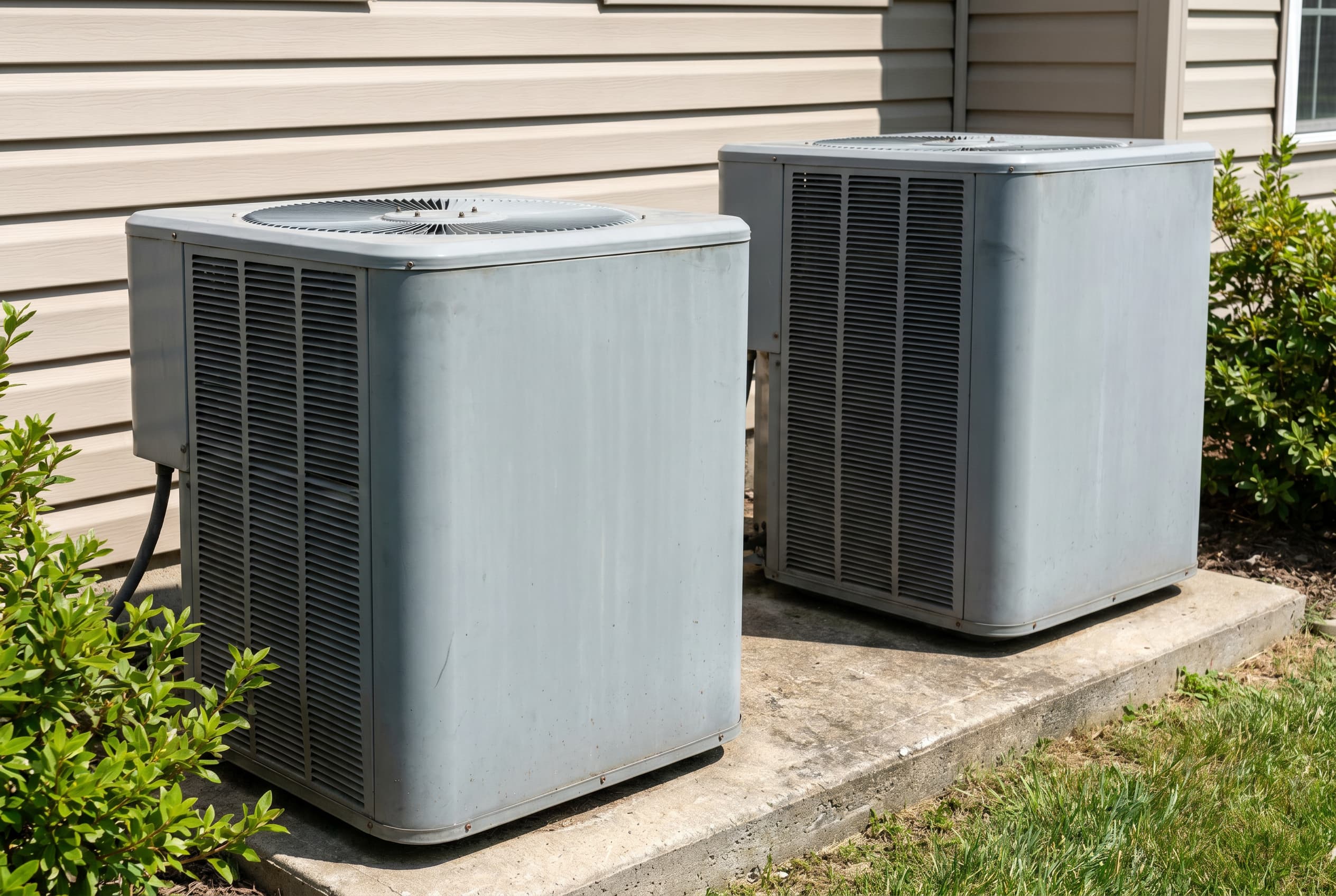
If you are replacing a system on Long Island and getting quotes, you have probably seen both names: Daikin vs Goodman. They show up on a lot of estimates because, as it turns out, they are the same family. This guide gives you the honest comparison, premium HVAC against solid value, so you can match the right brand to your Suffolk County home and budget.
We install both brands, so we have no stake in which one you pick.
Daikin and Goodman are the same company (sort of)
Here is the part most homeowners do not know. Daikin Industries, the largest HVAC manufacturer in the world, owns Goodman. It also owns Amana. Daikin and Goodman equipment is engineered and built at the same place, the Daikin Texas Technology Park outside Houston, one of the biggest HVAC factories on the planet. They share parts, platforms, and refrigerant systems.
So why two brands? Positioning. Goodman, founded by Harold V. Goodman, has always been the value name, built to hit an affordable price. Daikin is the premium name, carrying the inverter technology and the higher SEER2 ratings. Think of them as good and best from one parent, not two rivals.
Goodman: the value heat pump
A Goodman heat pump is the budget-friendly workhorse. It cools and heats your home reliably, carries a strong parts warranty, and costs noticeably less upfront than a comparable Daikin unit. For a lot of Long Island homes, that is exactly the right call.
What you get with Goodman:
- Lower upfront cost. The Goodman unit is built to be affordable, so the install price comes in lower than a premium system.
- Solid SEER2. Most Goodman heat pump models run roughly 14 to 17 SEER2, from code-minimum to genuinely efficient.
- Good warranty. Under Daikin ownership the parts warranty improved, often 10 to 12 years when you register the equipment.
- Dependable specs. A proven compressor and coil that hold up well for the price.
Where Goodman gives ground is in the details. The compressor in base models is single-stage, which means it runs full-blast or off, with more on-off cycling and less precise temperature control. The cabinet and the finish are not as refined as the premium tier. It is a value system, and it acts like one.
Daikin: the premium heat pump
A Daikin heat pump is the upgrade. The headline is inverter technology. Instead of a single-stage compressor that slams on and off, a Daikin inverter compressor modulates, running at variable speed and ramping up or down to match exactly what your home needs at that moment. That is where the comfort and the efficiency come from.
What you get with Daikin:
- Inverter, variable-speed operation. Steady, gentle output that holds temperature tightly and pulls humidity out of Long Island summer air better than a single-stage unit.
- Higher SEER2. Inverter models like the Daikin Fit climb into the high-teens and low-20s SEER2, which means a lower running cost.
- Quieter. A modulating compressor at low speed is much quieter than one cycling at full power. The slim Daikin Fit outdoor unit is built to tuck against the house.
- Strong 12-year parts warranty on registered equipment, plus smartphone thermostat control.
The tradeoff is price. A Daikin system costs more upfront than the equivalent Goodman. You are paying for the inverter technology and the efficiency, and over a long stay in the home that efficiency pays you back on energy bills.
Daikin vs Goodman: the side-by-side
The quick read, brand against brand:
If you put the two spec sheets next to each other, here is the short version:
- Best for budget: Goodman. Lowest install cost, dependable AC and heat performance, strong warranty.
- Best for efficiency and comfort: Daikin. Inverter modulation, higher SEER2, quieter, better humidity control.
- Warranty: close. Both offer up to 12-year parts coverage when registered.
- Build quality: Daikin is more refined, Goodman is solid for the price.
- Air handler and indoor match: both pair with a matching air handler or, in a dual fuel setup, a gas furnace.
For reference, a premium competitor like Trane sits in the same tier as Daikin on price and features. We default to Daikin and Goodman because, as one company, they give us a clean good-better-best ladder and parts we can get fast.
Cost, and what actually moves the number
The brand is only part of your final bill. Sizing, ductwork, the air handler, electrical, and the quality of the install all move the price more than the badge on the outdoor unit. A poorly sized premium system will underperform a well-sized value one. For a full breakdown of what drives the number, see our guide on the cost to install central air on Long Island.
This is why the contractor matters more than the brand. The same Daikin or Goodman heat pump, installed by a careful installer who sizes it right and seals the ductwork, will outlast and outperform the same unit thrown in by someone rushing. Pick the installer first.
Rebates do not favor either brand
Good news here: the incentives are brand-neutral. A Daikin or a Goodman heat pump that meets the program efficiency specs and becomes your home's primary heat can qualify for the PSEG Long Island rebate, a flat amount per home: $4,000 at market rate, $5,000 for homes in a Disadvantaged Community, and $7,500 for income-qualified households under 60% of state median income. On Long Island, PSEG administers the NYS Clean Heat program, so that is one rebate, not two stacked. PSEG Rate 580 takes 45% off your electric usage above 400 kWh a month, October through May. It is a rate discount, not a rebate. The federal 25C tax credit expired at the end of 2025, so there is no federal credit on 2026 installs. Our rebates and savings guide covers what your home qualifies for.
Which should you install?
If your priority is the lowest reliable upfront cost, go Goodman. If your priority is lower energy bills, quieter, steadier comfort, and you plan to stay in the home a long time, the Daikin earns its premium. Both are heat pumps that cool in summer and heat in winter, both replace an aging air conditioner and furnace with one system, and both qualify for the same rebate.
Not sure which fits? Our heat pump installation page covers the install, our heat pump vs air conditioner guide covers the bigger system decision, and if you are leaning toward a cold-climate heat pump we cover that too.
Call or text 631-209-7090 and we will price both for your house, rebate included, so you can see the gap in real dollars instead of arguing about badges.
Frequently Asked Questions
Yes and no. Daikin Industries owns Goodman, along with Amana, and both Daikin and Goodman equipment is built at the Daikin Texas Technology Park outside Houston. They share engineering and parts. But they are positioned as different tiers: Daikin is the premium brand with inverter technology and higher SEER2 ratings, while Goodman is the value brand built to hit a lower price. So they are family, not twins.
Daikin is the more advanced HVAC brand. A Daikin heat pump uses inverter, variable-speed technology that modulates output for quieter operation, better humidity control, and higher efficiency. A Goodman heat pump is mostly single-stage or two-stage, so it cools and heats well but cycles on and off rather than modulating. Better depends on your budget and goals. Daikin wins on comfort and efficiency, Goodman wins on upfront cost.
Yes. Goodman has a reputation as a budget-friendly workhorse, and under Daikin ownership the build quality and parts warranty improved. Most Goodman models carry a strong parts warranty, often 10 to 12 years when registered. The compressor and coil are solid for the price. You give up the inverter modulation and the top SEER numbers, but you get a dependable system at a lower cost.
Goodman heat pumps generally run from about 14 to 17 SEER2, which covers code-minimum to solidly efficient. Daikin reaches higher, with inverter models like the Daikin Fit climbing into the high-teens and low-20s SEER2. The higher the SEER2, the lower your running cost, but the efficient inverter units cost more upfront, so the right SEER level depends on how long you plan to stay in the home.
Both can, as long as the heat pump meets the program efficiency specs and becomes your home's primary heat. The PSEG Long Island rebate is a flat amount per home: $4,000 at market rate, $5,000 for Disadvantaged Community homes, and $7,500 for income-qualified households. It is the same rebate whether you install a Daikin or a Goodman, so the incentive does not favor one brand.
If you want the lowest install cost and a dependable system, Goodman is the better value. If you want lower energy bills, quieter operation, and you plan to stay in the home a long time, the Daikin pays back the higher price through efficiency and comfort. On Long Island we install both and match the brand to your home and budget rather than pushing one.
Daikin Industries makes Goodman heat pumps. Daikin is the largest HVAC manufacturer in the world, and it owns both Goodman and Amana. Goodman heat pumps, air conditioners, and air handlers are built at the Daikin Texas Technology Park outside Houston, the same plant that builds Daikin equipment, and the two brands share parts, platforms, and refrigerant systems. Goodman is positioned as the value tier and Daikin as the premium tier, but the manufacturer behind both is the same company.
Yes, for what it is meant to be. A Goodman heat pump is a value system: single-stage or two-stage rather than inverter, roughly 14 to 17 SEER2, with a parts warranty that often runs 10 to 12 years when registered. It heats and cools reliably and costs noticeably less to install than a premium unit. What you give up is inverter modulation, so it cycles on and off instead of holding a steady output, which means less precise temperature control and weaker humidity removal on muggy Long Island days. If your priority is the lowest reliable upfront cost, it is a good heat pump. If your priority is comfort and running cost, look at the Daikin.
Daikin is the premium tier of the same family. The difference is the inverter compressor, which modulates and runs at variable speed instead of slamming on and off, so it holds temperature more tightly, runs quieter, and pulls more humidity out of the air. Inverter models like the Daikin Fit reach the high-teens and low-20s SEER2, and registered equipment carries a 12-year parts warranty. The tradeoff is a higher upfront price than the equivalent Goodman, which pays back over a long stay in the home through lower energy bills.