Cold-Climate vs Regular Heat Pumps on Long Island
Cold-climate heat pump vs a regular heat pump on Long Island: how they differ, how cold they keep working, efficiency, rebates, and who needs one.
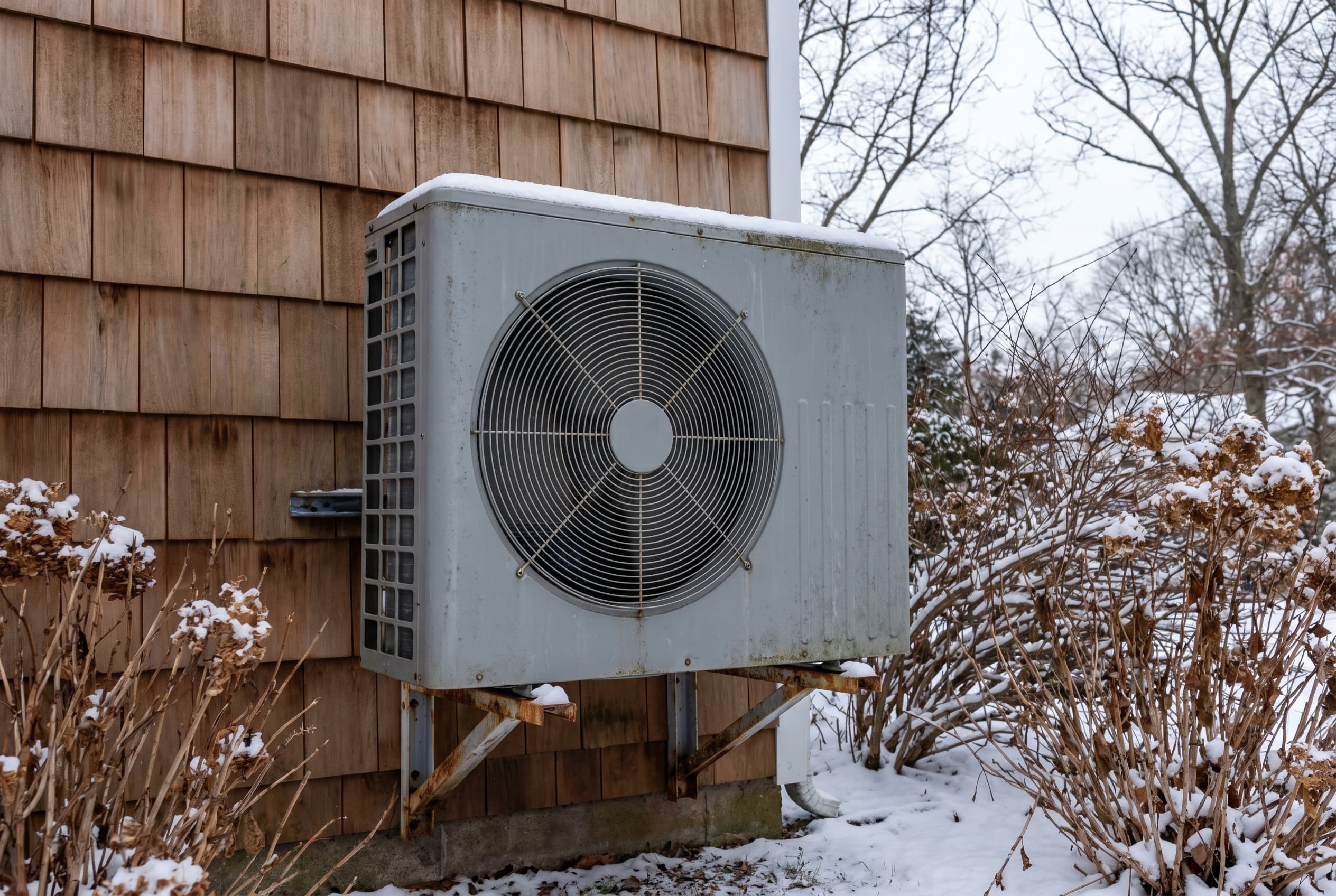
If you are putting a heat pump in on Long Island, you will run into two tiers of equipment: a standard heat pump and a cold climate heat pump. The question homeowners ask is whether the cold climate version is worth it, or just an upsell. The honest answer for Suffolk County is that if the heat pump is your primary way to heat and cool the home, you want the cold climate model. This guide explains how cold climate heat pumps work in cold climates, how they differ from a regular heat pump, and whether you actually need one out here for your heating and cooling needs.
We install air source heat pumps across Long Island year round, so what follows is how this equipment actually behaves in a Suffolk County winter, and where the different types on the market separate.
How a heat pump heats in the first place
Start with the basics, because it explains everything that follows. A heat pump does not generate heat by burning fuel like a furnace. It moves heat. Even in cold weather there is heat energy in the outdoor air, and an air source heat pump uses a refrigerant cycle to extract heat from that outdoor air and move it inside to heat your home. That is how a single heat pump system handles your heating and cooling from one unit, and it is the energy efficiency that makes heat pumps so much cheaper to run than electric resistance heat or a fossil fuel furnace. The U.S. Department of Energy has pushed hard on cold climate heat pump technology for exactly this reason.
The catch is that as the outdoor temperature falls, there is less heat energy in the air to grab, and the heat pump has to work harder to pull it. How well a heat pump handles that drop is exactly what separates a cold climate heat pump from a regular one, and why heating and cooling performance in cold climates is the spec that matters most up here.
What makes a cold climate heat pump different
A cold climate heat pump is engineered to hold its heating capacity in cold climates. The main ingredient is a variable-speed heat pump compressor that ramps up as the outdoor temperature drops, plus optimized refrigerant control and coil design that pulls heat from outdoor air even on bitter days. Where a standard heat pump's output sags as the cold air gets into the teens, modern cold climate heat pumps keep producing strong heat far lower, so they handle the heating and cooling for an entire home rather than just the easy months.
There is a real spec behind the label. The ENERGY STAR cold climate designation sets stringent requirements for operating in colder temperatures, so a unit that carries it has proven it can deliver heat efficiently as a heat pump in cold weather, not just on a mild day. It is the mark of a genuinely energy efficient cold climate machine. That cold climate heat pump designation is the thing to look for, because plenty of equipment marketed loosely as a heat pump is really a builder-grade unit that struggles once winter sets in.
How cold can they actually work?
This is where the gap shows. On an extremely cold day, a good cold climate heat pump delivers its rated heat down around 5 degrees and keeps producing useful heat well below zero. A regular heat pump starts losing meaningful capacity once the temperature drops into the teens and leans harder and harder on backup heat to keep up. The whole point of these units is that heat pumps must keep delivering when it is genuinely cold, which is what designing for cold climates is all about.
For Long Island, that difference matters. Our Suffolk County design temperature, the cold we actually plan for, sits in a range a properly sized cold climate heat pump handles comfortably. We do get cold snaps, but modern cold climate heat pumps are capable of carrying a well-insulated home through nearly all of them on their own. Today's heat pumps are simply not the weak winter performers they were a couple of decades ago.
Backup heat: auxiliary, electric strips, and dual fuel
Even a great cold climate heat pump has a floor, so systems include backup for the extreme cold. The common options are electric heat strips, often called auxiliary or supplemental heat, that kick in on the coldest nights, or a dual-fuel system that combines a heat pump with a furnace so natural gas covers the deep freeze while the heat pump handles the rest of the season.
The difference between the two tiers shows up here too. A regular heat pump calls on that expensive backup heat far more often through a Long Island winter, while a cold climate heat pump keeps moving heat efficiently and only needs the backup on the rare brutal night. That is the efficiency story in one sentence: the cold climate unit spends more of the winter in its efficient heat-moving mode and less of it burning through electric resistance heat.
Efficiency and your winter bill
Because a cold climate heat pump holds its heating capacity and relies less on auxiliary heat, it runs more efficiently exactly when you need heat the most. Over a full Suffolk County winter, that is real money, and good insulation makes the gap even bigger by lowering how much heat your home loses on a cold day. A standard heat pump that drops into resistance-heat mode every cold week will quietly run up your electric bill, while the cold climate model keeps delivering two to three units of heat for every unit of electricity it uses. For a homeowner, spending a little more on a cold climate heat pump up front usually pays back in lower heating costs and helps reduce your carbon footprint over the life of the heating system, more so than swapping a heat pump for natural gas. How well any of these heat pumps in cold weather actually perform still depends on insulation and a right-sized HVAC system.
Rebates: the cold climate spec is what qualifies
Here is the part that often settles the decision. A heat pump that becomes your home's primary heat can qualify for the PSEG Long Island rebate, a flat amount per home: $4,000 at market rate, $5,000 for homes in a Disadvantaged Community, and $7,500 for income-qualified households. On Long Island, PSEG administers the NYS Clean Heat program, so that is one rebate, not two stacked together. PSEG Rate 580 takes 45% off your electric usage above 400 kWh a month, October through May. It is a rate discount, not a rebate.
The catch ties straight back to this guide: the rebate requires equipment that meets the program's efficiency standards, and qualifying systems carry the ENERGY STAR cold climate designation. So choosing a cold climate heat pump is not just about comfort, it is literally what unlocks the rebate money. A non-qualifying standard unit leaves that on the table. Our rebates and savings guide covers the details.
So do you need a cold climate heat pump on Long Island?
If the heat pump is your home's primary system to heat and cool your home, yes. Long Island has a genuine cold stretch, a cold climate heat pump holds its heating capacity through it, and it is what the PSEG rebate requires. The small premium over a regular heat pump pays back in comfort, a lower winter bill, and several thousand dollars in rebate eligibility. For a true primary-heat install in our cold climates, with the right heat pump installed and sized, we do not really consider anything else.
If you only want a heat pump for shoulder-season heating, or for cooling with light heating in a single room, a standard model can be enough. And if you want belt-and-suspenders, a dual fuel system pairs a cold climate heat pump with your existing furnace. If you are still deciding between a heat pump and a cooling-only system in the first place, our heat pump vs air conditioner guide covers that side.
The right call depends on your home, your insulation, and how you plan to use the system. Our heat pump installation page covers the whole-home install, and our guide on what to expect from a heat pump installation walks through the process.
Give us a call or text at 631-209-7090 and tell us what you are heating now. We will size the system to the winters we actually get here, not to a spec sheet, and we will make sure whatever goes in qualifies for every rebate dollar you have coming.
Frequently Asked Questions
A cold climate heat pump is built to keep its heating capacity when the outdoor temperature drops, while a regular heat pump loses output as it gets cold. The cold climate version uses a variable-speed compressor and optimized refrigerant controls so it delivers strong heat down around 5 degrees and keeps working below zero. A standard heat pump starts falling behind once the cold air gets into the teens.
Yes. A modern cold climate heat pump works through nearly every Long Island winter day, delivering full heat down around 5 degrees and continuing below zero. The key is installing a cold climate model rather than a builder-grade unit. Our Suffolk County design temperature rarely gets cold enough to outrun a properly sized cold climate heat pump.
If the heat pump is your primary heat, yes. Long Island winters have a real cold stretch, and a cold climate heat pump holds its heating capacity through it where a regular heat pump would lean hard on backup heat and run up your bill. It is also what the PSEG rebate requires. If the heat pump is only for shoulder-season heating or a single room, a standard model can be enough.
Modern cold climate heat pumps deliver rated heat down around 5 degrees and keep producing useful heat well below zero, far colder than Long Island typically gets. On the rare brutal night, auxiliary heat or a backup furnace covers the gap. The ENERGY STAR cold climate designation sets stringent requirements for operating in colder temperatures, which is the spec to look for.
In cold weather, yes, by a wide margin. Because a cold climate heat pump holds its capacity and relies less on electric heat strips, it keeps moving heat efficiently when a regular heat pump would be falling back on expensive resistance heat. Over a Long Island winter that difference shows up directly on your electric bill, which is a big part of why the cold climate model is worth the small premium.
Effectively, yes. The PSEG Long Island rebate requires equipment that meets the program's efficiency standards, and qualifying systems carry the ENERGY STAR cold climate designation. So choosing a cold climate heat pump is not just about comfort, it is what unlocks the $4,000 to $7,500 rebate. The designation alone is not the whole test though: the unit also has to be sized to the house, with its NEEP listed maximum heating capacity at 17 degrees landing between 100 and 120 percent of the calculated heating load, so an oversized cold climate heat pump can still fail. We only install models that qualify, sized to a real load calculation.