Heat Pump vs Air Conditioner on Long Island
Heat pump vs air conditioner on Long Island: the real difference, heating and cooling performance, cost, efficiency, rebates, and which fits your home.
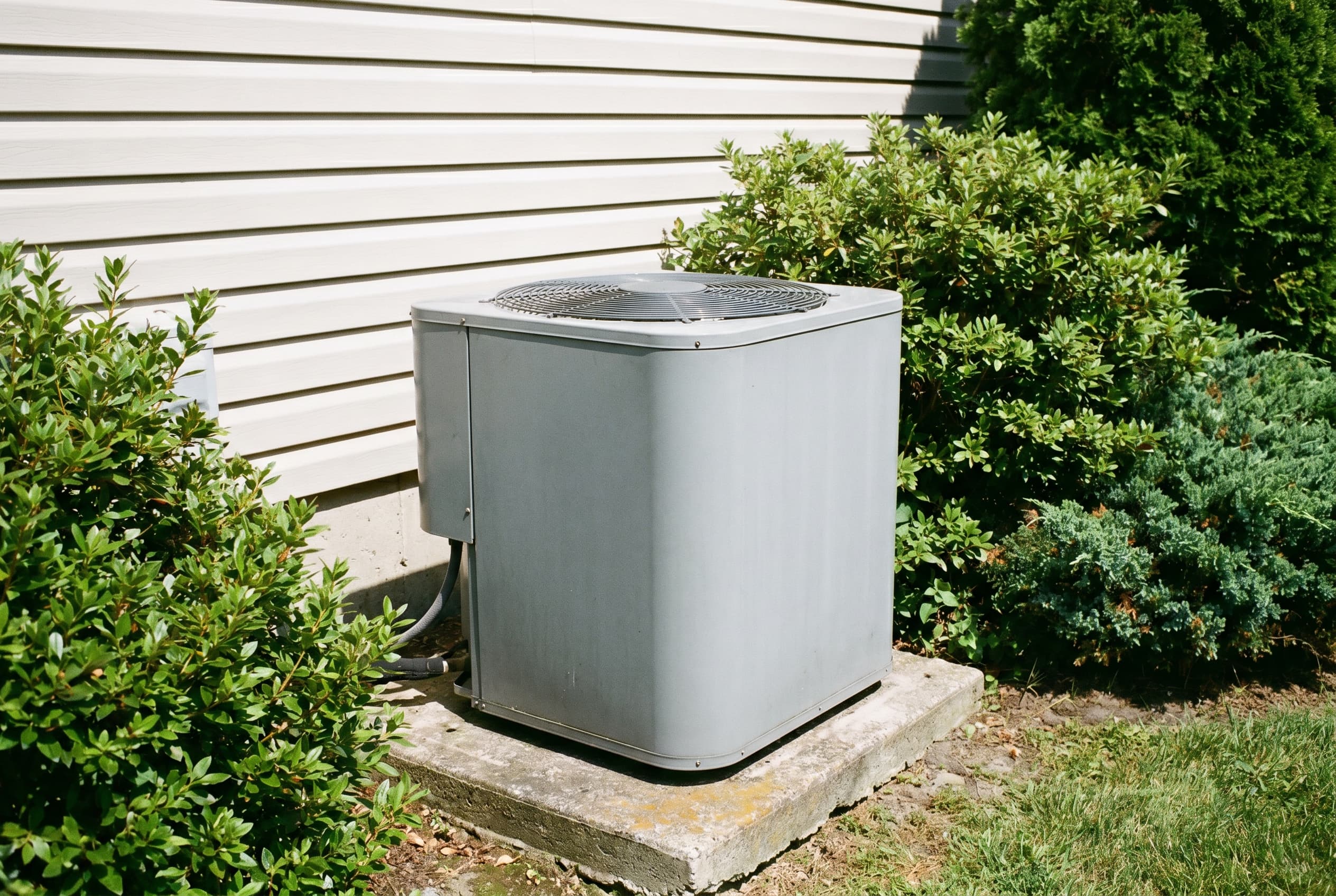
If you are replacing a system on Long Island and someone has floated a heat pump, the first question is usually simple: what is the difference between a heat pump and an air conditioner, and which should you actually install? The short version is that an air conditioner only cools your home, while a heat pump cools your home in summer and heats it in winter from the same unit. This guide breaks down how they compare on cooling, heating, cost, energy efficiency, and rebates, so you can pick the right system for your Suffolk County home.
We put in both across Long Island every week, so nothing below is written to steer you toward the more expensive one.
The one real difference between a heat pump and an air conditioner
Here is the thing most people do not realize: a heat pump and an air conditioner are nearly the same machine. Both use a refrigerant cycle and a compressor to move heat out of your home, and in cooling mode they work identically. The only mechanical difference is that a heat pump adds a reversing valve, which lets it run the cycle backward and move heat into your home in winter.
So an AC unit is a one-way machine: it cools your home and that is it. A heat pump is a two-way machine: it cools your home in summer exactly like a central AC, then heats your home in winter. That single capability, heat and cool from one system, is the entire heat pump vs air conditioner decision.
How each one works
An air conditioner pulls heat energy out of your indoor air and dumps it outside, leaving cool air behind. It does not make cold, it moves heat. The indoor air handler blows your home's air across a cold coil, and the outdoor unit rejects that heat to the outside air.
A heat pump does the same thing in summer. In winter it reverses: it pulls heat energy out of the outside air, even when it is cold out, and moves it inside to heat your home. A heat pump does not generate heat by burning fuel the way a gas furnace does. It moves existing heat from the outdoor air indoors, which is why it is so efficient. Air source heat pumps are the standard type on Long Island, pulling heat from the air rather than the ground.
Cooling: a heat pump and an AC are a tie
In cooling mode, there is no meaningful difference. A heat pump and an air conditioner cool your home the same way and are rated on the same scale, the seasonal energy efficiency ratio, or SEER2. A heat pump with the same SEER2 as a central AC unit will cool your Long Island home just as well, run the same cooling mode, and use the same electricity doing it. If all you care about is summer comfort, you give up nothing by choosing a heat pump. This is the part people get wrong: they assume a heat pump is a compromise on cooling. It is not.
Heating: where the two part ways
This is where the heat pump earns its keep. An air conditioner cannot heat your home at all, so an AC always needs a separate heating system, usually a gas furnace or another fuel system, to get through a Long Island winter. You are running and maintaining two machines.
A heat pump provides heat on its own. A cold-climate heat pump delivers full heat down around 5 degrees and keeps working below zero, which covers nearly every Suffolk County winter day. On the coldest nights, a heat pump can lean on electric heat strips, also called auxiliary heat, or you can pair it with a furnace in a dual fuel system, sometimes called a dual-fuel heat pump setup, where the heat pump handles most of the season and a gas furnace kicks in only in a deep freeze. Either way, the heat pump does the heavy lifting and you skip burning fuel most of the winter.
Cost: upfront price vs total value
A heat pump costs a little more upfront than a comparable air conditioner, because of the reversing valve and the controls that let it heat. On the AC side, remember you still have to buy and maintain a furnace, so the real comparison is a heat pump against an air conditioner plus a furnace system.
Looked at that way, the heat pump often comes out ahead. It is one system instead of two, and it qualifies for incentives an AC does not. The federal picture changed recently, the 25C tax credit expired at the end of 2025, so for 2026 installs there is no federal credit on either system. But the PSEG rebate is the big one, and it only goes to heat pumps.
Rebates: the heat pump's trump card
A heat pump that becomes your home's primary heat can qualify for the PSEG Long Island rebate, a flat amount per home: $4,000 at market rate, $5,000 for homes in a Disadvantaged Community, and $7,500 for income-qualified households under 60% of state median income. On Long Island, PSEG administers the NYS Clean Heat program, so that is one rebate, not a PSEG rebate plus a separate Clean Heat rebate stacked together. PSEG Rate 580 takes 45% off your electric usage above 400 kWh a month, October through May. It is a rate discount, not a rebate.
A cooling-only central air conditioner qualifies for none of this. When you put the heat pump rebate against the sticker-price gap, the heat pump frequently ends up cheaper net than an AC-plus-furnace replacement. Our rebates and savings guide covers what your home qualifies for.
Energy efficiency and running cost
In summer, a heat pump and an AC unit with the same SEER2 cost the same to run. The energy efficiency story changes in winter. Because a heat pump moves heat instead of generating it, it delivers two to three units of heat for every unit of electricity, which usually beats electric resistance heat outright and often runs at or below the cost of a gas furnace through Long Island's milder stretches. An energy-efficient heat pump that also cools is doing two jobs that used to take two machines.
When an air conditioner still makes sense
We will tell you straight when to just replace the AC. If your gas furnace is newer and only your central air conditioner failed, replacing the AC alone is often the cheaper, simpler move, since you are not touching a heating system that still has years left. Some homeowners also prefer to keep a fuel system they already trust. And if you want a middle path, a dual fuel system pairs a new heat pump with your existing gas furnace, so you get heat pump efficiency most of the year and gas backup on the coldest days.
Which is right for your Long Island home?
If your AC and your furnace are both aging, a heat pump is usually the better total-value choice: one system to cool and heat your home, no separate furnace to run, and a real shot at $4,000 to $7,500 back from PSEG. If only your AC died and your furnace is solid, replacing the air conditioner alone can be the smarter spend. The right heat pump or AC decision comes down to the age of your equipment, your ductwork, and whether cutting your winter heating bill matters to you.
The best way to know is to have someone look at your setup. Our heat pump installation and central air installation pages cover both sides, and our guide on heat pump vs oil furnace digs into the heating-cost comparison.
Call or text 631-209-7090 and tell us what is in the house now. We will walk it, run both numbers with the rebate included, and if a plain air conditioner is the better buy for you, we will say so.
Frequently Asked Questions
An air conditioner only cools your home. A heat pump cools your home in summer the exact same way, then reverses to heat your home in winter. Mechanically they are nearly the same machine: both use a refrigerant cycle to move heat. The heat pump just adds a reversing valve so it can run in heating mode too. That one difference is the whole comparison.
Yes. In cooling mode a heat pump and an air conditioner are functionally identical, and they are rated on the same SEER2 scale for efficiency. A heat pump with the same SEER2 as an AC unit will cool your Long Island home just as well and use the same amount of electricity doing it. You give up nothing on cooling by choosing a heat pump.
A heat pump costs a little more upfront than a comparable air conditioner because of the extra components that let it heat. But a heat pump replaces both your AC and your furnace, so you are buying one system instead of two. It also qualifies for the PSEG Long Island rebate, from $4,000 to $7,500 by income tier, which an AC-only system does not. Factoring the rebate in, the heat pump often costs less net.
Yes, if you install a cold-climate model. A modern cold-climate heat pump delivers full heat down around 5 degrees and keeps working below zero, which covers nearly every Long Island winter day. On the rare brutal night, electric heat strips or a backup furnace in a dual fuel system carry the load. Pairing a heat pump with a gas furnace gives you efficient heat most of the winter and gas heat in a deep freeze.
If your furnace and AC are both aging, a heat pump usually wins because it handles cooling and heating in one system and qualifies for the rebate. If you have a newer furnace and only your AC died, replacing the AC alone can be the cheaper move. The right call depends on the age of your existing equipment and whether you want to cut your heating bills.
No. The PSEG Long Island rebate is for heat pumps that become your home's primary heat, not for cooling-only air conditioners. A heat pump can qualify for a flat rebate of $4,000 at market rate, $5,000 for Disadvantaged Community homes, and $7,500 for income-qualified households. A new central AC gets none of that, which is a real part of the cost comparison.