Ductless Mini-Split Cost on Long Island (2026)
What a ductless mini split costs on Long Island in 2026: install prices by zone, the factors that move the number, and the PSEG rebates that apply.
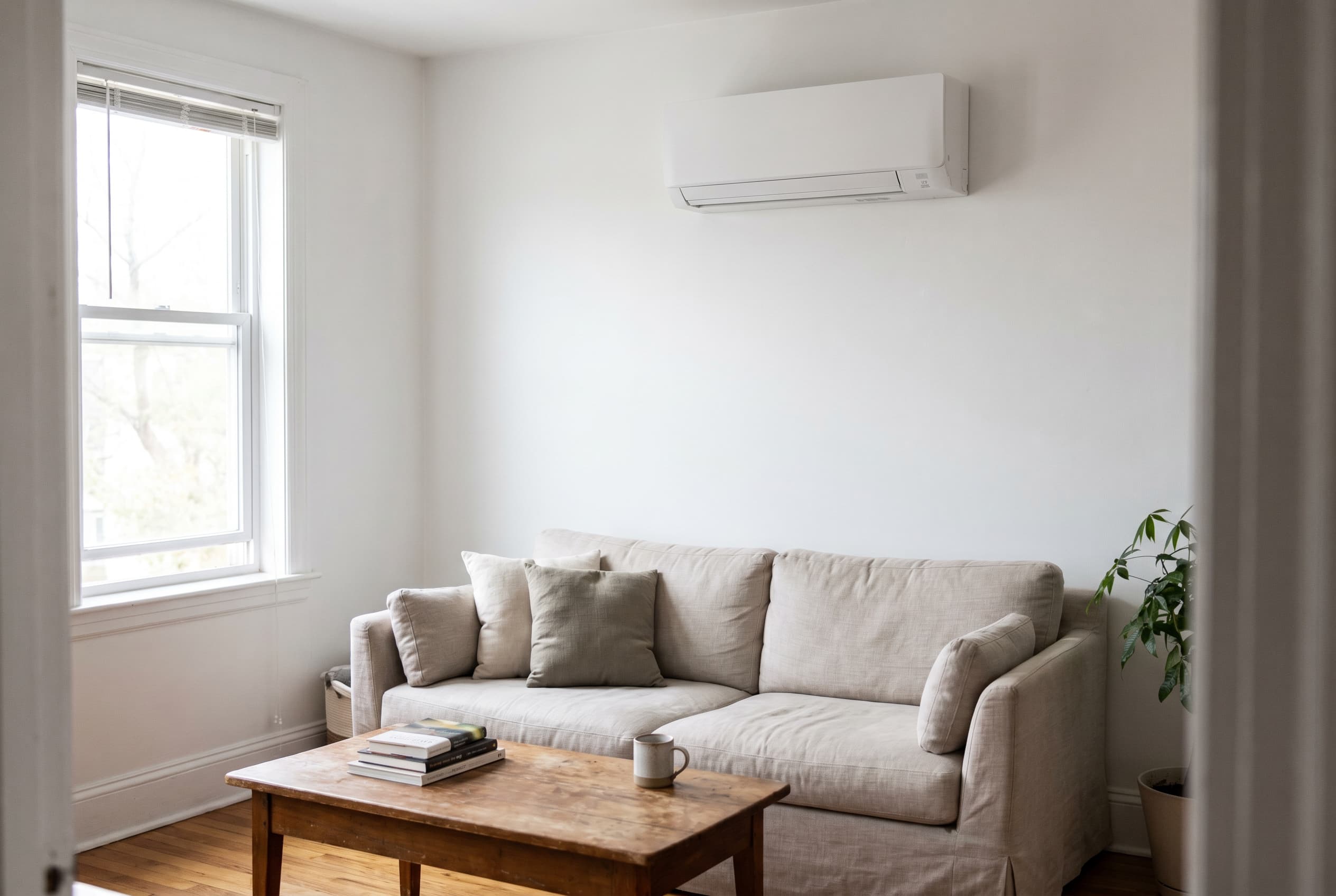
If you are pricing out a ductless mini split for your Long Island home, you want a real number, not a brochure. So how much does it cost? This guide lays out what a ductless mini split actually costs to install in Suffolk County in 2026, the cost factors that move the price up or down, how single-zone and multi-zone systems compare on cost, and which rebates bring the number down. We install and service mini splits all over Long Island, so these are the ranges we actually quote, not a national average cost.
How much does a ductless mini split cost on Long Island?
Here is the short answer. A single-zone mini split runs about $5,000 to $8,000 installed on Long Island. A two-zone system runs about $7,500 to $10,000, and a three-zone system lands between $10,000 and $15,000 before any rebates. Those ranges hold for most mini splits we install across Suffolk County. If you are cross-shopping ductless against a ducted whole-home heat pump, our heat pump cost guide for Long Island puts those numbers side by side.
That is a wide range because the total cost of mini splits depends on a handful of real variables: how many zones you need, the BTU size of each indoor unit, how far the refrigerant line set has to run, and how much electrical work your house needs. Mini splits are not a one-price product, and any HVAC contractor who quotes a flat number sight unseen is guessing. A simple one-room mini split on an exterior wall near your panel sits at the low end. A four-zone system feeding bedrooms on the far side of the house sits at the high end. We give a firm mini split quote after seeing the home, never a guess over the phone, because the house drives the price.
What it costs to install a ductless mini split: equipment and labor
A ductless mini split cost splits into two parts, the equipment and the install, the same as any HVAC system. Like most HVAC systems, mini splits are priced by capacity and complexity, and an air conditioner that also heats costs about the same as a cooling-only one.
The equipment. Every system has an outdoor unit, the compressor, and one or more indoor units, also called indoor air handlers or heads. A single-zone system is one outdoor unit and one indoor head. The indoor and outdoor units are matched and rated in BTU for the load they serve, and in SEER2 for efficiency. A higher SEER2 rating and better system efficiency cost more upfront but use less electricity, which matters on Long Island where PSEG rates are not cheap. Most quality residential equipment, including the Daikin systems we default to, is energy-efficient inverter technology that modulates instead of cycling. Whether you want a cooling-only mini split AC or a mini split heat pump that also heats, the equipment cost is similar, and the heat pump version is what qualifies for rebates.
The labor and materials. This covers mounting the indoor units, running the refrigerant lines and line set, the condensate drain, and the control wiring out to the outdoor unit, plus the electrical work. Professional installation is where a mini split lives or dies, and the refrigerant work in particular is not a DIY job. A clean install with short, hidden line runs and a proper load calculation performs for fifteen-plus years. A rushed one with refrigerant lines stapled across the front of the house and guessed-at sizing leads to callbacks.
The cost factors that actually move the number
When we quote a mini split installation cost, these are the things that swing it the most. They are the same cost levers across all mini splits, whatever brand of HVAC equipment you choose.
Number of zones. This is the single biggest driver. Each zone is another indoor unit and more line set, so cost scales with how many rooms you condition. Going from one zone to four roughly quadruples the indoor equipment. This is why multi-zone mini splits cost more than single-room mini splits.
System size in BTU. Bigger rooms need more BTU, and a load calculation based on square footage in sq ft, insulation, and window exposure sets the right size. Oversizing wastes money and hurts humidity control through a Long Island summer; undersizing leaves rooms uncomfortable. Right-sizing is not guesswork.
Installation complexity. A simple mount on an accessible exterior wall is quick. Installation complexity, like brick walls, tight crawlspaces, or three-story runs, drives up the equipment and labor costs because the job simply takes longer.
Line set length and routing. A short, simple run from the indoor unit to a nearby outdoor unit is cheap. Long runs, second-story units, and tricky routing through finished walls add labor and material.
Electrical work. Every outdoor unit needs a dedicated circuit. If your electrical panel is full, electrical upgrades or a sub-panel add to the project cost. This is the cost people most often forget to budget for.
Efficiency and brand. A higher SEER2 rating and a premium brand cost more upfront and pay back in lower bills and longer warranty coverage.
Single-zone vs multi-zone: the cost comparison
The mini split vs multi-zone decision is really a cost-and-layout decision, so this is where a lot of the budget question gets answered.
Among HVAC options, a single-zone mini split is the cheapest way into ductless because it is one of everything: one outdoor unit and one indoor unit, for one room. It is perfect for a single trouble spot, a converted attic, a sunroom, an addition, or a bedroom that bakes in July, and it runs at peak efficiency because the compressor is matched to a single load.
A multi-zone system uses one outdoor unit to feed multiple indoor units, usually two to five on a residential system. The number of indoor units is what drives the price, so a 3 zone mini split costs more than a 2 zone. Each indoor unit still controls its own room, giving you precise temperature control room by room across the entire home. On cost, a multi-zone system runs more than a single-zone unit but usually less than installing several separate single-zone systems for the same number of rooms, because you buy and mount only one outdoor unit. As a planning number, each additional zone adds roughly $2,000 to $5,000 on Long Island.
Here is the rule of thumb we use. For two or three rooms that sit close together, a multi-zone system is the smart pick on both cost and tidiness, since you are not lining the side of your house with outdoor units. For rooms on opposite ends of the house, or rooms you are adding years apart, separate single-zone systems can actually cost less in line set and keep each zone fully independent, so one failure never takes out the whole house. Both setups give you the room-by-room comfort that central air conditioning systems cannot, which is why so many Long Island homeowners pick mini splits over a ducted HVAC system in the first place.
How to save on mini split installation cost
A few things genuinely lower the cost of installing a ductless system without cutting corners. Right-size rather than oversize, since paying for more BTU than the room needs wastes money on equipment and on a system that short-cycles. Group your zones, because indoor units close together share shorter refrigerant lines and one outdoor unit. Bundle the whole project at once rather than installing a mini split system one room per year. And take the rebate, covered below, which is the single biggest way to save on mini split installation.
Running cost: the number after install
The install is a one-time cost. The running cost is where mini splits beat most other HVAC systems. Because every indoor unit is an inverter that modulates, and because you only heat and cool the rooms you use, mini splits cost far less to run than window units or electric baseboard. That energy efficiency is a core reason a mini split system pays back its higher upfront cost. Close the door on a guest room and stop paying to condition it, something a central HVAC system tied to one thermostat cannot do. Mini split air conditioners that double as heat pumps give you both seasons from one efficient unit, and they can cut heating cost versus oil since a heat pump moves heat instead of burning fuel.
Rebates that lower the cost on Long Island
This is the part that brings the number down, and it only runs one way.
A ductless heat pump qualifies for the PSEG Long Island rebate when it can supply full heat for your house without an auxiliary heat source, a flat amount per home: $4,000 at market rate, $5,000 for homes in a Disadvantaged Community, and $7,500 for income-qualified households under 60% of state median income. On Long Island, PSEG administers the NYS Clean Heat program, so that is one rebate, not a PSEG rebate plus a separate Clean Heat rebate stacked together.
What can genuinely add to it is PSEG Rate 580, which takes 45% off your electric usage above 400 kWh a month, October through May. It is a rate discount, not a rebate. NYSERDA EmPower+ weatherization for income-qualified homes runs alongside it, administered by NYSERDA rather than your utility. The federal 25C tax credit that used to help expired at the end of 2025, so for 2026 installs do not count on a federal credit.
The rule is categorical: a single-zone mini split does not qualify, because one zone can't carry the whole house. Two zones and up do, once the system replaces your old heat. We are a PSEG participating contractor and handle the paperwork. Our rebates and savings guide breaks down exactly what your home qualifies for.
Is a mini split worth the cost?
For the right house, yes. In an older Long Island home with no ductwork, a ductless system is often cheaper than installing central air because you skip building ducts, which is the expensive part of a ducted system. Mini splits also offer precise temperature control room by room, better indoor air quality with regular filter cleaning, and one system that handles cooling and heating. If you want to condition the whole house, you may need a multi-zone system with several heads sized to the outdoor and indoor units together. Add the PSEG rebate and the lower running cost, and the investment usually pencils out over the life of any of these HVAC systems.
If your home already has good ductwork, it is worth comparing ductless against a ducted system. Our heat pump installation page covers whole-home ducted heat pumps, and our ductless mini-split installation page covers the ductless side in detail. For a room addition specifically, our guide on using a ductless mini-split for additions digs into that exact case.
Get a real mini split quote
Online cost calculators guess. We measure. Unlike a lot of HVAC work, mini splits price out cleanly once someone actually sees the job, so the only way to know what a ductless system will cost for your home is to have someone look at your rooms, your panel, and how the line sets would run, then size each zone properly.
Give us a call or text at 631-209-7090 and tell us which rooms you want to condition. We install mini splits across the area every week, so we will walk your home, do the load calculation, tell you straight whether a single-zone or multi-zone system fits, and give you a firm number with the rebate already factored in. No pressure and no online-booking runaround, just a real quote for your Suffolk County home.
Frequently Asked Questions
Most single-zone ductless mini split installations on Long Island run about $5,000 to $8,000 installed. A two-zone system runs about $7,500 to $10,000, and a three-zone system about $10,000 to $15,000. The spread comes from the number of zones, the size of the units in BTU, and how much electrical and line-set work your house needs.
A single-zone mini split is the cheapest entry point because it is one outdoor unit and one indoor unit. A multi-zone system costs more upfront, but usually less than installing several separate single-zone systems for the same number of rooms, because it shares one outdoor unit. As a planning number, each additional zone adds roughly $2,000 to $5,000 on Long Island, with the firm price depending on your home.
The biggest cost factors are the number of zones, the BTU size of each unit, how far the refrigerant line set has to run, and any electrical work like a new dedicated circuit or a panel upgrade. SEER2 efficiency rating, brand, and how easy the indoor units are to mount also move the number. A simple one-room install on an exterior wall near the panel is cheap; a four-zone system with long line runs is not.
They do, once the system can supply full heat for your house without an auxiliary heat source, the same rule PSEG applies to any heat pump. The PSEG Long Island rebate is a flat amount by income tier, from $4,000 at market rate up to $7,500 for income-qualified households. A single-zone mini split does not qualify, because one zone can't carry the whole house. Two zones and up do. We handle the application as a participating contractor.
It depends on the house. In a home with no existing ductwork, a ductless mini split is often cheaper than installing central air because there is no ductwork to build, which is the expensive part of a ducted system. In a home that already has good ducts, central air can be the more cost-effective choice. For older Long Island homes with hot-water or steam heat and no ducts, ductless usually wins on total cost.
Well-maintained mini splits last about 15 to 20 years on Long Island, longer than many other HVAC systems. Because they heat and cool efficiently and let you condition only the rooms you use, most homeowners see lower energy bills than window units or electric baseboard, and a heat pump version can cut heating costs versus oil. Between the energy savings, the PSEG rebate, and getting both heating and cooling in one system, the cost usually pencils out.