Heat Pump vs Oil Furnace on Long Island
Heat pump vs oil furnace for Long Island homes. Real fuel costs, efficiency data, and the rebates that help Suffolk County homeowners decide which to install.
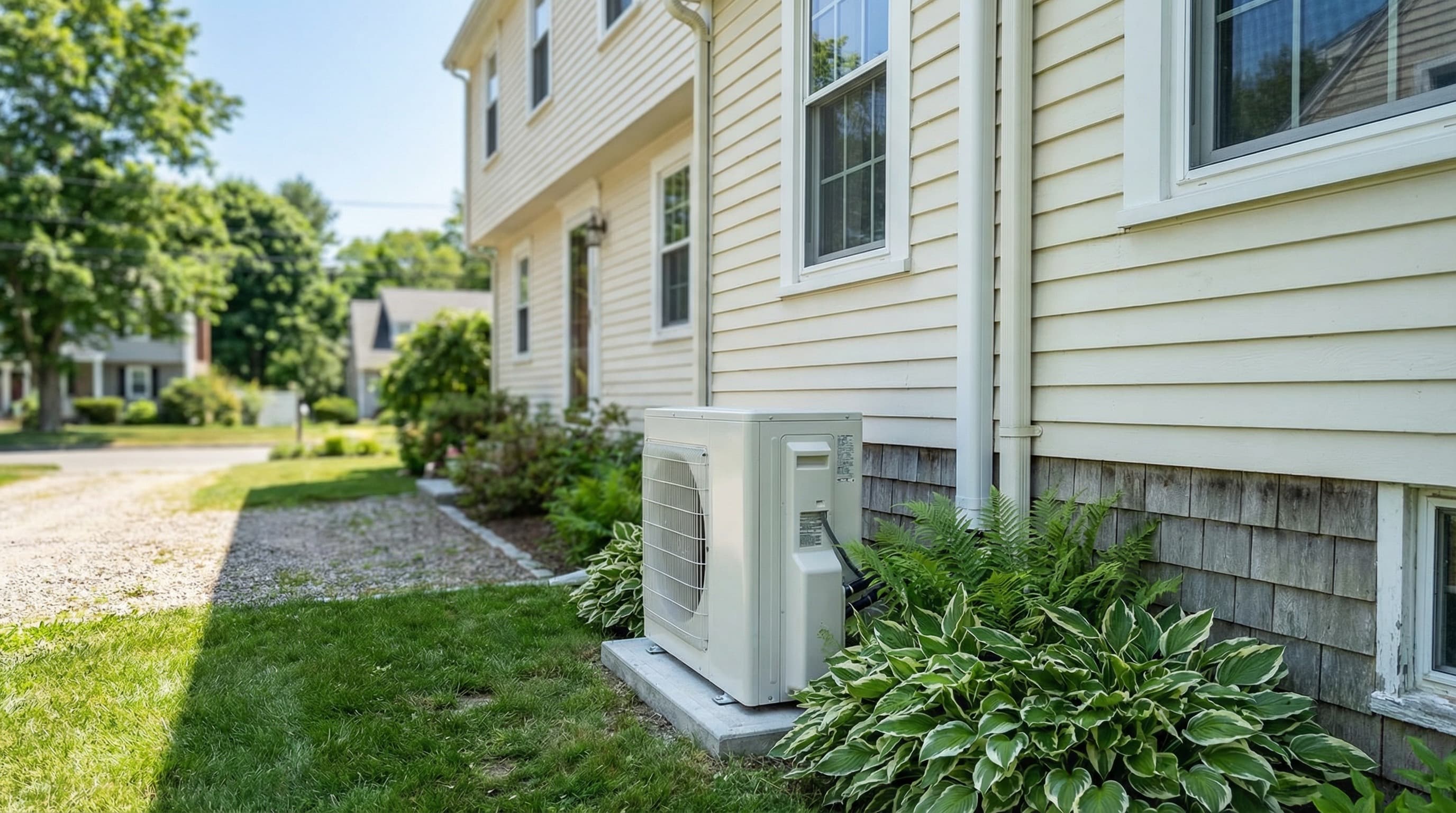
If you're still heating your home with oil on Long Island, you've probably noticed the bills creeping up every winter. And if you've looked into alternatives, you've seen heat pumps everywhere. There's a reason for that. The math on switching has shifted pretty dramatically in the last few years, and a lot of Suffolk County homeowners are making the move.
But a heat pump isn't automatically the right call for every home. Let's break down how a heat pump vs oil furnace actually compares when you factor in what it costs to operate, what the installation looks like, and what kind of rebates are on the table right now.
How a Heat Pump Works (And Why It's Different From Oil)
An oil furnace generates heat by burning fuel oil in a combustion chamber. That heat gets distributed throughout your home via ductwork or baseboards. Simple, proven, and it works. The downside is you're paying for oil delivery every few weeks and burning oil at whatever the current price happens to be.
A heat pump works completely differently. Instead of burning anything, it extracts heat from the outside air and transfers it inside. (If you want the full breakdown, we wrote a plain-English guide to how heat pumps work.) Even when it's cold out, there's still thermal energy in the air, and a heat pump pulls it in. This is why heat pumps are so much more efficient than oil. They're not creating heat from scratch, they're moving it. For every unit of electricity a heat pump uses, it can produce about 2.5 to 3.5 units of heat.
And here's the part a lot of people miss: a heat pump provides both heating and cooling in one system. You don't need a separate air conditioning system. That alone changes the math for a lot of homeowners who are also looking at replacing their AC.
The Cost of Heating With Oil vs. a Heat Pump
This is where it gets real. On Long Island, oil prices have bounced around between $3.00 and $4.50 a gallon over the last few years. A typical Suffolk County home burns 800 to 1,200 gallons a year depending on the size of the house and how well it's insulated. That's $2,400 to $5,400 a year just on heating oil, not counting the annual heating tune-up on the burner and any furnace repair work the oil system needs along the way.
A heat pump system running on PSEG Long Island electricity is typically 2 to 3 times more efficient than oil in terms of energy costs. Most homeowners we talk to see winter heating costs drop to somewhere between $1,200 and $2,500 a year after switching. The exact savings depend on your home's insulation, how cold the winter gets, and whether you're on PSEG's Rate 580, which takes 45% off your electric usage above 400 kWh a month, October through May. It is a rate discount, not a rebate.
The operating cost difference adds up fast. Over 10 years, you could be looking at $15,000 to $30,000 in savings depending on oil prices and your usage. That's real money. If you heat with natural gas instead of oil, the comparison is a lot closer, and we break that down in our heat pump vs gas furnace comparison.
Do Heat Pumps Work in Long Island's Cold Weather?
This is the big question everyone asks, and the answer has changed a lot in the last five years. Older heat pumps lost efficiency in extreme cold and needed backup heating once it dropped below 30 or so. That's not the case anymore.
Modern cold climate heat pumps, like the Mitsubishi Hyper-Heat or Daikin Fit, hold their rated heating capacity down to roughly 5 degrees and keep operating below that with reduced output. Long Island winters rarely dip below the teens, which is comfortably inside the range where these systems are still making full capacity. That is why they deliver reliable heat through January and February here.
That said, if your home has poor insulation or if you're in a particularly exposed coastal spot where nor'easters hit hard, you'll want to make sure the system is sized correctly. An undersized heat pump in a drafty house is going to struggle, and that's not the equipment's fault, that's a sizing problem. We always do a Manual J heat loss calculation before recommending a system.
For most Suffolk County homes built in the 50s, 60s, and 70s with decent insulation, a properly sized air-source heat pump handles winter heating just fine.
Installation: What to Expect and What It Costs
Installing a heat pump when you're converting from oil isn't quite as simple as a swap. Here's what the project usually looks like:
The outdoor condenser unit gets placed on a pad next to the house. Indoor air handlers or a ducted unit get connected to your existing ductwork if you have it. If you don't, you're looking at a ductless mini split setup with wall-mounted heads in each zone.
On Long Island, a ducted heat pump installation typically runs $12,000 to $20,000 installed before rebates. A ductless multi-zone system is usually $15,000 to $25,000 depending on how many heads you need. Those numbers sound steep, but keep reading, because the rebate situation right now is the best it's ever been.
You'll also want to factor in removing the old oil tank if you're going all-electric. Tank removal on Long Island runs $1,500 to $3,000 depending on whether it's above ground or buried. Some homeowners keep the oil boiler as backup heating for the first winter or two while they get comfortable with the heat pump, and that's a totally reasonable approach. If the boiler stays, regular boiler repair and service keeps that backup actually functional when you need it.
Rebates That Make the Switch Worth It
This is where choosing between a heat pump and an oil furnace really tips in the heat pump's favor.
PSEG Long Island pays a flat heat pump rebate set by household income tier: $4,000 at market rate, $5,000 or $7,500 if you're income-qualified. Because PSEG administers the NYS Clean Heat program on Long Island, that is one rebate rather than a PSEG amount plus a separate Clean Heat amount. The federal 25C credit expired on December 31, 2025 and does not apply to 2026 installs.
On a $16,000 system, that rebate brings the net cost down to roughly $8,500 to $12,000 depending on your tier. Factor in the annual cost savings on heating and most homeowners are looking at a payback period in the 5 to 9 year range. After that, the savings are pure upside.
There are no rebates for installing a new oil furnace. None. The incentive structure is very clearly pushing homeowners toward electric heat, and the numbers reflect that.
Which Is the Best Choice for Your Home?
For most Suffolk County homeowners who are currently heating with oil, a heat pump conversion makes financial sense. The operating costs are lower, the rebates are substantial, you get air conditioning included, and you eliminate oil delivery and the hassle of managing an oil tank.
The main exception is if your home has serious insulation issues or if you're planning to sell in the next year or two and don't want to take on the project. In those cases, it might make more sense to keep the oil furnace running and invest in insulation first.
If you're on the fence, the best next step is a straightforward one. Give us a call or shoot us a text at 631-209-7090. We'll take a look at your setup, run the numbers for your specific home, and tell you whether a heat pump makes sense or if you're better off sticking with oil for now. No pressure either way.
Want the full picture? Our complete heat pump guide for Long Island homeowners covers everything from how they work to what brands we install and which rebates are available right now.
Frequently Asked Questions
Yes. Older heat pumps lost efficiency in extreme cold and needed backup heat below about 30 degrees. Modern cold-climate heat pumps hold their rated heating capacity down to roughly 5 degrees and keep operating below that with reduced output. Long Island winters rarely dip below the teens, which is comfortably inside the range where these systems are still making full capacity.
A typical Suffolk County home burns 800 to 1,200 gallons of oil a year, which at recent Long Island prices is roughly $2,400 to $5,400 a year on fuel alone. A heat pump is typically 2 to 3 times more efficient, and most homeowners we talk to see winter heating costs land between $1,200 and $2,500 a year after switching.
For most Suffolk County homeowners currently heating with oil, a heat pump conversion makes financial sense. Operating costs are lower, the rebates are substantial, you get air conditioning included, and you drop oil delivery and the oil tank. The main exception is a home with serious insulation problems, or a plan to sell within a year or two.
Related Articles
Heat Pump Installation: What to Expect
Here's what to expect during a heat pump installation on Long Island, from initial walkthrough through commissioning. Timeline, rebates, install day details.
Is an Oil-to-Heat-Pump Conversion Worth It?
Thinking about an oil to heat pump conversion on Long Island? We compare real costs, savings, rebates, and payback periods so you can decide if it makes sense.
What Size Heat Pump Do You Need for a Long Island Winter?
Heat pump size on Long Island: what size heat pump do you need for your home, and why BTUs at 17 degrees matter far more than the ton printed on the label.