AC Compressor Replacement Cost on Long Island
Honest 2026 AC compressor replacement costs for Long Island. Real price ranges, repair vs replace math, failure signs, and the warranty traps to know.
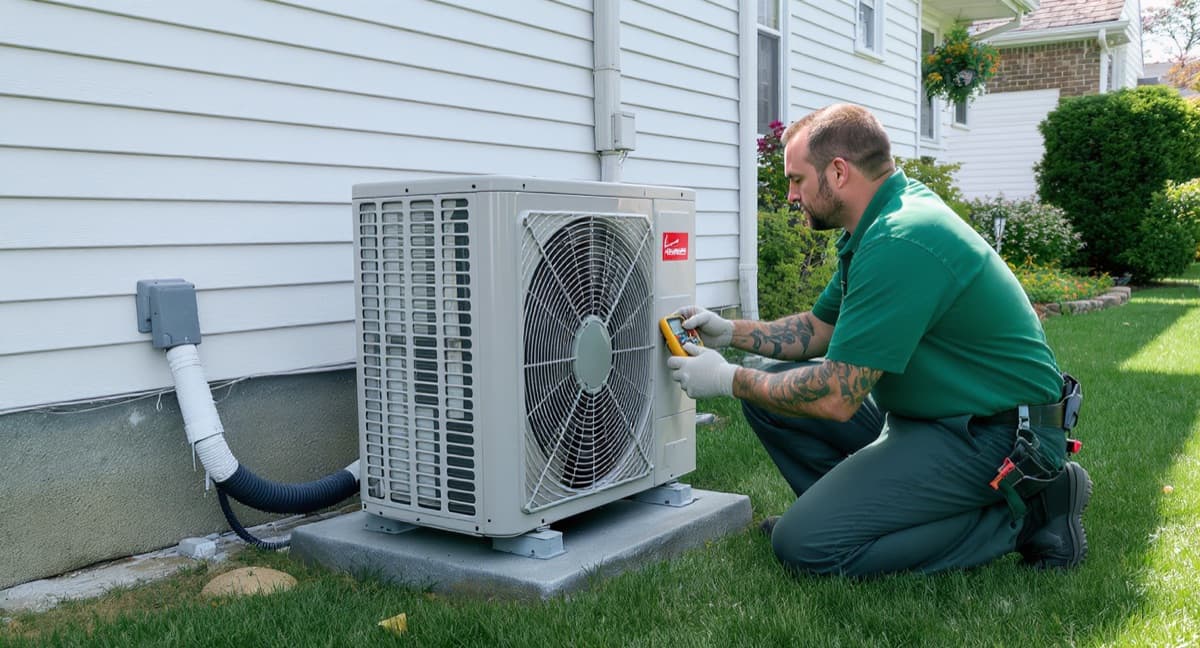
If a tech tells you your AC compressor is shot, the next sentence is usually a number that makes you sit down. Compressor replacement is one of the most expensive single repairs on a residential central air system, and on Long Island the average ac compressor replacement cost lands between $1,800 and $3,500 once parts, labor, and refrigerant are all in. Sometimes higher, depending on the size of your home and the type of compressor you have.
Before you write that check, here's what you actually need to know about ac compressors: what they do, why compressor failure happens, what the real numbers look like in 2026, and when replacing the compressor is the right move versus replacing the entire ac system.
What an AC compressor actually does
The compressor is the heart of your air conditioner. It lives inside the outdoor unit (the condenser) of a central ac system, and its job is to pressurize refrigerant and push it through the system. Refrigerant absorbs heat inside your house, the compressor pumps it outside, and the heat gets dumped into the air through the condenser coil. No working compressor, no cooling. It's that simple.
Most residential systems use a scroll-type of compressor, which is reliable but expensive to replace. A few older or budget ac units still use reciprocating or rotary compressors, but for anything installed in the last fifteen years on Long Island, you're almost certainly dealing with a scroll. Window unit and window ac systems use smaller, cheaper rotary compressors that aren't worth replacing on their own. If a window unit dies, you just buy a new one.
Signs of a failing compressor
A bad compressor doesn't always die suddenly. There are usually signs of a failing compressor in the days or weeks before the unit quits entirely. Things to watch for:
The system is blowing warm air from the vents even though it's running. This usually means the compressor isn't pumping refrigerant the way it should.
The outdoor unit hums but won't start, or it labors and clicks off after a few seconds.
The compressor trips the breaker the second it tries to kick on.
You hear unusual noises from the outdoor unit, things like grinding, rattling, and banging. Compressor symptoms include unusual noises that get louder over time, and they're a sign the internal components are coming apart. We covered the most common ac noises and what they actually mean here if you want to figure out whether what you're hearing is the compressor or something else.
The unit short-cycles, turning on and off every few minutes without ever cooling the house.
A failed compressor doesn't fix itself. Once it's gone, you're choosing between replacement of the part or replacement of the whole condenser.
Why compressors fail
Compressors don't usually die out of nowhere. They fail because something else in the system was wrong for a long time and the compressor took the abuse.
The most common killers are low refrigerant from a slow leak, a failed capacitor that the compressor was forced to start without, dirty condenser coils that made the unit run hot for years, and electrical issues that overheated the windings. A broken compressor that locked up because of a bad capacitor is a totally preventable failure. We see it all the time, which is why we tell homeowners that a $20 capacitor replaced on time can save them a $2,500 compressor later.
Age matters too. Most compressors are designed to last 12 to 15 years of service. If yours is past that, the manufacturer warranty is gone, the rest of the hvac system is also worn out, and you're throwing good money after bad if you replace just the compressor.
What an ac compressor replacement actually costs in 2026
Here's the honest breakdown of replacement costs for a 2 to 5 ton residential system on Long Island. Numbers are 2026 retail compressor prices, including parts, labor, and refrigerant recharge. Tax not included.
Compressor part itself: $600 to $1,500 depending on tonnage, brand (Copeland scroll vs cheaper alternatives), and whether you're matching an OEM unit. Different ac compressor models can vary widely in price even at the same tonnage.
Labor: $800 to $1,400. Labor costs and labor rates on a compressor swap reflect that ac compressor installation is real work. The tech has to recover the existing refrigerant, cut the suction and discharge lines, remove the old compressor, install the new one, braze the lines, pull a vacuum on the system, leak test, and recharge with refrigerant.
Refrigerant: $200 to $700 depending on whether your system uses R-410A or the newer R-32, and how much got lost in the failure or recovery. R-410A has gotten more expensive every year as it's phased out, and if your system needs a top-up it's running about $100 to $150 per pound retail in 2026.
New filter drier and contactor (almost always replaced at the same time): $80 to $150.
All in, you can expect to pay around $1,800 on the low end for a small 2-ton system out of warranty, and $3,500+ for a larger 4 or 5 ton system, especially if the part is hard to source. Costs range higher in some cases, particularly if there are additional costs from code work or matched coil replacement. Anyone quoting under $1,500 is either cutting corners (skipping the vacuum, skipping the filter drier, lowballing refrigerant) or it's a scam. We've seen both. Here's how we approach AC repair work on Long Island homes and what's actually included when we quote a compressor swap.
If your compressor is still under warranty (most are 10 years from install date if it was registered), the part itself is free and you're really paying for labor and refrigerant. That changes the math a lot, which we'll get to.
Repair vs replace: the math that actually matters
This is where homeowners get into trouble. The cost of replacing an ac compressor runs $1,800 to $3,500. A new condenser unit, properly matched and installed, is roughly $5,500 to $8,500 on Long Island in 2026. So replacing your ac compressor looks like a clear win, right?
Not always. Here's the rule we use at PHA, and most reputable Long Island contractors use a version of it to figure out when it's worth replacing versus when it's time to replace the entire ac unit:
If the system is under 8 years old and the compressor is under warranty, replace the compressor. The labor and refrigerant cost is real but you're keeping a system that has years of life left.
If the system is 8 to 12 years old, do the math. Get a quote for both options. If the compressor replacement is more than 50% of what a new condenser would cost, replace the entire ac system. You're getting newer technology, a fresh warranty, and you're not gambling on the rest of an aging system. We covered the broader signs it's time to replace the whole AC unit in this guide, and a failed compressor is one of the bigger ones on the list.
If the system is over 12 years old, replace the condenser. Period. A new compressor in an old system is a $2,500 patch job on a unit that's going to need something else expensive in 18 months. We've watched homeowners replace a compressor at year 13, then lose the evaporator coil at year 14, then need a TXV at year 15, and finally replace the whole thing anyway after spending $6,000 in repairs. Don't be that homeowner. It's not cost-effective to replace a single component when the whole system is on borrowed time.
If your system uses R-22 refrigerant (anything installed before about 2010), replace the entire ac unit no matter what. R-22 is fully phased out, the refrigerant cost alone has gotten brutal, and you can't legally get new R-22 anymore. The newer R-410A or R-32 air conditioning systems are also significantly more efficient.
The hidden costs nobody talks about
A few things that don't show up on the initial quote but matter:
Code compliance. If your existing line set, disconnect, or pad doesn't meet current code, the inspector can require it be brought up. That's $200 to $800 in extras.
Refrigerant type mismatch. If your system is R-410A and the only matching compressor available is for R-32 or vice versa, you can't just swap. You'd need a full system change, which is the same as a condenser replacement.
Diagnosis time. A good tech doesn't just declare the compressor dead. They check the capacitor, the contactor, the start components, the wiring, the pressures, and confirm the compressor windings are actually shorted or the internal valves are blown. Our diagnostic is a flat $129, no trip fee, and that time is worth every penny. If a contractor diagnoses a dead compressor in 10 minutes without testing anything else, get a second opinion. We've also seen "ac compressor repair" quoted on systems that just needed a capacitor swap. A failing component on the outside of the compressor isn't the same as a failed compressor.
What to ask before authorizing the repair
Before you say yes to a $2,500 ac compressor replacement, ask the tech these questions:
How old is the system, and is the compressor still under manufacturer warranty? They should be able to look it up by serial number in 60 seconds.
What killed the compressor? If they can't tell you the cause, you're going to replace the new one in two years. The cause matters.
Are you replacing the filter drier, contactor, and capacitor at the same time? If they say no, find another contractor. These should always be replaced with a compressor swap.
What refrigerant does the system use, and is the new compressor matched? You can't mix refrigerants.
What's the warranty on the new compressor and the labor? Get both terms in writing before you agree to anything. The part usually carries the manufacturer's warranty, and labor coverage varies a lot shop to shop, so ask specifically rather than assuming.
How long do you expect the new compressor to last? A quality replacement ac compressor installed in a clean, properly charged system should last another 10+ years. If the tech is hedging on this, it's a sign the rest of the system is the real problem.
The honest answer most homeowners need to hear
For systems under 8 years old with a warranty-covered compressor, replacement is a no-brainer. For systems over 12 years old, replacement of just the compressor is almost always a mistake. The middle ground (8 to 12 years) is where you actually need a real conversation with a contractor who isn't trying to upsell you a brand new ac unit when a repair makes more sense.
If you're staring at a compressor replacement quote right now and you're not sure which side of that math you're on, get a second opinion. We do free repair vs replace consultations on Long Island and we'll tell you straight whether a compressor swap is the right call or whether you should put the money toward a new system instead. Call or text us at 631-209-7090 to schedule your replacement consultation, or just to get a sanity check on a quote. Our pricing page lists the diagnostic and the common repair ranges if you want the numbers before you call.
Related Articles
Pool Heat Pump Error Codes on Long Island
Pool heat pump error codes explained for Long Island homeowners: the AquaCal OTA alarm, low water flow lockouts, pressure trips, and when to call for repair.
AC Short Cycling: Why Your AC Keeps Shutting Off
AC short cycling on Long Island? The common causes of a short-cycling air conditioner, how to stop it, what the repairs cost, and when to call a pro.
Commercial HVAC Repair on Long Island
Commercial HVAC repair on Long Island can shut a business down fast. What Suffolk County owners should know about cost, timing, and avoiding trouble.