Commercial HVAC Repair on Long Island
Commercial HVAC repair on Long Island can shut a business down fast. What Suffolk County owners should know about cost, timing, and avoiding trouble.
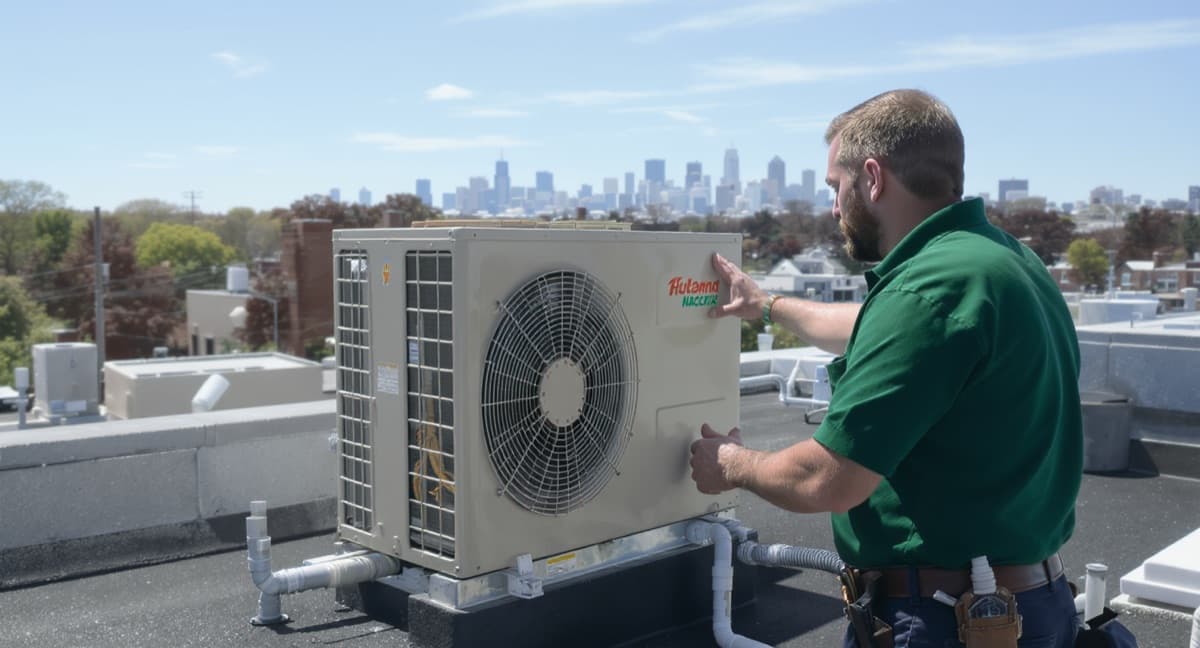
It's 2pm on a 92-degree Tuesday. Your rooftop unit stops blowing cold air. The dining room temperature climbs five degrees in under an hour, customers start asking for the check early, and your line cooks are quietly hating life. By 4pm you're calling around for a commercial HVAC repair tech and finding out the first available slot is Thursday.
That call shouldn't be the first time you talk to an HVAC contractor. Here's what business owners on Long Island should actually know about keeping a commercial HVAC system running, what repair costs really look like, and how to avoid the worst version of that Tuesday afternoon.
Commercial HVAC isn't just bigger residential
It's tempting to think a rooftop ac unit is just an oversized version of what's outside your house. It isn't. Commercial heating and air conditioning equipment runs at higher tonnages, usually has gas heat built in, uses different refrigerant circuits, and includes ventilation hardware (economizers, outside air dampers) that residential systems don't. The runtime hours would burn out a residential condenser in a year or two, and the electrical service is heavier. Diagnostics, parts catalogs, and the tools an hvac technician actually needs are all different.
What that means in practice: a tech who only works on residential central air isn't the right person to diagnose a 7.5-ton Trane or Carrier package unit on the roof of a Patchogue strip mall. The valves, the controls, the staging on the gas section, the economizer linkage, the ventilation dampers, none of that exists on the unit behind your house. When you're vetting commercial HVAC companies, ask how many rooftop units and split DX systems they actively service in Suffolk County. If the answer is vague, keep dialing.
The most common commercial repair calls we see
A handful of issues drive most of the emergency calls in the Long Island light commercial market.
Compressor failures top the list, especially on older R-22 ac units that have been limping along for years. Once a commercial compressor goes, you're looking at $3,500 to $7,500 in parts and labor depending on tonnage, refrigerant type, and warranty status. The decision tree of repair versus replacement gets ugly fast, and we walk through how to think about it in our AC compressor replacement cost guide. The math is different for commercial properties, but the principles hold.
Capacitor and contactor failures are next. These are cheaper fixes for an hvac contractor to handle, usually $250 to $500 with a service call, but they're the kind of part that fails on the hottest day of the year because that's when the equipment is working hardest. A good technician will check capacitance values during regular maintenance and replace anything reading weak before it strands you on a Friday afternoon.
Refrigerant leaks are the slow killer. A commercial ac unit running low on charge limps along, cools poorly, runs nonstop, drops efficiency, and slowly cooks the compressor windings. By the time you notice the temperature creeping up or the energy bills climbing, you might already be looking at a much bigger bill than a leak repair and recharge would have cost six months earlier.
Belt-driven blowers, drain pan overflows, dirty filter restrictions, economizer linkage problems, and igniter or flame sensor faults on the heating side round out the regular roster of commercial heating and cooling repairs.
What a commercial repair call actually costs on Long Island
Honest numbers. A standard daytime service call for light commercial work in Suffolk County usually runs $175 to $275 just to get a qualified technician on site with the truck stocked. Diagnostic time is typically billed at $150 to $225 an hour after the service call.
Common commercial HVAC repair ranges we see, assuming the unit is accessible and parts are stocked:
- Capacitor or contactor replacement: $250 to $500
- Condenser fan motor: $600 to $1,400
- Refrigerant leak repair plus recharge on a 5-ton ac system: $1,200 to $3,500
- Blower motor or VFD: $900 to $2,200
- Gas valve or igniter on the heat section: $400 to $900
- Compressor replacement on a 5 to 10-ton package unit: $3,500 to $7,500
Across the trade, after-hours and weekend emergency repairs typically run 1.5x to 2x the daytime rate. Our technicians are on the road 7am to 7pm and we do not offer after-hours emergency service, so planning the work into the schedule is the cheaper path either way. That is one reason a planned commercial HVAC maintenance schedule almost always pays for itself.
Repair, replacement, or new commercial HVAC installation?
A commercial rooftop unit on Long Island has a realistic service life of 15 to 20 years if it's maintained, less if it's been neglected. The general rule we use: if a single repair will cost more than 40 percent of replacement, and the unit is over 12 years old, a new commercial HVAC installation usually beats another big repair. Energy efficiency on commercial heating and cooling equipment built in the last 5 years is dramatically better than units from the early 2010s, and the runtime hours commercial gear puts on means those efficiency gains show up on your utility bills faster than they would in a residential setting.
For some buildings, especially small offices, retail backrooms, and add-ons, the right call isn't a like-for-like rooftop replacement at all. Multi-zone ductless heat pumps now handle a lot of light commercial heating and cooling work, especially where ductwork is limited or where you want zoned control for productivity reasons (server closets, conference rooms).
The other factor is refrigerant. If you're still running R-22, the supply is thin and the price keeps climbing. Once R-22 leaks out of a 4-ton condenser, the recharge cost alone can run $800 to $1,500. At that point, repair is often throwing good money after bad.
Why a service agreement changes the math for businesses
For residential customers, a maintenance plan is mostly about catching problems early and locking in priority service. For commercial customers, it's about not losing a day of revenue. A restaurant that closes for one Friday night in July loses more in food and ticket sales than two years of preventive maintenance would have cost. A medical office that has to reschedule a half day of patients pays an even higher price in lost productivity.
A real commercial HVAC services agreement should include two scheduled tune-ups a year (spring cooling start-up and fall heating changeover), filter changes on a documented schedule, full electrical and refrigerant checks, indoor air quality and ventilation inspection, and priority dispatch when something does go wrong. We laid out how to think about whether that math works in our breakdown of HVAC maintenance plans. The residential numbers in that post are a useful baseline, but the ROI on the commercial side is stronger because downtime hurts more.
The other underrated piece is documentation. A good hvac contractor leaves you with records of refrigerant charge, electrical readings, and parts replaced. That paper trail matters for customer service, warranty claims, selling the business, or applying for a PSEG commercial rebate.
When to call
If your ac system is short-cycling, blowing warm air, tripping a breaker, or making any noise it didn't make last week, don't wait for the weekend. Commercial equipment fails in stages, and the cheap fix is almost always available if you catch it on day one rather than day five.
PHA handles light commercial HVAC repair, heating repair, and ductless installation across Patchogue, Medford, Bellport, Sayville, and the rest of Suffolk County. If you've got a rooftop unit, a split DX system, or a small commercial heat pump that needs a look, give us a call or text at 631-209-7090. Our AC repair page covers how we diagnose and price the work, and our pricing page lists the flat diagnostic and common repair ranges up front.
Related Articles
Pool Heat Pump Error Codes on Long Island
Pool heat pump error codes explained for Long Island homeowners: the AquaCal OTA alarm, low water flow lockouts, pressure trips, and when to call for repair.
AC Short Cycling: Why Your AC Keeps Shutting Off
AC short cycling on Long Island? The common causes of a short-cycling air conditioner, how to stop it, what the repairs cost, and when to call a pro.
Pool Heat Pump Won't Heat? 7 Things to Check
Pool heat pump not heating? Work through these seven checks first. Common causes on Long Island, what you can fix yourself, and when to call for service.