Is an Oil-to-Heat-Pump Conversion Worth It?
Thinking about an oil to heat pump conversion on Long Island? We compare real costs, savings, rebates, and payback periods so you can decide if it makes sense.
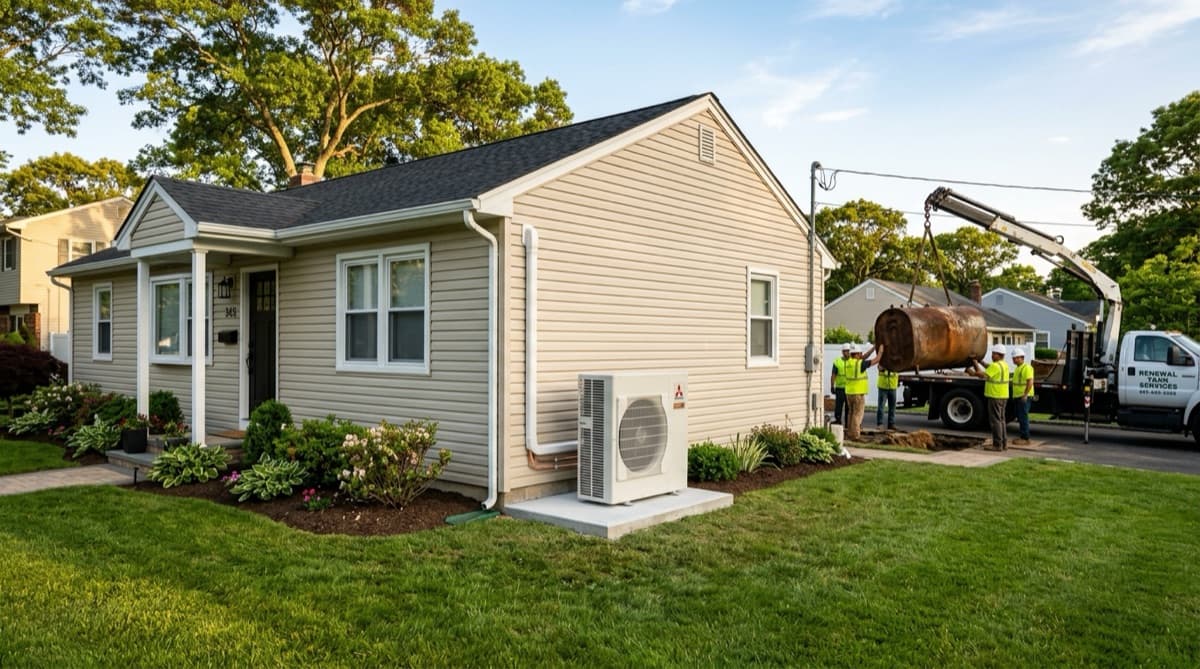
If you're still using oil to heat your home on Long Island, you've probably noticed two things: heating oil prices keep climbing, and everyone seems to be talking about heat pumps. The question is whether converting from an oil furnace to an electric heat pump actually makes financial sense for your house, or if it's just hype.
We run the numbers on oil to heat pump conversions regularly for homeowners across Suffolk County. Here's what the math actually looks like in 2026.
How Much Does It Cost to Convert from Oil to a Heat Pump?
Let's start with the upfront heat pump cost, because that's usually what stops people. A full oil to electric conversion on Long Island typically runs between $15,000 and $28,000 before rebates. That range depends on a few things: the size of your home, whether you're going with a ducted heat pump system or ductless mini-split heat pumps, and how much electrical work your installer needs to do. Our 2026 breakdown of oil-to-electric conversion costs on Long Island walks through the numbers tier by tier with the current rebates factored in. And if you want to see where oil-to-electric lands next to ductless, central air, and pool heating costs, our heat pump cost guide for Long Island lines up every system type in one spot.
If your home already has ductwork in decent shape, a whole-home heat pump system with a new air handler is usually on the lower end. Homes without ducts, which is common in older Long Island ranches and capes with baseboard heat, will need a ductless multi-zone setup that costs more. Steam radiators and baseboard systems are especially common out here, and those homes almost always need a mini-split heat pump approach.
The good news is that the PSEG Long Island rebate knocks a serious chunk off that number: a flat $4,000, $5,000, or $7,500 depending on your household income tier. PSEG administers NYS Clean Heat out here, so that arrives as a single rebate rather than two you add together, and the federal 25C credit expired at the end of 2025. Even so, that brings real out-of-pocket down to roughly the $10,000 to $20,000 range on most projects.
The Annual Energy Savings Breakdown
Here's where it gets interesting. Oil heat on Long Island currently costs somewhere around $2,800 to $4,200 per year for a typical 1,500 to 2,000 square foot home, depending on how well insulated it is and how many gallons of oil you're burning each winter. With heating oil prices as volatile as they've been, some homeowners are paying even more.
An electric heat pump heating and cooling the same home costs roughly $1,200 to $2,000 per year in electricity. Heat pumps work by moving heat energy rather than generating it from fossil fuel combustion, which is why electricity costs end up so much lower than expensive oil. And here's a detail most people miss: PSEG Rate 580 takes 45% off your electric usage above 400 kWh a month, October through May. It is a rate discount, not a rebate, and it keeps applying every heating season you own the system.
So you're looking at roughly $1,200 to $2,500 in annual heating savings on your energy bills. But it doesn't stop there.
A heat pump can both heat and cool your home. Instead of an oil furnace pushing warm air or hot air through your house in winter and a separate air conditioning system cooling it in summer, one heat pump does everything. If you're currently running a separate central AC, window AC unit, or an old air conditioner alongside your oil furnace, you can factor in the cost of not having to replace that equipment down the road. You're essentially switching from two systems to one that does both HVAC jobs. Some homeowners even add a heat pump water heater at the same time and reduce their energy costs further.
The Payback Period: When You Break Even
This is the number everyone wants. Take your net installation cost (after rebates) and divide by your annual savings to reduce your energy costs.
For a typical Suffolk County conversion, the math usually lands between 5 and 9 years. On the shorter end, you've got well-insulated homes with high oil consumption, good rebate timing, and Rate Code 580 enrollment. On the longer end, smaller homes with moderate heating bills and more complex installations.
A 5-to-9 year payback on equipment that lasts 15 to 20 years is a solid return. After that break-even point, the savings are just money in your pocket.
For those looking to maximize savings, pairing a new heat pump with a smart thermostat can make a noticeable difference in how efficiently the system runs throughout the heating season.
Do Heat Pumps Work in Cold Weather?
This is the most common concern we hear when homeowners consider making the switch from oil: "Do heat pumps actually work when it's 10 degrees outside?" The answer in 2026 is yes. Modern cold-climate air-source heat pump technology from Mitsubishi, Daikin, and others holds close to rated capacity down to about 5°F and keeps producing usable heat down to roughly -13°F. Long Island rarely sees anything below the single digits, even in the worst cold-weather stretches.
That said, there are a handful of nights each winter where temperatures drop low enough that the heat pump's efficiency decreases. Some homeowners keep their old oil furnace or boiler as a backup for those extreme cold snaps. This hybrid approach, sometimes called dual-fuel, gives you the efficiency of an electric home heating system 95% of the time with the peace of mind of oil backup for the worst nights. If you go that route, plan on keeping up with boiler service and repair so the backup actually fires when the temperature drops.
Going fully electric and removing the old oil tank entirely saves you oil tank insurance, annual tune-up costs (usually $200 to $350), and the hassle of scheduling deliveries. You also improve your indoor air quality since there's no combustion happening inside the house. Home electrification is the direction things are moving. But dual-fuel is a perfectly reasonable middle ground if you're not ready to go all-in on clean energy.
The Hidden Costs of Keeping Your Oil Furnace
When you compare oil vs. heat pump, most people only look at fuel cost versus electricity costs. But using oil comes with ongoing expenses that add up and eat into what you'd save by not converting.
Annual boiler maintenance runs $200 to $350. Oil tank insurance can be $200 to $400 per year. If your underground old oil tank fails an inspection or leaks, remediation can cost $10,000 to $50,000, and that's not an exaggeration. A lot of homes on Long Island still have underground tanks from the 1970s and 80s that are past their expected lifespan.
There's also the environmental angle. Suffolk County has been pushing homeowners toward cleaner heating systems, and oil tank removal regulations have gotten stricter. Eventually, that old tank becomes a liability whether you're using it or not. The shift away from fossil fuel heating isn't slowing down.
Who Should Wait Before Making the Switch
An oil-to-heat-pump conversion isn't the right move for everyone right now. If your oil furnace or boiler is less than five years old and running well, the payback math gets harder to justify until it's closer to end of life. If your home has serious insulation problems, you'll want to address those first. Consider getting an energy audit done, and look at improving insulation in the attic and walls before installing an electric heat pump. Otherwise you're sizing a heat pump for a leaky house that's wasting energy, and you'll overpay on both the equipment and the energy bills.
And if your electrical panel is at capacity, the cost of an electrical upgrade (usually $2,000 to $4,000) needs to get factored into the project total before you switch from oil to electric. If you're weighing electric against natural gas, our oil-to-gas vs oil-to-heat-pump comparison for Long Island breaks down the costs and tradeoffs side by side.
If you're also considering solar panels, the economics of a heat pump conversion get even better since you can generate the renewable energy you need to heat and cool your home right from your roof. And unlike a gas furnace or oil system, a heat pump paired with solar can virtually eliminate your heating bill over time.
The Bottom Line on Converting Your Oil Furnace to a Heat Pump
For most Long Island homeowners still heating with home heating oil, an oil to heat pump conversion pencils out within 5 to 9 years and delivers real savings for the remaining 10+ years of the heating system's life. When you account for summer cooling benefits and seasonal maintenance, the value gets even clearer since you're replacing your furnace and AC system with a single heat pump that can heat and cool your home year-round.
The best time to start planning is before your current boiler or oil heating system forces your hand. If you want to see what the numbers look like for your specific home, give us a call at 631-209-7090 or shoot us a text. We'll walk through the options, tell you where the rebates land, and give you a straight number. No pressure. You can also read up on how we handle heat pump installation before you call.
Related Articles
Heat Pump vs Oil Furnace on Long Island
Heat pump vs oil furnace for Long Island homes. Real fuel costs, efficiency data, and the rebates that help Suffolk County homeowners decide which to install.
What Size Heat Pump Do You Need for a Long Island Winter?
Heat pump size on Long Island: what size heat pump do you need for your home, and why BTUs at 17 degrees matter far more than the ton printed on the label.
Your Heat Pump Is Rated at 47 Degrees. Long Island Winters Are Not.
A cold climate heat pump loses heating capacity as it gets colder. What Long Island homeowners should check at 17 degrees before signing any proposal.