What Is Smart HVAC Monitoring? A Simple Guide
Smart HVAC monitoring explained for Long Island homeowners. What it does, how it works, what it costs, and whether it's worth it.
Your furnace dies at 2am on a Friday in January. You don't find out until you wake up to a 52-degree house and frozen pipes in the crawl space. By then, you're calling an emergency HVAC technician, paying weekend rates, and dealing with water damage from a burst pipe. That kind of downtime is expensive and completely avoidable.
Smart HVAC monitoring exists to prevent exactly that scenario. It watches your heating and cooling system around the clock and sends you real-time alerts when something is off, before it turns into an emergency. But what does that actually mean in practice, and is it worth the money? Let's break it down.
What Smart HVAC Monitoring Actually Does
At its simplest, a smart HVAC system with monitoring connects your heating and cooling equipment to the internet so it can send you alerts and data in real time. Instead of waiting for something to break and then figuring out what happened, you get a heads-up when your HVAC system starts going wrong.
The basics that most smart HVAC monitoring systems track include indoor temperature dropping or spiking unexpectedly, your system running longer than it should for the conditions, filter replacement reminders based on actual runtime hours instead of guessing, humidity levels that are outside a healthy range, and error codes from your furnace, heat pump, or air conditioning unit.
More advanced systems add remote diagnostics and go further. They can detect refrigerant pressure changes that signal a slow leak, flag electrical draw anomalies that suggest a failing compressor or blower motor, and track energy usage patterns so you can see exactly what your HVAC system is costing you per day. This kind of remote monitoring eliminates the guesswork from troubleshooting and helps your technician diagnose issues before they even show up at your house.
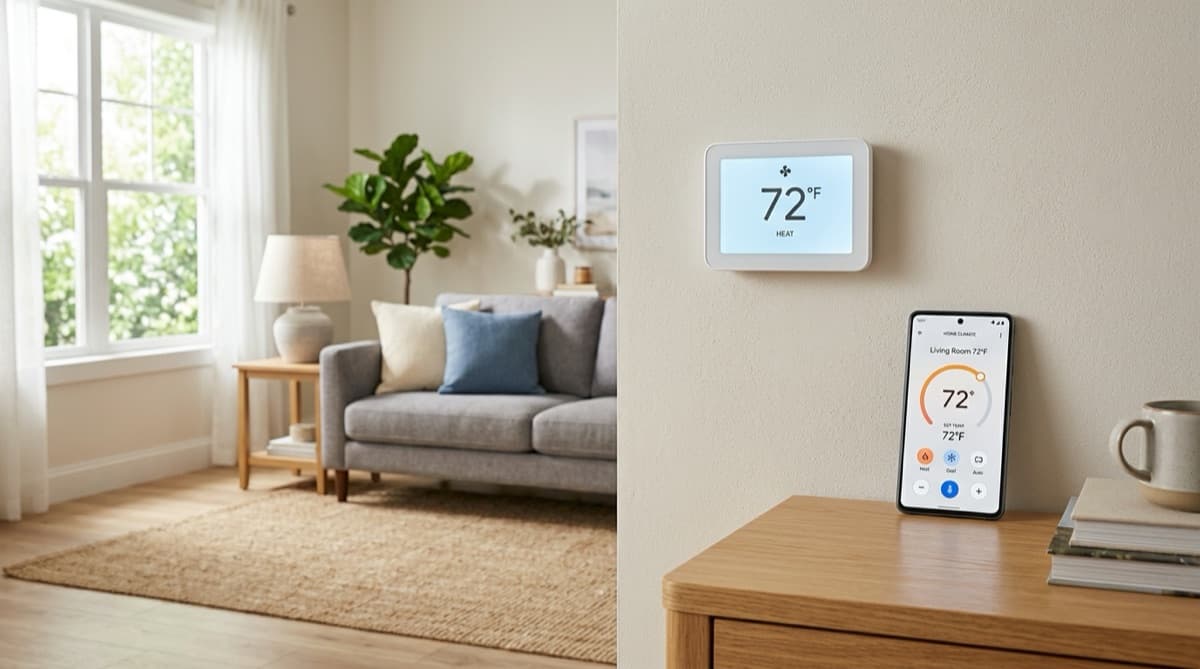
The key difference from a regular smart thermostat is that monitoring goes beyond temperature control. A smart thermostat like an ecobee or Honeywell Home lets you adjust your schedule and see your home's temperature remotely. Smart HVAC monitoring watches the equipment itself and its system performance, not just the air temperature in the room.
How It Works in Your Home
There are a few different approaches depending on your equipment and what you're trying to accomplish. All of them rely on WiFi connectivity and some level of home automation to keep you informed.
Equipment-level monitoring is built into newer smart HVAC systems from manufacturers like Carrier, Lennox, Trane, and Mitsubishi. If you bought a heat pump or furnace in the last few years, there's a good chance it has connectivity and a companion app. These systems report error codes, runtime data, and maintenance alerts directly from the unit. Your HVAC technician can often see the same data remotely, which means they can diagnose problems and perform remote diagnostics without a site visit.
Add-on sensors work with any existing HVAC system, even older ones. Companies like Emerson Sensi, Honeywell, and various smart home automation platforms sell temperature, humidity, and leak sensors that connect to your WiFi network. You place them near your air handler, in the drain pan, near the outdoor unit, and in key rooms. They feed data to an app on your phone and send alerts when readings go out of range. A sensor in the right spot can detect a problem days before you'd notice it yourself.
Thermostat-based monitoring is the entry point most homeowners start with. Modern smart thermostats track runtime, alert you to unusual patterns, and send maintenance reminders. They won't catch everything an equipment-level system would, but they're a massive step up from a basic programmable thermostat. If your spring HVAC maintenance checklist keeps falling through the cracks, a smart thermostat that reminds you automatically is worth its weight in gold.
For most Long Island homes, the practical setup is a smart thermostat plus a couple of add-on sensors in critical spots. That covers 90% of what you'd want to monitor without a major investment, and gives you real-time visibility into your HVAC system's health.
What It Catches That You'd Otherwise Miss
The real value of smart HVAC monitoring isn't the data itself. It's what the data prevents. It helps you optimize system performance and avoid energy waste before small issues become expensive ones.
A slow refrigerant leak is a perfect example. Your air conditioning might lose cooling capacity gradually over weeks. You don't really notice because you adjust the thermostat down a degree, then another degree. By the time you realize something is wrong, the compressor has been running under stress for a month, wasting energy, and now you're looking at a repair bill that could have been avoided. A monitoring system would detect the declining system performance and alert you early.
Condensate drain clogs are another one. A water sensor in the drain pan costs $20 and sends you an alert the moment water starts backing up. Without it, you don't find out until the pan overflows and there's water on the ceiling below.
On Long Island, where a lot of homeowners have oil boilers or heat pumps handling serious winter loads, monitoring catches things like short cycling (the system turning on and off rapidly, which destroys compressor life), frozen outdoor coils that aren't defrosting properly, restricted airflow from dirty filters, and burner lockouts that happen at 3am when nobody's checking the thermostat.
One homeowner we talked to had a monitoring system flag that their heat pump was running in emergency backup mode for 14 hours straight during a cold snap. Without the real-time alert, they wouldn't have known until they saw the electric bill. Emergency backup heat on PSEG rates can cost 3-4x what the heat pump normally uses. That's the kind of energy waste that adds up to hundreds of dollars in a single weekend.
What It Costs
This is where it gets practical for most homeowners.
A smart thermostat with basic monitoring features runs $150 to $250 installed. An ecobee Premium or Honeywell Home T9 gives you temperature and humidity monitoring, runtime tracking, and maintenance reminders right out of the box. If you're still running a manual thermostat, this is the single best upgrade you can make to your HVAC system for both comfort and energy efficiency.
Add-on sensors run $20 to $50 each. A water leak sensor for the drain pan, a temperature sensor for the basement or attic, and maybe a humidity sensor for the crawl space. Figure $60 to $150 for a solid set of three to four sensors.
Equipment-level remote monitoring through your HVAC manufacturer's app is usually free if your system supports it. The hardware cost is baked into the price of the equipment. If you recently installed a new heat pump or high-efficiency furnace, check whether it has connectivity built in. A lot of homeowners don't realize the smart HVAC features are already there.
Professional monitoring services, where your HVAC technician gets the alerts too and can proactively schedule service based on remote diagnostics, run $10 to $25 per month depending on the provider. This is the premium tier and probably overkill for most residential customers, but for snowbirds or homeowners with vacation properties on the East End, it's worth considering. It means zero downtime because problems get caught and fixed before your system ever shuts down.
Total investment for a typical Long Island home: $200 to $400 upfront for a smart thermostat and a few sensors. That's less than a single emergency service call.
Is It Worth It?
For most homeowners, yes, and the math is pretty straightforward.
The average emergency HVAC repair on Long Island runs $300 to $800. A weekend or after-hours call adds $100 to $200 on top. If smart HVAC monitoring catches even one problem early and lets you schedule a regular-hours repair instead of an emergency call, it's paid for itself. Less downtime, lower repair costs, and better energy efficiency across the board.
The energy savings are real too, though harder to quantify. A system that's running 15% longer than it should because of a slowly failing component is wasting energy every day. Catching that early helps you optimize both energy costs and equipment lifespan. Over a full heating or cooling season, eliminating that kind of energy waste can save $100 to $300.
Where it's especially valuable on Long Island is for homes that sit empty for stretches. If you travel for work, spend winters somewhere warmer, or have an aging parent whose house you're keeping an eye on, remote monitoring gives you peace of mind that the heat is still running and the pipes aren't freezing. A single sensor and a smartphone app can prevent thousands in damage.
If you're not sure where to start, a smart thermostat is the move. It handles the most important monitoring functions and you can add sensors later if you want more coverage. Give us a call or text at 631-209-7090 and we can help you pick the right setup for your home.
Related Articles
Can a Heat Pump Work With My Radiators?
Most heat pumps can't drive Long Island radiators. One new system can. Here's how heat pumps work with existing radiators and what's actually changed in 2026.
Heat Pump Installation: What to Expect from Start to Finish
Here's what to expect during a heat pump installation on Long Island, from initial walkthrough through commissioning. Timeline, rebates, install day details.
Window AC vs. Central Air: When to Upgrade Your Cooling System
Window AC vs central air on Long Island. When window unit repair makes sense, when it's time to upgrade, and what Suffolk County homeowners should expect.