Why Is My AC Running But Not Cooling?
Your AC is running but not cooling your Long Island home? Here are the most common causes Suffolk County homeowners run into, and what to do about each one.
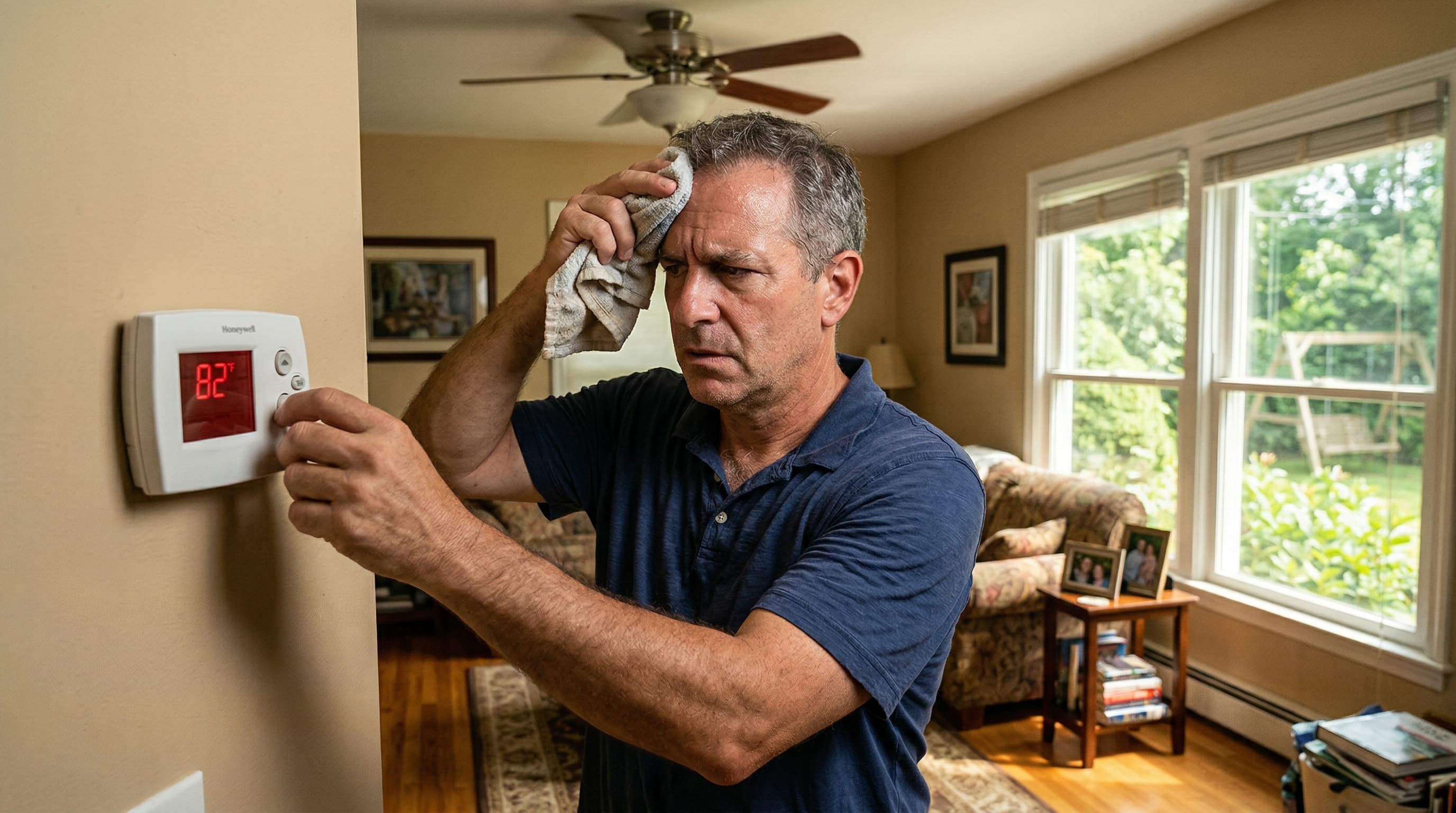
The AC is on, the air is moving, and the house is still hot
An air conditioner not cooling is one of the most frustrating common AC problems a homeowner can run into. You can hear the outdoor condenser humming, you can feel air coming out of the vents, but there's no cold air and the temperature on the thermostat just sits there. On a 90-degree July afternoon in Suffolk County, a central air conditioner blowing warm air is the kind of thing that ruins a weekend.
The good news is that most of the time, this is a fixable problem. Learn how to fix the easy stuff yourself, and call in a pro for the rest. The bad news is that "fixable" covers everything from a five-minute filter swap to a several-thousand-dollar compressor replacement. Here's how to diagnose what's actually going on with your AC system before you call for AC repair service.
Start with the easy stuff: filter, thermostat, and vents
Before you call anyone, inspect the three things that cause more "my air conditioner isn't working" calls than everything else combined.
First, pull your filter. Air conditioner filters are the single most overlooked piece of the cooling system. If it looks grey, fuzzy, or like a carpet sample, that's your problem. A clogged filter chokes airflow across the evaporator coil, which can cause the coil to freeze over and stop cooling entirely. The short version: if you can't remember when you last changed it, change it now. That's one of the most basic maintenance tips and it fixes a shocking number of no-cool calls.
Second, check the thermostat. Make sure it's set to cool, not fan. Sounds dumb, but we've driven out to Medford for exactly this more than once. If it's a smart thermostat, check the batteries and make sure the schedule isn't overriding you. A blown fuse or tripped breaker at the air handler can also kill cooling while the outdoor unit keeps running, so take a quick look at the panel.
Third, walk around and make sure every supply vent and the air ducts in every room are open and not blocked by furniture. If half your vents are closed, the other half are working overtime and the air conditioning system can't keep up.
The outdoor AC unit iced over (yes, in summer)
This one confuses people. How does an air conditioner freeze when it's 88 degrees out? It happens all the time on Long Island, usually for one of two reasons: airflow is restricted (see: dirty filter) or the refrigerant charge is low.
If you walk around to your outdoor AC unit and see ice on the copper lines or the coils, shut the system off immediately. Running a frozen air conditioner can destroy the compressor, and that's a repair you don't want. Turn the thermostat to "fan only" and let it run for a few hours to thaw everything out. Then call us.
A frozen AC is almost always telling you something specific. Either there's an airflow problem that needs to be fixed, or you're losing refrigerant somewhere, which means there's a leak. Regular AC maintenance and a proper tune-up can catch both before they strand you in the middle of a heat wave.
Low refrigerant and a refrigerant leak
Refrigerant is the stuff that actually moves heat out of your house. If refrigerant levels are low, the indoor evaporator coil can't absorb heat from your air, and what comes out of the vents is warm air with a little bit of a chill if you're lucky. No cold air, no comfortable house.
Here's the thing: refrigerant doesn't get "used up" the way gas does in a car. If your system is low, there's a refrigerant leak somewhere. A technician topping off the charge without fixing the leak is a short-term band-aid that'll cost you again in a few months. And if you have an older air conditioning system running R-22, topping off is getting genuinely expensive. The stuff is phased out and prices have gone through the roof.
A proper AC repair involves finding the leak, repairing it, vacuuming the system, and a full refrigerant recharge to the manufacturer's spec. For older R-22 systems, this is often the point where we have an honest conversation about whether repair or replacement makes more sense. If you're weighing that, our guide to when to replace your AC unit lays out the repair-versus-replace math, and our pricing page shows what our diagnostic and common repairs actually run.
The compressor or capacitor is failing
The compressor is the heart of your AC. It's the big cylinder inside the outdoor unit, and it's what actually pumps refrigerant through the system components. When the compressor starts to fail, you'll often hear it: loud humming, clicking, or the outdoor fan running while the compressor itself is dead silent.
The capacitor is a smaller part that gives the compressor the jolt it needs to start. Capacitors fail all the time, especially on systems that are 10 to 15 years old. The symptoms look similar to a bad compressor from the outside, which is why a real diagnosis matters. A failing capacitor or compressor can also make the unit start up and then shut off after a few minutes, so if that sounds like your system, read our guide to why your air conditioner keeps shutting off after a few minutes. A technician can diagnose it in a few minutes with a multimeter and give you an estimated repair cost on the spot. A capacitor is a cheap fix, usually $150 to $350 installed. A full compressor replacement on a residential AC system runs $1,500 to $3,000, and at that point a lot of homeowners start asking whether it makes sense to replace the whole cooling system instead.
Dirty condenser coils and blocked airflow outside
Your outdoor condenser unit pulls hot air out of your house and dumps the heat into the outside air. If the condenser coils are caked with grass clippings, pollen, cottonwood fluff, or dirt, it can't shed that heat efficiently. The system runs, the compressor works, but the house never gets cool because the heat has nowhere to go.
Walk around your outdoor unit. If you can barely see the fins through the dirt, that's your problem. Shut the system off, gently rinse the unit with a garden hose from the inside out if you can, and clear anything growing within two feet of the cabinet. A full coil cleaning is part of a proper tune-up, and it's one of the reasons we push homeowners to get on a maintenance plan before the summer hits. Regular ac maintenance drops repair costs sharply and keeps air quality higher throughout the house.
When to call us for HVAC repair
If you've checked the filter, the thermostat, and the vents and your air conditioner still isn't cooling, it's time to stop guessing. The longer you run a system that's struggling, the more likely you are to turn a $200 repair into a $2,000 one. Honest service and maintenance is cheaper than a compressor replacement every time. We cover what typical repair costs look like on Long Island in our guide to AC repair costs in Suffolk County if you want to know what to expect before you pick up the phone.
If you need a diagnostic or you're already sweating in your living room, give us a call or text at 631-209-7090 and we'll get a technician out to you for HVAC repair. If you're a maintenance plan customer, you jump the line in summer, which is exactly why the plans exist.
Related Articles
Strange AC Noises? What Your AC Is Telling You
A Long Island guide to AC unit noises, what each one means, and when a repair can wait versus when it is time to call an HVAC pro out to the house.
Pool Heat Pump Error Codes on Long Island
Pool heat pump error codes explained for Long Island homeowners: the AquaCal OTA alarm, low water flow lockouts, pressure trips, and when to call for repair.
AC Short Cycling: Why Your AC Keeps Shutting Off
AC short cycling on Long Island? The common causes of a short-cycling air conditioner, how to stop it, what the repairs cost, and when to call a pro.