How to Size an AC System for Your Long Island Home
A plain-English guide to AC sizing on Long Island: how tons and BTUs work, why online calculators are a starting point, and what a Manual J gets right.
Getting the size right is the whole ballgame
When homeowners call us about a new central air system, the first question is almost always price. The question that actually decides whether you'll be happy with the system for the next 15 years is size. Get the size right and the unit cycles cleanly, dries out the air, keeps the house even, and sips electricity. Get it wrong in either direction and you're stuck with a system that either can't keep up or short cycles itself into an early grave.
So before you punch numbers into an ac sizing calculator and call it a day, it's worth understanding what those calculators are actually doing, where they fall short, and how proper system sizing works on a Long Island home. Whether the tool you found online calls itself an ac btu calculator, a tonnage calculator, or just an "what size air conditioner do I need" quiz, they all run the same basic math. This is the guide we wish more homeowners read before they signed a contract.
Tons and BTUs: the language of cooling
Air conditioning capacity gets measured two ways, and they mean the same thing. A BTU (British Thermal Unit) is a unit of heat. Your ac is rated by how many BTUs of heat it can pull out of your house per hour. A "ton" of cooling is just shorthand for 12,000 BTUs per hour. So a 3 ton system moves 36,000 BTUs per hour, a 2.5 ton system moves 30,000, and so on.
Residential central air on Long Island almost always lands between 2 and 5 tons, with most single-family homes in the 2.5 to 3.5 ton range. Systems come in half-ton steps (2, 2.5, 3, 3.5, 4, 5), so there's no such thing as a 2.8 ton unit. Part of sizing is landing on the load number, the other part is rounding to the nearest piece of equipment that actually exists.
Want to know your current ac tonnage? Look at the model number on the outdoor unit's data plate. Manufacturers bury the BTU rating in it as a two-digit number, usually a multiple of 6 or 12: 24 means 24,000 BTUs (2 tons), 30 means 2.5 tons, 36 means 3 tons, 48 means 4 tons, 60 means 5 tons. That tells you the cooling capacity you have now, which is a useful reference point even though it doesn't tell you what you actually need.
The goal is not to buy the biggest unit you can afford. The goal is to match the equipment's BTU output to the amount of heat your specific house gains on a hot day. More on why bigger is worse below.
New York actually requires that calculation, and most replacements are still sized without one. We cover the code requirement and how to tell if yours is real in your HVAC contractor is required to do a Manual J.
The rule of thumb (and why it's only a starting point)
The fast way to size an ac unit, the one most online calculators use under the hood, is square footage per ton. You'll see the common range quoted as 400 to 600 square feet of living space per ton of cooling, which is a wide spread. For average Long Island housing stock we use 600 square feet per ton as the single starting number, and every example in this post uses it so the math stays consistent. Punch in 1,800 square feet, divide by 600, and you get 3 tons.
Here's a rough ballpark table for Long Island homes, assuming average construction and that same 600 square feet per ton:
- 1,200 to 1,500 sq ft: roughly 2 to 2.5 tons
- 1,500 to 2,000 sq ft: roughly 2.5 to 3.5 tons
- 2,000 to 2,800 sq ft: roughly 3.5 to 4.5 tons
- 2,800 to 3,500 sq ft: roughly 4.5 to 5 tons (often two systems)
That's useful for a gut check, and it's exactly what a generic ac sizing calculator spits out. But notice the ranges are wide, and the reason they're wide is that square footage alone tells you almost nothing about how much heat a house actually gains. Two homes that are both 1,800 square feet can have wildly different cooling loads depending on insulation, windows, sun exposure, ceiling height, and how leaky the house is. A tight 2015 colonial and a drafty 1950s cape of the same size can be a full ton apart.
So treat the calculator number as a sanity check, not an answer. If a contractor's proposed tonnage is way off from the rule of thumb, ask why. If it matches the rule of thumb but they never measured anything, also ask why.
What actually drives the load
The variables that move your cooling number up or down, the ones a square-footage calculator ignores, are the ones worth understanding:
- Insulation. Attic R-value and wall insulation are huge. A well-insulated house holds cool air; a poorly insulated one bleeds it, and you need more capacity to keep up.
- Windows. Number, size, orientation, and glazing. West and south-facing glass dumps afternoon heat into the house. A wall of single-pane windows facing the backyard sunset adds real load.
- Sun exposure and shade. A house under mature oak trees gains less heat than the identical house on a bare lot.
- Ceiling height. More volume of air to cool. Vaulted ceilings and cathedral great rooms add up.
- Air infiltration. Older Long Island homes leak air around doors, windows, and the rim joist. Leaky houses need more capacity.
- Internal gains. People, kitchens, electronics. A finished basement gym or a home office full of equipment adds heat.
- Additions and conversions. Dormers, three-season rooms turned year-round, finished attics. These almost always add load the original system was never sized for.
This is exactly why a system that was perfectly sized 20 years ago can end up undersized today. If your current ac runs nonstop and still can't hold the setpoint, the problem may not be the equipment at all, it may be that the house outgrew it. We walked through how to spot that in our piece on whether your ac is too small for your home.
The real answer: a Manual J load calculation
The industry standard for sizing residential cooling is a Manual J load calculation. Manual J is the method published by ACCA (the Air Conditioning Contractors of America), and it's the one the Department of Energy points to as the right way to size a system. Instead of guessing from square footage, it accounts for the actual house: every window's size and orientation, insulation R-values in the walls and attic, ceiling heights, air infiltration, the number of occupants, internal heat gains, and the local design temperature.
For Long Island, the cooling design temperature runs around 87 degrees outdoor against a 75-degree indoor target, which represents the hot-but-not-record days the system should be sized to handle. You don't size for the single worst afternoon of the decade, because that would leave you oversized 360 days a year.
A real Manual J takes an experienced person an hour or two per house and produces a precise BTU load for both heating and cooling. Divide the cooling BTUs by 12,000 and you've got your tonnage. That's how the number is supposed to be reached. A good contractor either runs the full Manual J or, at minimum, measures windows and checks insulation before naming a tonnage. If someone walks the house in five minutes and quotes you a 4 ton system off the cuff, they sized it off the truck, not off your house.
Why bigger is not better
The instinct is to round up. More cooling can't hurt, right? It can, and on Long Island it usually does, because our summers are humid.
An oversized ac cools the air around the thermostat fast, hits the setpoint, and shuts off, all before it's run long enough to pull moisture out of the rest of the house. That's short cycling: lots of quick on-off bursts instead of long, steady runs. The thermostat reads 72, but the house feels clammy because the system never ran long enough to dehumidify. You also get more wear on the compressor from all that starting and stopping, uneven temperatures room to room, and higher bills from the inrush current every time it kicks on.
Undersized is the opposite failure: the unit runs flat out and never catches up on the hottest days, freezes its coil, and runs the least efficient operating point constantly. Both ends are bad. The sweet spot is a system sized to run long, steady cycles on a typical hot day, which is what keeps a Long Island house both cool and dry. Two-stage and variable-speed equipment, and the higher SEER2 (Seasonal Energy Efficiency Ratio) systems that come with it, widens that sweet spot, but it doesn't make correct sizing optional. A right-sized higher-efficiency unit also trims your kilowatt-hour usage all summer, which is where the energy savings actually show up on the PSEG bill.
Don't forget the ductwork and the airflow
Sizing the outdoor unit is only half the job. The indoor coil, the air handler or furnace blower, and the ductwork all have to be matched to that capacity too. A correctly sized 3 ton condenser bolted onto undersized ducts will choke for airflow, freeze up, and underperform no matter how good the equipment is. The rule of thumb here is roughly 400 CFM of airflow per ton, and a lot of older Long Island duct systems can't deliver that without modification.
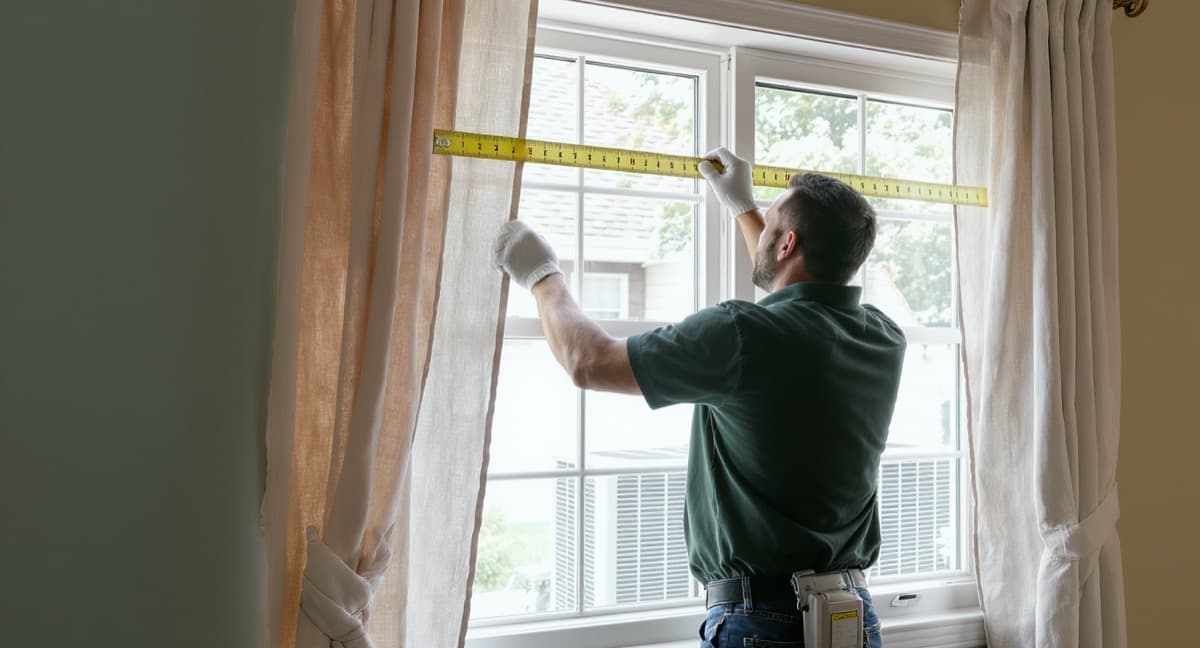
This is one more reason the online calculator falls short. It can give you a tonnage, but it can't tell you whether your existing ducts can carry it, whether you've got a return on the second floor, or whether that finished attic needs its own zone. Those answers come from someone standing in your basement and attic with a tape measure.
A quick way to size it yourself
If you just want a ballpark before you call anyone, here's an honest DIY pass:
- Measure your conditioned square footage (living space you actually cool, not the garage).
- Divide by 600 to get rough tonnage. If the house is older and leaky, figure closer to 500 square feet per ton instead, which lands you on a bigger number.
- Round to the nearest half ton.
- Adjust up a notch for lots of west-facing glass, high ceilings, or a finished attic; down a notch for heavy shade and great insulation.
That gets you in the right neighborhood and arms you to spot a quote that's a full ton off. What it doesn't do is replace a Manual J. When you're spending real money on equipment that runs for 15 years, and especially when you're weighing the full cost of installing central air on Long Island, the load calculation is the cheapest insurance you can buy against a system that disappoints you every summer.
Common ac sizing questions
Will a 3 ton AC cool a 2,000 square foot house? Often, yes. Using the 600 square feet per ton starting point, 2,000 heated square feet points to roughly 3.5 tons, so a 3 ton is in the neighborhood. A tight, well-insulated newer home with good windows may well be comfortable on 3, while a leaky older home with lots of west glass and two stories could need 4 or more. Square footage gets you in the ballpark; the load calculation tells you which end of it you're on.
How many square feet will a 16,000 BTU unit cool? A 16,000 BTU unit (a bit over one ton) covers roughly 800 square feet at 600 square feet per ton, which is window-unit or single-zone mini split territory, not whole-home central air. For perspective, most Long Island houses need 30,000 to 48,000 BTUs of total cooling capacity.
What is the $5,000 rule for HVAC? It's a repair-or-replace formula you'll find online: multiply the age of the system by the estimated repair cost, and if the result clears $5,000, lean toward replacing. The rule we actually use is the 50 percent rule, which is simpler and easier to sanity-check. If the repair costs more than half of what replacement would cost, replace it. Age is still context, since half of a replacement is a very different bet on a six-year-old system than on a sixteen-year-old one.
The bottom line
An ac sizing calculator is a fine place to start and a terrible place to stop. Tons and BTUs are easy; the load behind them is the part that takes real measurement. Anyone sizing your system should be looking at your insulation, your windows, your ceilings, and your ductwork, not just your square footage. If they're not, you're rolling the dice on the single most important decision in the whole project.
If you're planning a new system and want it sized right the first time, we run the load calculation as part of every estimate. That's covered on our central air installation page, and you can see what the work costs on our pricing page. Call or text Patchogue Heating and Air Conditioning at 631-209-7090 and we'll measure the house instead of guessing at it.
Frequently Asked Questions
Often, yes. Using the 600 square feet per ton starting point, 2,000 heated square feet points to roughly 3.5 tons, so a 3 ton is in the neighborhood. A tight, well-insulated newer home with good windows may well be comfortable on 3, while a leaky older home with lots of west glass and two stories could need 4 or more. Square footage gets you in the ballpark; the load calculation tells you which end of it you are on.
A 16,000 BTU unit (a bit over one ton) covers roughly 800 square feet at 600 square feet per ton, which is window-unit or single-zone mini split territory, not whole-home central air. For perspective, most Long Island houses need 30,000 to 48,000 BTUs of total cooling capacity.
It is a repair-or-replace formula you will find online: multiply the age of the system by the estimated repair cost, and if the result clears $5,000, lean toward replacing. The rule we actually use is the 50 percent rule, which is simpler and easier to sanity-check. If the repair costs more than half of what replacement would cost, replace it. Age is still context, since half of a replacement is a very different bet on a six-year-old system than on a sixteen-year-old one.
Related Articles
Heat Pump vs Gas Furnace on Long Island: Pros, Cons, and Which Is Right for You
Heat pump vs gas furnace on Long Island: operating cost, comfort, cold-weather performance, and rebates compared, plus when a gas furnace still makes sense.
Best Pool Heat Pumps for Long Island (2026): Hayward vs Pentair vs AquaCal vs Raypak
The best pool heat pump brands for Long Island in 2026, compared by techs who service all four: Hayward, Pentair, AquaCal, and Raypak. Match the brand to your pool.
Ductless Mini Split vs Central Heat Pump: Your Next System Probably Is Not Ductless
Ductless mini split vs central air heat pump on Long Island? If your Suffolk County home has radiators, there is a third option most contractors never quote.