Pool Heat Pump vs Gas Heater on Long Island
Pool heat pump vs gas heater on Long Island: how each one heats, what they cost to buy and run, heat-up speed, and which fits your swimming season.
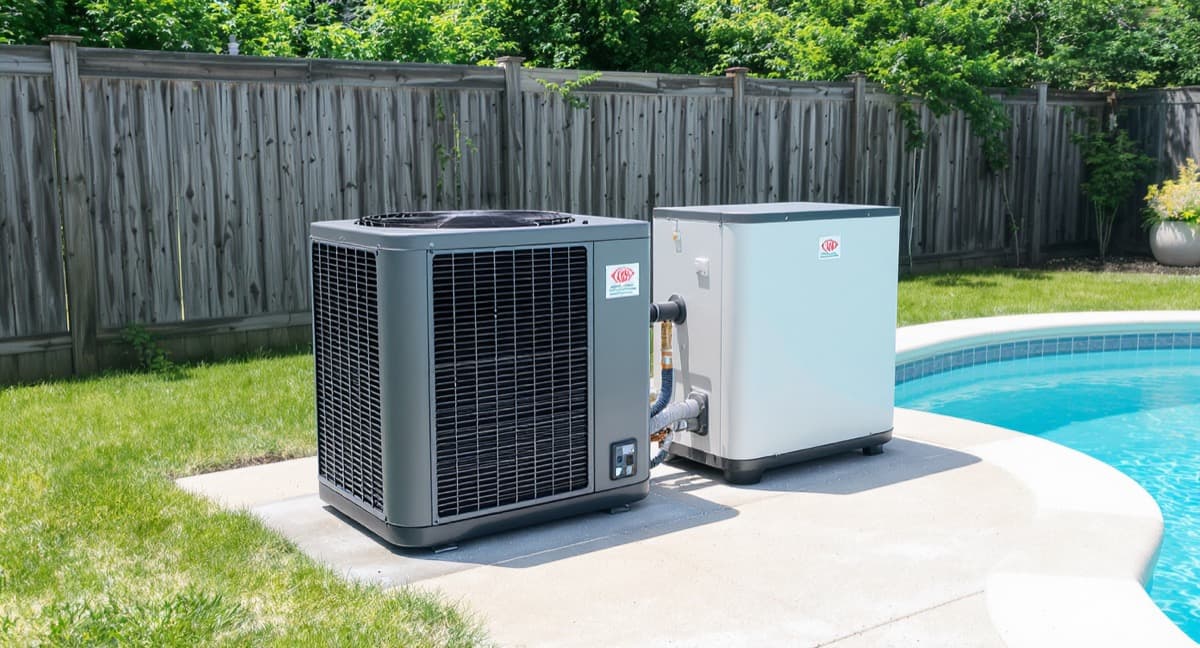
The short answer on pool heat pump vs gas heater
For most Long Island pools, a heat pump beats a gas heater. It costs more upfront, but it runs for a fraction of the monthly cost, and our swimming season lines up almost perfectly with the mild weather a heat pump likes. A gas heater earns its place when you need heat fast or want to swim outside the normal season, but for a homeowner who runs the pool all summer, the running cost makes the heat pump the cheaper machine over its life.
We service both kinds across Suffolk County every week, so we end up settling this debate for a lot of homeowners before they buy. Here is the honest breakdown: how each one actually heats your water, what they cost to buy and to run, and which one fits the way you use your pool.
How each one heats your water
The two heaters work on completely different principles, and that difference drives every cost number below.
A gas heater burns natural gas or propane in a combustion chamber and passes pool water through a copper heat exchanger sitting in the flame. It makes heat. Light it and it produces a lot of BTUs right away, which is why it warms water fast and does not care how cold the air is.
A heat pump does not make heat, it moves it. A fan pulls outside air across a coil, the unit captures the heat that is already in that air, and a titanium heat exchanger transfers it into the water as it cycles through your filter and back to the pool. Because it is moving heat instead of burning fuel to create it, it delivers three to five units of heat for every unit of electricity it draws. That ratio is the whole reason the running cost is so low, and it is also why a heat pump slows down as the air gets cold, since there is less heat in 45-degree air to grab.
Upfront cost: gas wins, but not by as much as it looks
A gas pool heater is cheaper to buy and install than a heat pump, usually by $1,000 to $2,000. If your only goal is the lowest sticker price today, gas wins that round.
The catch is the install. A gas heater needs a gas line sized for its demand, and pool heaters are hungry. If you are on natural gas and the line is close and big enough, you are in good shape. If you have to run a new line, upsize the meter, or set up a propane tank and fills, that upfront savings shrinks fast. A heat pump needs a dedicated 240V circuit instead, and if your panel is full or the equipment pad is a long run from the house, that adds cost too. We get into the full numbers in our guide to what a pool heat pump costs on Long Island, but plan on $5,900 to $8,000 installed for a heat pump and somewhat less for gas before the fuel hookup.
Running cost: this is where the heat pump pulls away
This is the number that matters over the years you own the pool, and it is not close.
A heat pump costs roughly $150 to $400 a month in season on Long Island, depending on pool size, the temperature you hold, and whether you use a cover. A gas heater doing the same job runs two to three times that, and propane is the worst of all because you are paying retail per gallon to make heat that mostly evaporates off the surface overnight.
Put a season on it. A heat pump might cost $1,000 to $1,800 to run from late May to mid-September. The same pool on propane can run north of $3,000 for the season. That gap is the heat pump's whole argument, and it repays the higher install cost in two or three summers, then keeps saving every year after that. A solar cover is the single biggest lever on either system, cutting heat loss 40 to 70 percent, but it helps the expensive-to-run gas heater even more in absolute dollars.
Speed and cold weather: gas wins this round
Here is where gas earns its keep. A gas heater will take a cold pool and have it swimmable in a matter of hours, and it does it on a 45-degree April morning without slowing down. A heat pump warms the water slowly and steadily, more like holding a temperature than blasting up to one, and it gets less efficient as the air cools.
So the question is how you swim. If you keep the pool at a steady temperature all season and plan ahead, the heat pump's slow, cheap heat is perfect. If you only fire the pool up for the occasional weekend and want it hot on short notice, or you want to stretch into the cold shoulder weeks of April and October, gas has a real edge. Some homeowners with big pools and unpredictable schedules even run both, gas for fast catch-up and the heat pump for cheap day-to-day holding.
Lifespan, maintenance, and repairs
A heat pump lasts about 10 to 15 years on Long Island. A gas heater tends to run 5 to 10, because combustion heat and the acidic condensation it creates are hard on the heat exchanger and burner. Salt-system pools and homes near the bay pull both toward the low end thanks to corrosion.
Maintenance is lighter on a heat pump. It is a sealed refrigerant machine, the same kind of equipment we work on every day, so an annual check of the coil, fan, and electrical is usually all it wants. Gas heaters need their burners, vents, and gas pressure checked, and they have more parts that fail. When a heat pump does act up, the fixes are familiar, capacitors, contactors, and the occasional control board, and our pool heat pump troubleshooting guide walks through what to check before you call. Most heat pump repairs land between $300 and $1,400. A compressor is the exception, since the part alone often runs about $2,000 before labor, and past ten years that is where replacement enters the conversation.
So which should you buy?
Choose a heat pump if you swim through the whole Long Island season, you want the lowest possible monthly cost, and you are fine letting the water warm over a day or two. That describes most of the homeowners we install for out here.
Choose a gas heater if you need heat fast and on demand, you only use the pool occasionally, or you want to swim well into the cold shoulder seasons when a heat pump runs out of efficiency. The upfront and fuel-line costs are lower, you just pay it back the other direction on the monthly bill.
For the typical Suffolk County family that opens in May and closes in September, the heat pump is the better total-cost machine almost every time.
Talk to a pool professional before you buy
The right answer comes from your actual pool and your actual setup, the gas line you have or do not have, where your panel sits, and how you really use the pool. If you want a straight comparison for your yard, or you are weighing a repair on an aging heater against a new unit, give us a call or text at 631-209-7090. We cover pool heat pump service across Suffolk County, we work on both gas heaters and heat pumps, and we will give you honest numbers either way.
Frequently Asked Questions
For most Long Island pools, a heat pump is the better choice. Our season runs roughly May through September, when the air is warm enough for a heat pump to run efficiently and cheaply. A gas heater costs less upfront and heats faster in cold weather, but it costs far more every month to run. Over a full season, the heat pump almost always wins on total cost.
Yes, by a wide margin. A heat pump moves three to five units of heat for every unit of electricity it uses, so it costs roughly $150 to $400 a month in season on Long Island. A gas heater burns propane or natural gas to make heat directly, which can run two to three times more per month, especially on propane.
Yes. A gas heater can raise water temperature fast on a cold morning and does not slow down when the air drops into the 40s. A heat pump warms the water slowly and steadily and gets less efficient as the air cools. If you want a pool hot on demand for occasional weekend use, gas has the edge.
A pool heat pump lasts about 10 to 15 years here with proper winterizing and balanced water chemistry. Gas heaters tend to run 5 to 10 years because combustion and condensation are harder on the internal parts. Salt pools and lots near the bay shorten both because of corrosion.
Neither. The PSEG Long Island and NYSERDA Clean Heat rebates apply to heat pumps that heat your home, not your pool. Budget for a pool heater on its own merits without counting on an incentive.
Related Articles
Pool Heat Pump Cost on Long Island (2026)
What a pool heat pump costs on Long Island in 2026: unit and install price, monthly running cost, and how it compares to gas and solar pool heating.
What Size Heat Pump Do You Need for a Long Island Winter?
Heat pump size on Long Island: what size heat pump do you need for your home, and why BTUs at 17 degrees matter far more than the ton printed on the label.
Your Heat Pump Is Rated at 47 Degrees. Long Island Winters Are Not.
A cold climate heat pump loses heating capacity as it gets colder. What Long Island homeowners should check at 17 degrees before signing any proposal.