Oil-to-Electric on Long Island: 2026 Costs
An honest 2026 guide to converting from oil heat to electric on Long Island: what PSEG and NYSERDA still cover, and what the conversion really costs.
If you have been thinking about getting off oil for the last year or two, you have probably read an article that promised something like "$10,000 in stacked rebates" for switching from oil to a heat pump. You may have also heard, more recently, that the big federal tax credit went away. Both things are true, and that combination has left a lot of Long Island homeowners confused about whether an oil-to-electric conversion still makes sense in 2026.
Here is the honest version. The federal piece is gone. The New York and PSEG programs that do most of the heavy lifting are still here. And the equipment that just arrived on Long Island has changed the cost picture more than any tax credit ever did. Whether you heat with an oil furnace or an oil boiler, if you read about switching off oil heat in 2024, your information is out of date. This is the 2026 version, written for homeowners across Nassau and Suffolk counties who are tired of oil-fired heating and want a straight answer on the HVAC upgrade. Heat pumps are now the leading oil heat alternative on Long Island, and the programs that push older oil heating systems toward that alternative are still funded.
What Changed: The Federal 25C Credit Expired
The federal 25C tax credit, the one nearly every heat pump article from 2023 and 2024 leaned on, expired on December 31, 2025. It is not available for systems installed in 2026 or later. If you are reading an older guide that walks you through claiming a federal credit on your taxes, that section no longer applies to your project. Throw out the math that includes it.
This matters because that credit was usually the headline number in those "$10,000 in savings" articles. Take it out and the totals you remember shrink. That is the bad news, and we would rather tell you up front than let you find out after you have already gotten your hopes up.
What Did Not Change: PSEG and NYSERDA Rebates Are Still Active
Here is the part the scary headlines skip. The two programs that actually move the needle for Long Island homeowners are both still running in 2026.
PSEG Long Island offers a heat pump rebate paid as a flat amount by household income tier: $4,000, $5,000, or $7,500. It is not calculated per ton. And it is not a PSEG rebate plus a separate NYSERDA Clean Heat rebate, because PSEG administers the Clean Heat program on Long Island, so the two arrive as one. It did not depend on the federal credit and it did not disappear when 25C did. These clean energy programs are how New York keeps nudging homeowners off oil, so a home on Long Island still has real support for the switch. For a typical whole-home oil-to-heat-pump conversion these utility and state rebates are the larger share of the help anyway, so losing the federal credit hurts less than the headlines suggest. We keep a current breakdown of both on our rebates and savings page, because the exact numbers get adjusted periodically and you want today's figures, not last year's.
A quick honesty note. You will see people online add up federal, state, and utility programs into one big "stacked" total. Those totals are wrong twice over now: the federal credit is gone, and the PSEG and NYSERDA Clean Heat pieces were never two separate rebates to add together out here. What does genuinely run alongside the heat pump rebate is NYSERDA EmPower+ for income-qualified weatherization and PSEG Rate 580, which takes 45% off your electric usage above 400 kWh a month, October through May. It is a rate discount, not a rebate. How those layer together depends on your household, so we are not going to quote a single combined figure in a blog post. We will give you a real number when we have looked at your house.
The New Wrinkle: One System Counts as Two Things
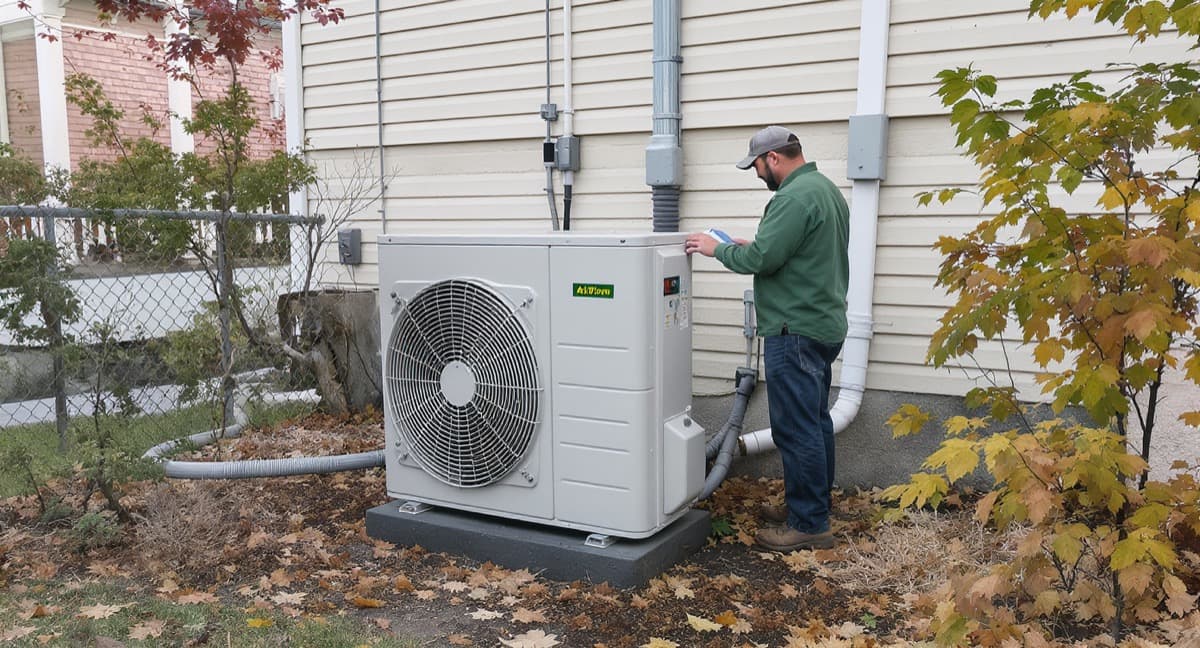
This is the development almost nobody is talking about yet. The electric heat pump we install for these conversions, the Daikin Altherma 3 H HT, is an air-to-water heat pump. It handles your heating and cooling and it heats your domestic hot water from the same outdoor unit. Because it does both, it can qualify as a cold-climate heat pump and as a heat pump water heater.
Why does that matter for cost? Because some incentive programs treat space heating and water heating as separate lanes. A system that legitimately does both may be eligible for rebates in more than one category. We want to be straight with you here: exactly how that plays out across the current PSEG and NYSERDA program rules is still being worked out, and we are not going to promise you a second check before we have confirmed it for your specific install. But it is a real, live question that did not exist when the old oil-to-electric articles were written, and it points in your favor, not against you.
What an Oil-to-Electric Conversion Costs in 2026
Forget the rebates for a second and look at the actual project. The cost to convert from oil to a heat pump in 2026 comes down to a handful of line items. If you want to see how that compares against ductless, central air, and pool heating costs across Long Island, our heat pump cost guide for Long Island puts the whole picture in one place.
The equipment and installation are the bulk of it: the outdoor heat pump, the indoor components, the hot water tank if you are replacing your water heater at the same time, and the labor to tie it all into your existing radiators or baseboards. Permits and inspections are a smaller but real cost, and on Long Island they are not optional, so be wary of any quote that pretends they do not exist.
Then there are the house-specific variables, and this is where two identical-looking homes can land at very different numbers. Oil tank removal, especially for a buried tank, adds cost and sometimes adds surprises. Your electrical panel may need an upgrade to carry the new load; an older 100-amp service often does. And the condition of your existing radiator or baseboard loop affects how cleanly the new heat pump system drops in. Because the Altherma keeps your existing distribution, you usually avoid the ductwork most oil-furnace conversions require. If you want central cooling from the same system, we add an air handler, sometimes a ducted system with the air handler in the attic, which is a small addition on top of the heating tie-in. A well insulated home needs less capacity per square foot, so how well you insulate and the size of the house shift the number too. None of these are dealbreakers. They are just the reasons we insist on seeing the house before we put a number on paper.
What the Conversion Process Looks Like
A straightforward oil-to-electric conversion on Long Island is typically a one to three day install once the equipment is on site. We start with a home visit, essentially a mini energy audit, to size the heating equipment, check your panel, and look at your radiators, baseboards, or ductwork. On install day the crew sets the outdoor heat pump, ties it into your existing heating distribution, adds the hot water tank if you are replacing your water heater, and handles any electrical work. Old oil-fired furnace or boiler removal and oil tank removal are scheduled around that. Then the town inspection closes out the permit. Most homeowners are surprised how little disruption there is, because we are reusing the heating system you already have rather than tearing the house apart.
Do These Heat Pumps Work in a Long Island Winter?
Yes, and this is the objection that used to be fair and no longer is. Older heat pumps lost output in the cold, which is why people kept oil as a backup. The cold-climate air-to-water heat pumps we install are rated to hold their heating capacity through the single-digit temperatures Long Island actually sees, so you are not gambling your January comfort on the weather. For most homes the heat pump carries the whole heating season with no oil backup at all, which is exactly why converting to a heat pump has stopped being a cold-weather risk on Long Island.
What About Switching to Gas or Adding Solar?
A fair question before you commit to electric. Some homeowners weigh switching to natural gas instead, but much of Long Island has no gas main on the street, and running a new natural gas line is its own expense and headache. Going electric skips that entirely. Others ask about pairing the heat pump with solar, which works well, because the system runs on electricity, solar panels can offset a real chunk of the run cost over time. And to be clear about brands: companies like Mitsubishi make excellent cold-climate heat pumps, but those are air-to-air units, so for a home on radiators the air-to-water Altherma is usually the cleaner fit. If your house is a good candidate for a ducted or mini-split setup instead, we will say so.
What Stays the Same If You Keep Burning Oil
When you are weighing the cost of converting, do not forget to put the cost of not converting on the other side of the ledger. Heating oil prices on Long Island are volatile and have trended up over the years, and you are exposed to that every winter. There is the delivery hassle, the watching-the-gauge, the scheduling, the bad-weather-before-a-cold-snap scramble of oil deliveries. And there is something most people forget: an aging oil tank, particularly an underground one, is a liability your homeowners insurance cares about, and some carriers have gotten stricter about it. If you still rely on oil to heat your home, your energy costs ride the oil market every heating season, and moving to a cleaner heating system is a more predictable way to heat your home. Getting off oil takes all of that off your plate. That value never shows up in a rebate table, but it is real money and real aggravation.
Payback Math and Energy Savings in Honest 2026 Terms
We are not going to hand you a tidy "pays for itself in X years" number, because anyone who does that without seeing your fuel bills is selling you something. What we can tell you is what goes into the math so you can think about it clearly.
On the savings side: your annual heating oil spend, which we can estimate from your last couple of delivery statements, minus your new electric bill to run the heat pump, plus whatever you save by no longer maintaining and insuring an oil system. On the cost side: the install price minus the PSEG and NYSERDA rebates you actually qualify for. The gap between those, divided into the net cost, is your payback. For homes with high oil usage and an aging heating system that is going to need replacing soon anyway, that math has been working even after the federal credit went away, because you were going to spend money on a new system regardless. The honest answer for your house depends on your numbers, and we will run them with you. The benefits of an oil to heat pump conversion, lower and steadier energy costs, no oil deliveries, central cooling you did not have before, are real, but they are worth more to some houses than others. If you want the longer walk-through of how we think about this trade-off, we covered it in is an oil-to-heat-pump conversion worth it.
Why the Altherma Makes This Conversion Easier
The reason we are bullish on oil-to-electric in 2026 has less to do with the rebates and more to do with the equipment finally being good enough. For years the knock on heat pumps was that they could not drive the radiators or baseboards in older Long Island homes, so a conversion meant ripping in ductwork or hanging mini-split heads on every wall. That is expensive and invasive, and it is why a lot of oil-to-heat-pump quotes used to look ugly. We wrote about exactly this problem in can a heat pump work with my radiators.
The Altherma changes that. Because it is an air-to-water heat pump, it sends hot water through the radiators and baseboards you already have. No ductwork, no wall heads, no gutting the house. And because it is an all-in-one system, the same outdoor unit handles your heat, your central cooling, and your domestic hot water, so you are replacing the boiler, the air conditioning, and the water heater in one move instead of buying three separate things. That is what bends the cost curve. Fewer trades, less demolition, one system and one thermostat to maintain in place of your old furnace and ac system. You can see how the whole system works on our Altherma page, and the conversion process itself lives on our oil-to-electric service page.
Get a Real Number for Your House
Everything above is the framework. The actual answer for your home depends on your oil usage, your panel, your tank, and which rebates you qualify for this year. We will come look, run the math with your real bills, and tell you the honest number, and we handle the service and repair on the system after too. And if the conversion does not make sense for your situation yet, we will tell you that too, because we would rather have you as a customer in three years than sell you the wrong thing today.
Call Patchogue Heating and Air Conditioning at 631-209-7090 for a free oil-to-electric assessment. We will give you a clear-eyed read on what it costs, what you get back, and whether making the switch from oil is the right way to upgrade your home this year in 2026.
Related Articles
What Size Heat Pump Do You Need for a Long Island Winter?
Heat pump size on Long Island: what size heat pump do you need for your home, and why BTUs at 17 degrees matter far more than the ton printed on the label.
Your Heat Pump Is Rated at 47 Degrees. Long Island Winters Are Not.
A cold climate heat pump loses heating capacity as it gets colder. What Long Island homeowners should check at 17 degrees before signing any proposal.
17 Degrees in Patchogue, 10 in Westhampton: The Long Island Heating Design Temperature
The Long Island heating design temperature is not one number. Brookhaven 16F, Farmingdale 17F, Gabreski 10F, and Suffolk County HVAC design conditions differ.