Mitsubishi vs Daikin Heat Pump: The Long Island Answer
Mitsubishi vs Daikin heat pump for your Long Island home? Both brands are excellent. The real answer depends on your ducts, your radiators, and your house.
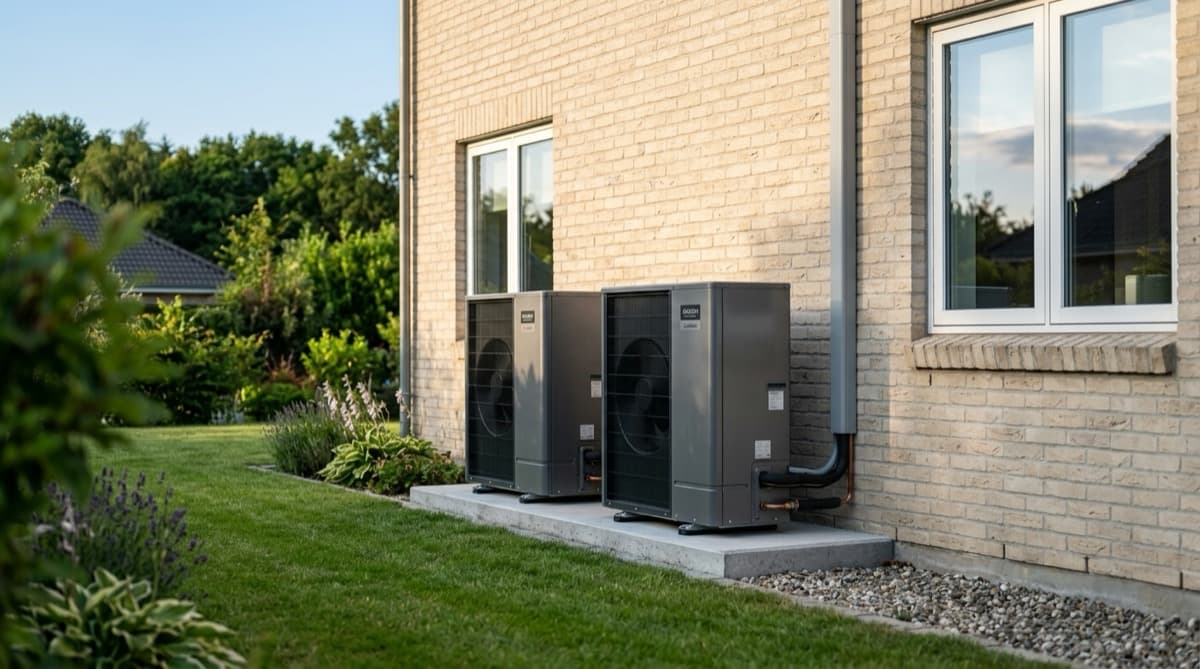
Type "mitsubishi vs daikin heat pump" into Google and you will find scorecards, comparison tables, and forum debates that treat this like a title fight. Daikin vs Mitsubishi, who's king. We install heat pumps across Long Island for a living, so here is the honest version up front: both brands build excellent equipment, and for most homes the deciding factor is not the logo on the outdoor unit. It is what your house already has inside its walls.
There are really three kinds of Long Island homes in this comparison: homes with ductwork, homes going ductless, and homes with radiators or baseboard. For the first two, Mitsubishi and Daikin are close enough that we would not lose sleep either way. For the third, and that is a huge share of the housing stock out here, the two brands are not even playing the same game anymore.
The Comparison You Came For
First, the questions everyone asks. Which brand of heat pump is most reliable, Daikin or Mitsubishi? Honestly, it is a tie. Both are Japanese engineering heavyweights that build their own inverter compressors rather than buying them in, and both have decades of cold-climate heat pump development behind them. Field reliability between the two comes down far more to the quality of the installation than to the brand.
Which is quieter? Also effectively a tie at the spec-sheet level. Both make some of the quietest outdoor units in the industry, and the answer changes model by model, so compare the specific units you are quoted rather than the brands.
Price? Comparable. Warranty? Comparable, typically 10 to 12 years on parts and compressor when the system is registered and installed by a credentialed dealer, which is Diamond dealer status on the Mitsubishi Electric side and similar programs on the Daikin side.
If that feels anticlimactic, it should. At the brand level this comparison caps out fast. The useful differences show up when you look at your house.
If Your Home Has Ducts: Very Close
For a home with existing ductwork, both brands make strong cold climate ducted systems. Daikin's Fit line pairs a compact outdoor unit with an air handler and holds heating capacity well into single digits. Mitsubishi's ducted Hyper-Heat equipment is rated to do the same, with a well-earned reputation for output in deep cold. Efficiency ratings trade slight edges back and forth depending on the model year and size.
Our take for a ducted Long Island home: either brand can be the best heat pump for the job. Pick based on the installer's track record with that equipment, the specific model's cold-weather ratings, and the controls you prefer, not the badge.
If You're Going Ductless: Also Close
Same story for mini splits. Mitsubishi has arguably the broadest ductless lineup in the US market and the name recognition to match. Daikin's mini-splits are every bit as capable, often a touch quieter in the smaller wall units, with a designer series if looks matter to you. You will also see Fujitsu, LG, and Bosch in this space, and some of them are fine machines, but the big two are the big two for a reason.
If a contractor tells you one of these brands is junk and the other is a miracle, that tells you about their dealer agreements, not about the equipment.
If Your Home Has Radiators: They Stop Being Comparable
Here is the fork in the road that the national comparison articles miss, and it matters more on Long Island than almost anywhere else. A large share of homes here heat with a boiler pushing hot water through radiators or baseboard, often with no ductwork at all. Every system discussed above is an air-to-air heat pump. None of them can use your radiators, because air-to-air heat pumps and radiators do not connect to each other.
This is where the two brands diverge. Daikin makes the Altherma 3 H HT, an air-to-water heat pump that produces water hot enough to drive the cast-iron radiators and baseboard loops Long Island houses already have. It is an all-in-one system: it replaces your boiler, adds central cooling, and heats your domestic hot water from a single outdoor unit, while your existing radiators stay right where they are. Mitsubishi sells air-to-water heat pumps in other markets, but it does not currently offer an equivalent in the US.
So for a radiator house asking "which heat pump brand is best," the honest answer is that only one of the two brands has a product built for your house at all. That is not a knock on Mitsubishi. It is just the state of the US lineup in 2026.
New to Long Island, and We're On the Launch List
The Altherma 3 H HT is newly arrived in the US market, and Patchogue Heating and Air Conditioning is one of the few authorized Altherma installers on Long Island. We went through the factory training because we kept meeting homeowners stuck in the same spot: oil or gas boiler aging out, no ducts, and every heat pump quote starting with "first we tear open the walls." The Altherma skips that entirely.
The rebate picture helps too. PSEG Long Island's heat pump rebates and NYSERDA programs apply to qualifying air-to-water installs just as they do to conventional heat pumps, and in some cases the programs may be combined. The details depend on your household and change periodically, so we will walk you through current numbers at the house rather than quote totals in a blog post.
The Honest Caveats
Brand-level comparisons only take you so far, ours included. The right answer for your home depends on the specific model, the sizing, and the design. Any HVAC company quoting you a heat pump without a load calculation is guessing, and an oversized or undersized system from the best brand in the world will still disappoint you. Every recommendation we make starts with a Manual J, a look at your electrical panel, and a walk through what your house already has.
The Question to Ask Instead
Not "Mitsubishi or Daikin?" Ask this instead: what does my house already have, and what is the cheapest thing it can keep? If the answer is ducts, keep them, and either brand can serve you well. If the answer is nothing, ductless mini splits from either brand make sense. If the answer is radiators or baseboard, keeping them is a massive cost saving, and right now Daikin is the brand with the air-to-water heat pump that lets you do it.
Not Sure Which Way Your House Points?
We will tell you straight, even when the answer is "either brand is fine." If you are weighing a boiler replacement, a first heat pump, or a full oil-to-electric conversion, we offer a free home assessment across Nassau and Suffolk: we look at your heating system, your ducts or radiators, and your panel, and give you a real recommendation with real numbers. Call Patchogue Heating and Air Conditioning at 631-209-7090 or request your assessment online.
Related Articles
Heat Pump vs Gas Furnace on Long Island: Pros, Cons, and Which Is Right for You
Heat pump vs gas furnace on Long Island: operating cost, comfort, cold-weather performance, and rebates compared, plus when a gas furnace still makes sense.
Best Pool Heat Pumps for Long Island (2026): Hayward vs Pentair vs AquaCal vs Raypak
The best pool heat pump brands for Long Island in 2026, compared by techs who service all four: Hayward, Pentair, AquaCal, and Raypak. Match the brand to your pool.
Ductless Mini Split vs Central Heat Pump: Your Next System Probably Is Not Ductless
Ductless mini split vs central air heat pump on Long Island? If your Suffolk County home has radiators, there is a third option most contractors never quote.