Pool Heat Pump Cost on Long Island (2026)
What a pool heat pump costs on Long Island in 2026: unit and install price, monthly running cost, and how it compares to gas and solar pool heating.
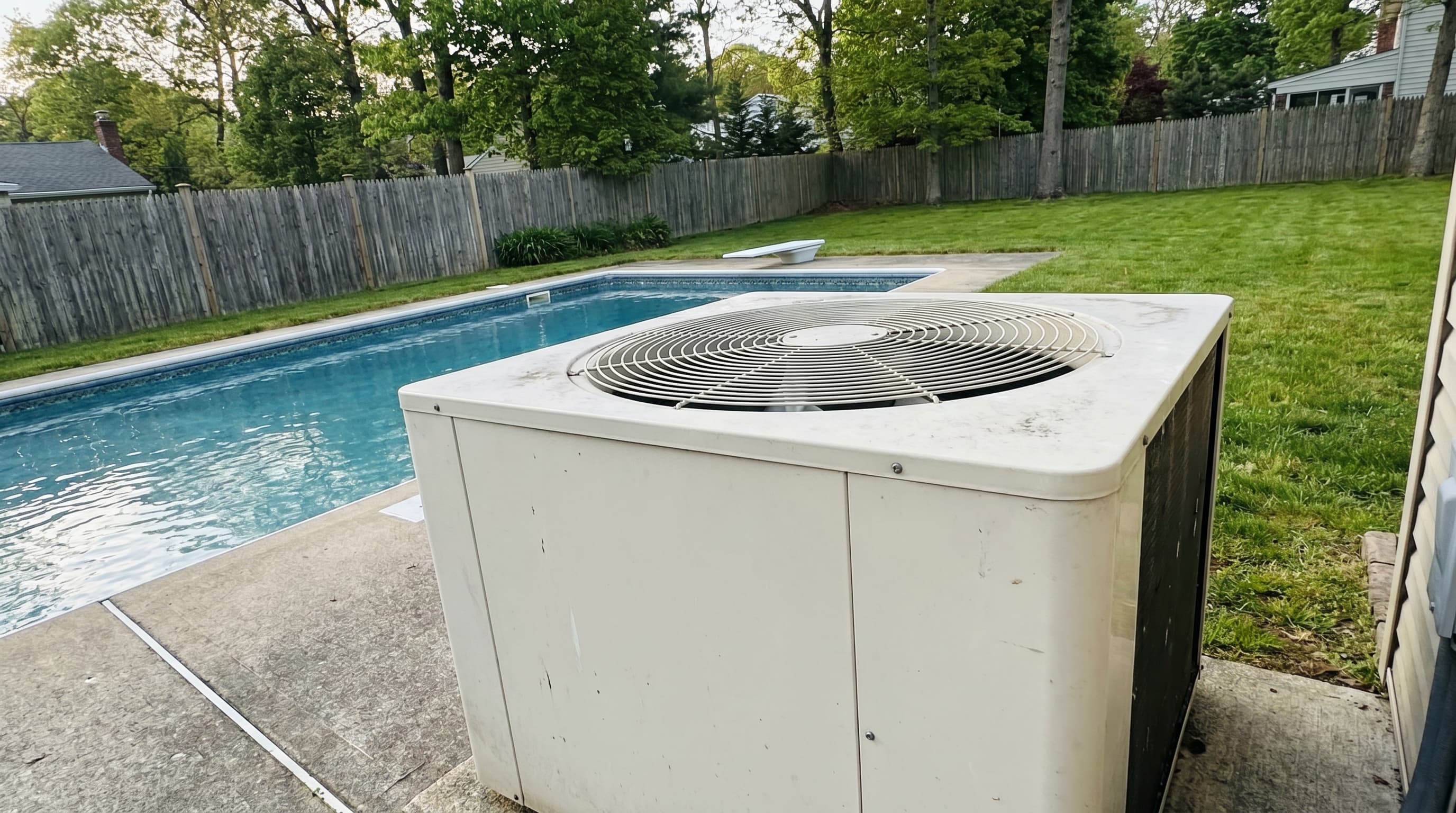
The short answer on pool heat pump cost
A pool heat pump costs about $5,900 to $8,000 installed on Long Island, and somewhere between $150 and $400 a month to run during the swimming season. That spread is wide because the unit size, your electrical setup, and how you use the swimming pool all move the number. Out here in Suffolk County, where the climate gives us a season that runs roughly May through September, an electric pool heat pump is the most energy efficient way to hold a comfortable water temperature for the whole stretch. Heating your actual house is a different cost conversation than heating the pool, and our heat pump cost guide for Long Island covers what a home heat pump runs across every system type.
We service pool heat pumps across Long Island, and the real cost of pool heating is the part most homeowners have the least information on before they buy or replace. Here is the honest breakdown: what the unit and install run, the operating costs most people underestimate, and how a heat pump compares to gas and solar pool heaters.
What a pool heat pump costs to buy and install
The price splits into the equipment and the install, the same way a home system does.
The unit. A pool heat pump runs about $3,900 to $5,300 depending on BTU output and brand. The common brands we see on Long Island are Hayward, Pentair, AquaCal, and Raypak. If you are trying to decide between them, our guide to the best pool heat pumps for Long Island compares all four. A bigger pool or a faster heat-up time means more BTUs, and more BTUs means a higher pool heat pump cost. Most inground pools out here land on a 110,000 to 140,000 BTU unit.
Most units run on an inverter compressor now, which ramps up and down instead of cycling on and off, and that is part of why newer pool heat pumps are more energy efficient than the ones from ten years ago. The water side uses a titanium heat exchanger that stands up to chlorine and salt, which matters a lot on Long Island.
The installation. Installation adds $2,000 to $2,700. That covers a level pad, the plumbing tie-in downstream of your pool pump and filter, and the electrical. The heat pump sits in the loop after the filter and the heat pump warms the water on its way back to the pool. The electrical is the part that surprises people. A pool heat pump needs a dedicated 240V circuit, and if your panel is full or the equipment pad is a long run from the house, you are paying for wire, conduit, and sometimes a sub-panel. A short, simple run is cheap. A 100-foot trench across the yard is not.
So a typical pool heat pump installation cost on Long Island, all in, lands between $5,900 and $8,000. If someone quotes you far under that, ask what they are leaving out, usually the electrical.
Pool heat pump operating costs: what it costs to run each month
This is the number that actually matters over the life of the unit, and it is where a heat pump shines on operating costs.
Here is how they work, because the running cost only makes sense once you know. A gas heater burns fuel to make heat. A heat pump does not make heat at all, it moves it. A fan pulls outside air across a coil, the unit takes the warmth out of that air, and a titanium heat exchanger hands it off to your pool water on its way back from the filter.
The payoff is the ratio. For every unit of electricity it draws, a pool heat pump delivers three to five units of heat. That is the whole reason a month of heating costs less than it would on propane or gas.
Newer units are inverters, which means they throttle output instead of slamming on and off, holding the water steady on less power. Some reversible models will even pull heat back out of the pool during a July heat wave. None of it is exotic. It just needs a correct install and a little maintenance to keep delivering.
On Long Island, with PSEG electric rates where they are, expect roughly $150 to $400 a month in season to heat your pool. The range depends on three things: the size of your swimming pool, the water temperature you want to hold, and whether you use a cover. A 28-foot pool held at 86 degrees with no cover costs a lot more than a 24-foot pool held at 80 with a solar cover on overnight.
That cover is the single biggest lever you have. Most of a pool's heat loss is evaporation off the surface, so a solar cover can cut your pool heating cost by 40 to 70 percent. If you run a heat pump without a cover, you are paying to heat the night air over Suffolk County. Drop the target temperature a couple of degrees and the savings stack on top of that.
Heat pumps and pool heaters compared: heat pump vs gas heater vs solar heaters
Three ways to do your pool heating, three different cost shapes.
Heat pump. Higher upfront than electric pool heaters and gas, cheapest to run by a wide margin. Works great in the mild air temperatures Long Island sees from late spring through early fall, and it is the energy-efficient way to heat a pool over a full season. It warms the water slowly and steadily, so it pairs best with a cover and a pool you keep at a steady temperature rather than blasting from cold.
Gas heater. Cheaper to buy, far more expensive to run, especially on propane. Heat pumps cost more than gas pool heaters upfront but cost far less every month after that, so over a season they save more money. The gas advantage is speed and cold-weather performance: it will heat a pool fast on a 45-degree morning when a heat pump becomes less efficient and slows down. For a Long Island homeowner who swims all season, the running cost almost always makes the heat pump the better total-cost choice over gas or propane pool heaters.
Solar heaters. Lowest running cost of all, basically free once installed, but weather-dependent and slow. Plenty of homeowners pair solar heaters with a heat pump so the heat pump only has to make up the difference on cloudy stretches.
For most Suffolk County pools used through the normal season, the heat pump is the sweet spot on total cost.
How pool size and target temperature change your pool heating cost
Sizing is where a good installer earns their keep, and it drives both the install price and the monthly bill. The right BTU pool heat pump for your yard comes from the pool surface area, the water temperature you want to hold, how exposed the pool is to wind, and whether you use a cover. A pool tucked behind a fence in Sayville loses less heat than an open lot near the bay catching the wind off the water.
Undersizing means the unit runs constantly and still never quite catches up on a cool week. Oversizing means you paid for BTUs you do not need. Either way, a cover and a realistic target temperature do more for your running cost than chasing the biggest unit on the shelf. Holding 82 instead of 88 is real money over a Long Island summer, and a well-sized unit will also extend your swimming season into the cooler shoulder weeks of May and September.
Heat pumps for above ground vs inground pools: how the cost differs
Above ground pools usually cost less to heat than inground pools, for two reasons. Smaller pools hold less water, so a lower-BTU unit does the job. A homeowner with an above ground pool can often get away with a smaller heat pump and a lower install cost. Heat pumps for above ground pools are widely available, and the same titanium heat exchangers used on inground systems work fine, just sized down. Inground pools and larger pools generally run longer seasons and justify a bigger unit, which is why their total pool heating cost runs higher. Either way the cost drivers are the same: pool size, target water temperature, and whether you use a cover.
Do pool heat pumps qualify for rebates?
Short answer, no, and we would rather tell you that up front than let you budget around a rebate that is not coming. The PSEG Long Island and NYSERDA Clean Heat rebates that knock thousands off a home heat pump do not apply to pool heat pumps, because those programs are about heating and cooling your house, not your pool. A pool heat pump is still a big efficiency win over gas, but plan the purchase on its own merits, not on an incentive.
Pool heater repair cost and the repair-versus-replace question
Once the unit is in, the cost conversation shifts to upkeep, and proper maintenance keeps the running cost down for the whole pool season. A heat pump pool heater is a refrigerant machine, the same kind we work on every day, and most repairs run $300 to $1,400 depending on the failure. Capacitor and contactor swaps are on the low end, and refrigerant leaks and control boards sit higher. A compressor is the exception: the part alone often runs about $2,000 before labor, and once a unit is past ten years old that is where replacement enters the conversation. If you want to see how the common failures show up, our pool heat pump troubleshooting guide walks through the seven things to check first.
The repair-versus-replace math is simple. Pool heat pumps last 10 to 15 years on Long Island. If the unit is over 10 years old and the repair quote is at or above roughly $2,000, which is about what the compressor part alone runs before labor, replacement usually makes sense, and a newer unit will cut your running cost on top of it. We always give you both numbers so you can decide.
When a swimming pool heat pump is worth it on Long Island
If you swim through the season and want predictable, low running costs, a pool heat pump is almost always the right call over gas. The upfront cost is real, but the monthly savings and the long life pay it back over the years you own the pool. Pair it with a cover and a sensible target temperature and it is the cheapest comfortable pool on the block.
If your heat pump is acting up, you are weighing repair against replacement, or you want a straight answer from a pool professional on what a new unit would cost for your pool, give us a call or text at 631-209-7090. We are the HVAC techs who actually know the machine, we cover pool heat pump service across Suffolk County, our rates are posted on our pricing page, and we will give you honest numbers either way. That beats any online cost calculator, because the price comes from your actual pool and your actual panel.
Frequently Asked Questions
Most homeowners spend $5,900 to $8,000 for a pool heat pump installed on Long Island. The unit itself runs about $3,900 to $5,300 depending on BTU output and brand, and installation adds $2,000 to $2,700 for the electrical, pad, and plumbing tie-in. A long run to the panel or a new dedicated circuit pushes you toward the high end.
Expect roughly $150 to $400 a month in season on Long Island, depending on pool size, your target temperature, and whether you use a cover. A solar cover is the single biggest lever, often cutting running cost by 40 to 70 percent because most heat loss is evaporation off the surface.
To run, yes, by a wide margin. A heat pump moves three to five units of heat for every unit of electricity, so it costs far less per month than propane or natural gas. Gas heats the water faster and works in cold weather, but on Long Island's May-to-September season the heat pump almost always wins on total cost.
No. The PSEG Long Island and NYSERDA Clean Heat rebates apply to heat pumps that heat your home, not your pool. A pool heat pump is a great efficiency upgrade over gas, but it does not qualify for those programs, so plan your budget without counting on a rebate.
Ten to fifteen years with proper winterizing and balanced water chemistry. Salt-system pools and lots near the bay tend toward the lower end because of corrosion. An annual pre-season check is the cheapest way to get the full life out of the unit.
Related Articles
Pool Heat Pump vs Gas Heater on Long Island
Pool heat pump vs gas heater on Long Island: how each one heats, what they cost to buy and run, heat-up speed, and which fits your swimming season.
What Size Heat Pump Do You Need for a Long Island Winter?
Heat pump size on Long Island: what size heat pump do you need for your home, and why BTUs at 17 degrees matter far more than the ton printed on the label.
Your Heat Pump Is Rated at 47 Degrees. Long Island Winters Are Not.
A cold climate heat pump loses heating capacity as it gets colder. What Long Island homeowners should check at 17 degrees before signing any proposal.