What Is an Air-to-Water Heat Pump? (Long Island)
An air-to-water heat pump handles space heating, water heating, and cooling from one unit. Here's how it works and why Long Island homeowners should care.
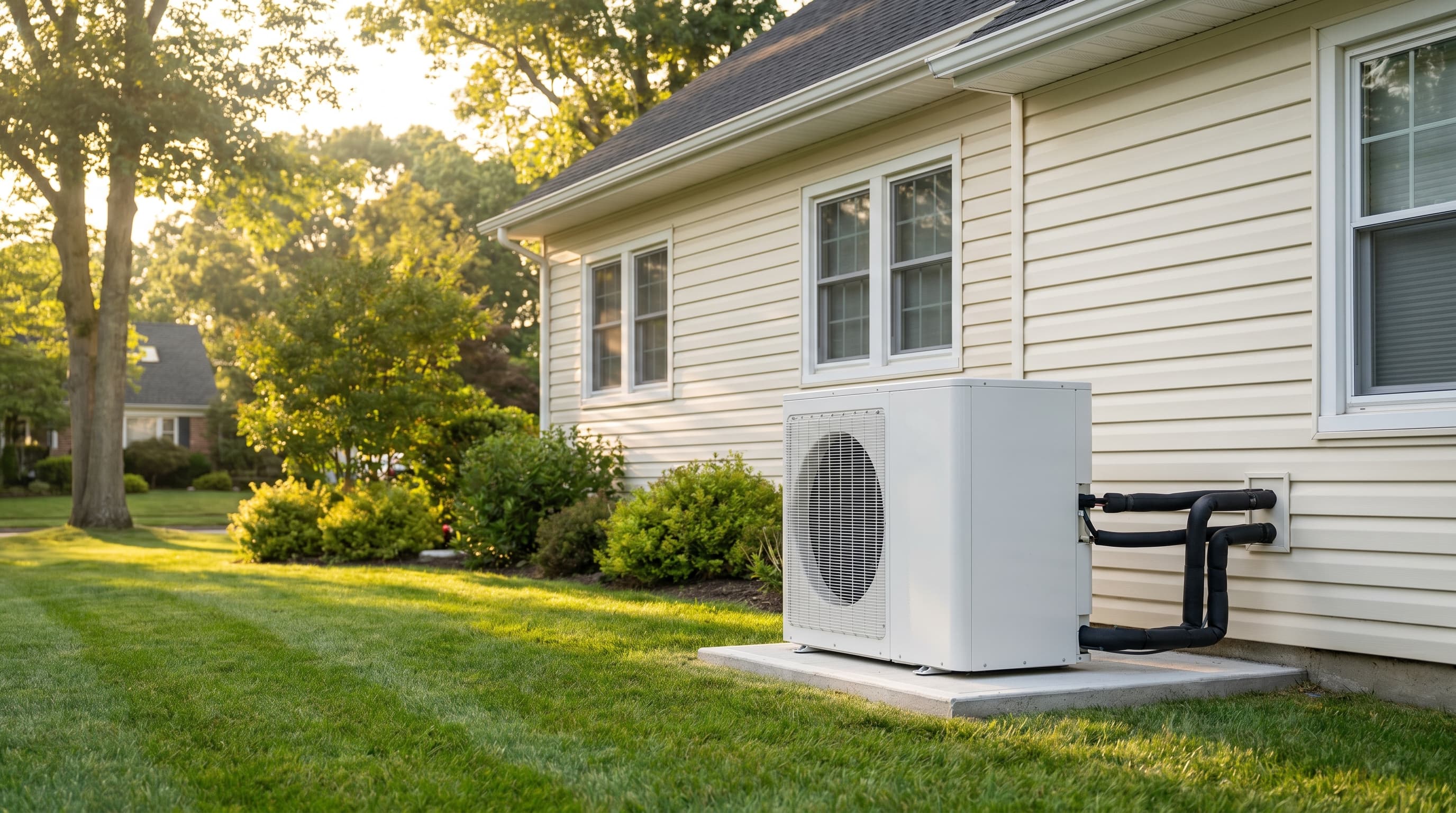
You have probably heard of heat pumps by now. Maybe a neighbor got one, or your contractor mentioned it last time the boiler needed work. But the systems most people talk about are air-to-air models that blow warm or cool air through ducts or wall heads. If your house has radiators and no ductwork, that kind of heat pump has never been a clean fit. An air to water heat pump is a different animal entirely, and it is the reason radiator houses can finally get in on the heating and cooling conversation.
How Does an Air to Water Heat Pump Work?
An air to water heat pump is a system that extracts heat from the outside air and transfers it to water instead of blowing it through ducts. The air-to-water heat pump extracts heat from the outdoor air using a refrigerant cycle, and the refrigerant flows through a heat exchanger where that heat energy is used to heat water. Even when it is cold outside, there is still usable energy from the outside air, and the heat pump's compressor concentrates it and raises the water temperature. All heat pumps operate on this same principle. The difference is what happens next.
Instead of delivering hot air indoors, the heated water circulates through your house using whatever distribution system you already have. Radiators, baseboards, radiant floor loops, fan coils. It pulls heat from the air and sends warm water through your water pipes and water distribution network. Your house decides how to use it. In cooling mode, the process reverses. The heat pump transfers heat from the water loop and rejects outdoor heat, sending chilled water through fan coils or a hydronic air handler to cool your rooms. And because it already moves heat in and out of water, it handles your domestic hot water needs too, year round, from the same outdoor unit and a dedicated hot water tank. One hot water system handles heating and domestic hot water and cooling from the same loop. Heat pumps provide heating or hot water on demand, and this one does both.
Air-to-Air vs. Air to Water: The Split That Matters
Most systems installed in the US are air-to-air heat pumps. Here is how an air to air heat pump works: it extracts heat from outdoor air and delivers conditioned indoor air into your rooms through air handlers or wall units. It is essentially an air conditioner that can also heat indoors, but the delivery method is always blown air.
That works great if you have ductwork. It does not work well if your house was built to distribute heat through water. And on Long Island, a lot of houses were built exactly that way. Oil boilers feeding cast iron radiators or baseboards. No ducts anywhere. The houses in Patchogue, Sayville, Bay Shore, Islip, most of the South Shore run on hydronic heating systems.
An air to water heat pump works differently. It heats water and sends it through the pipes and radiators you already own. It replaces the boiler but keeps everything downstream of it.
Why Americans Haven't Seen Air to Water Heat Pumps Until Now
In Europe, air to water heat pumps are used widely and have been the standard for over a decade because European houses are overwhelmingly hydronic. Radiators everywhere, underfloor heating in newer construction. The US went a different direction. We built houses with forced air ducts after World War II, so the air-source heat pump was the natural fit here. The hydronic houses in the Northeast were treated as edge cases. The other problem was water temperature. Early air to water heat pump systems could heat water to about 120 degrees. That is fine for underfloor heating, where the whole floor is the emitter and you only need 90 to 110 degree water. It is not fine for cast iron radiators that were sized for 160 to 180 degree water from a boiler. At that low temperature, the radiator cannot extract heat from the water fast enough to transfer heat directly into the room. Your house gets cold.
What changed is a new generation of compressor and heat exchanger technology that pushes heat into the water at much higher temperatures. The cold climate models now available can heat water to 150 to 158 degrees even when the ambient air is below freezing. That is hot enough to drive the radiators you already have.
Is an Air to Water Heat Pump Right for You?
Heat pumps use electricity to move heat rather than creating it, which is why they can deliver two to five units of heat energy for every one unit of electricity. For water heating and space heating through radiators, the efficiency ratio runs around 2 to 2.5. Water heating alone can be even better depending on tank temperature. For underfloor heating at lower temperatures, it climbs to 4 or higher. Either way, significantly more efficient than burning oil or gas to heat your home.
If you have a boiler feeding radiators or baseboards, no central ductwork, and you are thinking about getting off oil, this is the heating system built for your house. If your water heater is also aging, the all-in-one approach makes the math even better since one unit replaces your boiler, your air conditioning, and your water heater. Air-to-water heat pumps may not be the right answer for every house, but for hydronic homes heat pumps are an excellent option. Heat pumps can also provide cooling and domestic hot water from the same unit, which air-to-air systems cannot match. The full fit criteria, including which Long Island homes tend to qualify and which ones need more review, are on our air-to-water heat pump service page.
What Is Available on Long Island in 2026
The market is still small compared to Europe, but it is real and growing. A handful of manufacturers now sell cold climate rated systems through US dealer networks. Heat pumps are designed for different applications, and the air to water heat pump systems built for hydronic homes are finally arriving here.
The one we install is the Daikin Altherma 3 H HT. It is the all-in-one air-to-water heat pump that handles heating, cooling, and water heating from a single outdoor unit. It can produce water up to 158 degrees at full capacity down to 5 degrees of ambient air temperature, which covers every winter day Long Island has ever had. The heat exchanger design also makes it one of the quietest outdoor units on the market at 38 dBA, about the volume of a library.
Daikin has been selling the Altherma in Europe for over a decade. This third generation model is the first rated for both cold climates and high water temperatures at the same time, which is what separates it from older models. We are one of a small number of Long Island contractors authorized to install it. Full system breakdown, specs, and cold weather data are on the Altherma page.
Where to Start
If you have been told your house cannot have a heat pump because of your radiators, that advice was probably correct when you heard it. It is not correct anymore. Water heating, space heating, and cooling from one heat pump, for radiator houses, is now real.
The first step is a site visit. We look at your existing piping, your radiator sizing, your electrical panel, and your hot water tank setup. We run a Manual J heat load calculation so the system is sized correctly for your house. Give us a call or text at 631-209-7090 and we will walk you through what it would look like. You can also read more about how heat pumps work with existing radiators for the radiator-specific deep dive, or see what a heat pump for radiators project actually involves.
Frequently Asked Questions
An air-to-water heat pump extracts heat from outdoor air and transfers it into water rather than blowing it through ducts. The heated water then circulates through whatever hydronic distribution the house already has: radiators, baseboard, radiant floor loops, or fan coils. It replaces the boiler but keeps everything downstream of it. Because it already moves heat in and out of water, it can also handle domestic hot water and, running in reverse, cooling.
A refrigerant cycle pulls usable energy out of the outside air, even when it is cold, and the compressor concentrates it. That heat passes through a heat exchanger into a water loop instead of into an air stream. The hot water circulates through your existing pipes and radiators. In cooling mode the process reverses, sending chilled water to fan coils or a hydronic air handler. All heat pumps work on this same principle. The only difference is whether the heat lands in air or in water.
Air-to-air heat pumps deliver conditioned air into rooms through ductwork or wall-mounted heads. They are essentially air conditioners that can also heat. Air-to-water heat pumps heat water and send it through pipes to radiators, baseboard, radiant floors, or fan coils. Most American installs are air-to-air because the US built forced-air housing after World War II. Long Island has a lot of hydronic homes with oil boilers and no ducts anywhere, which is exactly where air-to-water fits.
Two reasons. First, housing stock. European homes are overwhelmingly hydronic, so air-to-water became the standard there over a decade ago, while the US built forced-air ducted homes and treated hydronic Northeast houses as edge cases. Second, water temperature. Early air-to-water systems reached only about 120 degrees, fine for underfloor heating but too cool for cast iron radiators sized for 160 to 180 degree boiler water. Newer cold-climate models reach 150 to 158 degrees, which removed that barrier.
Heat pumps move heat rather than creating it, so they deliver roughly two to five units of heat energy per unit of electricity. Running space heating through radiators, the ratio lands around 2 to 2.5. Underfloor heating at lower water temperatures climbs to 4 or higher. Either way it is meaningfully more efficient than burning oil or gas, and the efficiency varies with how hot the water needs to be.
Related Articles
What Size Heat Pump Do You Need for a Long Island Winter?
Heat pump size on Long Island: what size heat pump do you need for your home, and why BTUs at 17 degrees matter far more than the ton printed on the label.
Your Heat Pump Is Rated at 47 Degrees. Long Island Winters Are Not.
A cold climate heat pump loses heating capacity as it gets colder. What Long Island homeowners should check at 17 degrees before signing any proposal.
17 Degrees in Patchogue, 10 in Westhampton: The Long Island Heating Design Temperature
The Long Island heating design temperature is not one number. Brookhaven 16F, Farmingdale 17F, Gabreski 10F, and Suffolk County HVAC design conditions differ.