Home Energy Assessment
Find Out What Your House Is Actually Doing
A BPI home energy assessment measures where your house loses energy instead of guessing at it. Blower door, insulation inventory, safety testing, and a written plan you keep.
Reviewed by Andrew Blom, HVAC pro since 2007, including nine years at Daikin
Home Energy Assessment: Key Facts
- What it is
- A BPI home energy assessment: a room-by-room walkthrough, a blower door test that measures how leaky your house actually is, combustion safety testing on your existing equipment, and a written report of what to fix and in what order.
- How long it takes
- Two to three hours in the house for a typical Long Island home, and you get the written report within five business days.
- PSEG program
- This is the Home Energy Assessment that opens the door to the PSEG Long Island Home Performance program and its envelope rebates.
- What you get
- A measured air leakage number, an insulation inventory by location and R-value, a health and safety check, and a prioritized scope of work with rebate amounts attached.
- No obligation to buy
- The report is yours. If you want to take it to another contractor or do the work yourself over three years, that is fine and it happens.
- Service area
- Assessments are scheduled across PHA's Suffolk County South Shore service area, from West Islip east to Bellport and north to Ronkonkoma, seven days a week from 7am to 7pm.
What Is Included
Six Things We Measure
Two to three hours in the house. Every item here is a measurement, which is what separates an assessment from a salesman with a flashlight.
Blower door test
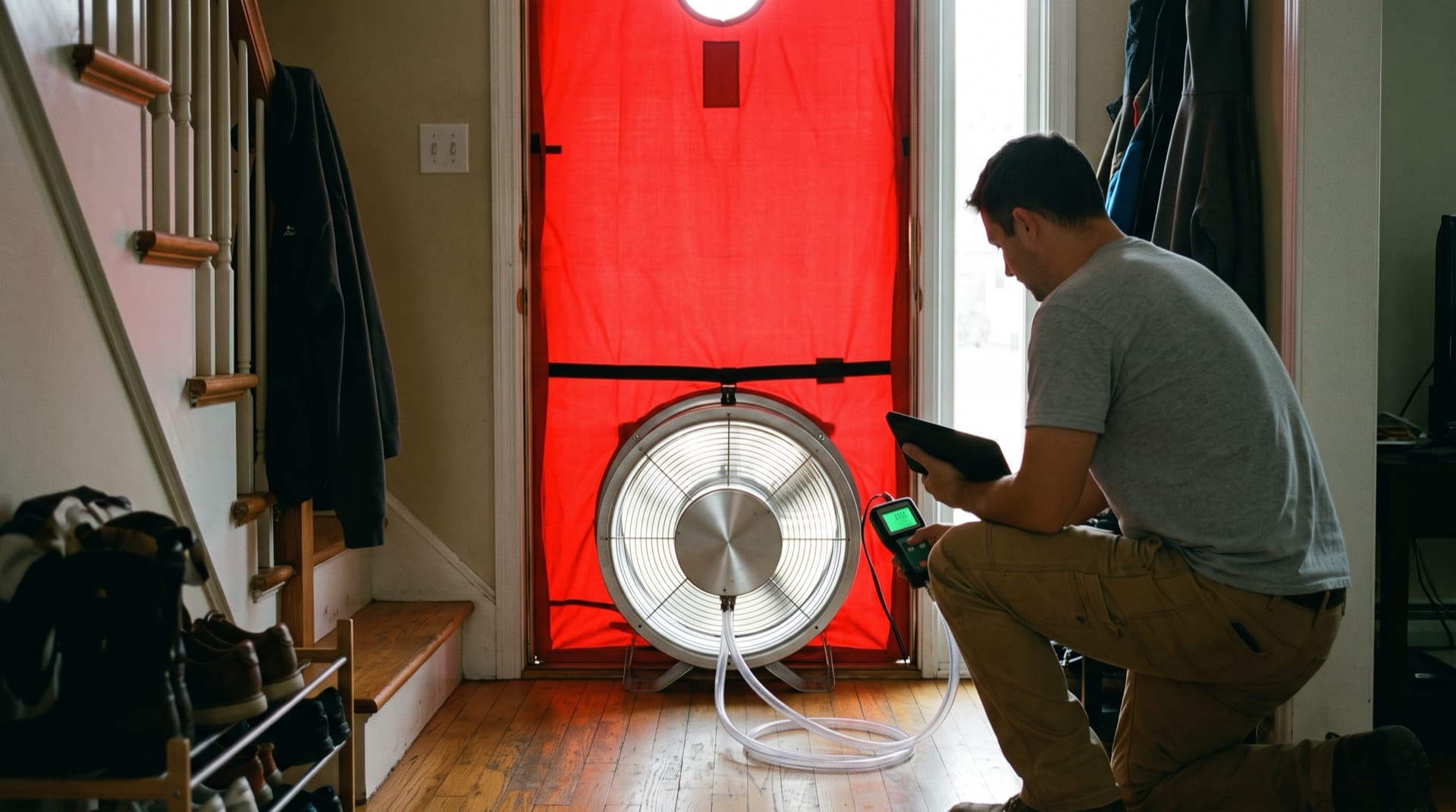
A measured air leakage number for your house, before and after, not an opinion about drafts.
Insulation inventory
Attic, walls, floors, band joist, and crawl space, recorded by location, condition, and existing R-value.
Combustion safety
Draft, spillage, and carbon monoxide testing on your existing furnace, boiler, and water heater. Required by BPI standards.
Duct assessment
Where ductwork runs through unconditioned space, and whether it is leaking your paid-for air into the attic.
Health and safety check
Moisture, ventilation, and anything that needs to be addressed before the house gets tighter.
Written scope of work
A prioritized list with costs and the rebate amounts attached, delivered within five business days.
What Happens With the Report
You get a written scope of work within five business days. It lists what we found, what each fix costs, what the PSEG rebate covers, and what order to do things in if you are not doing all of it at once.
If you want us to do the work, the scope goes to PSEG for approval before anything starts, so the rebate is confirmed rather than hoped for. If you want to take the report elsewhere or handle the easy items yourself, that is genuinely fine. It is your house and your report.
Most people find the same thing: the attic and the air sealing are where the money is, and the rest can wait. See insulation and air sealing for what that work involves, or the rebates and savings guide for how the programs fit together.
Common Questions
Home Energy Assessment FAQ
We start with a walkthrough and a conversation about which rooms are uncomfortable and what your bills look like, because that tells us where to look. Then we measure: attic and crawl space insulation by location and depth, a blower door test to put an actual number on the air leakage, and combustion safety testing on your existing furnace, boiler, or water heater. Two to three hours for most homes. You get a written report within five business days with what we found and what fixing it costs, ranked by what actually pays back.
A calibrated fan mounted in an exterior doorway that pulls air out of the house and depressurizes it slightly. That makes every leak in the building announce itself, so instead of guessing where the drafts come from we can find them and put a number on the total. It is the difference between a contractor telling you the house is leaky and showing you how leaky, and then showing you the same measurement again after the work.
The Home Energy Assessment is part of the PSEG Long Island Home Performance program and PSEG supports the cost of it for participating households. Eligibility depends on your account and your home, so we confirm what applies to you when we schedule rather than promising a number up front.
No. The report is yours to keep and use however you want. Plenty of people take it, do the cheap items themselves that first winter, and come back for the attic a year later. We would rather be the company that gave you a straight assessment than the one that talked you into a project on day one.
PSEG runs a few things under similar names, including a quick online home energy check that is a questionnaire, not a visit. This is the in-home BPI assessment: somebody in your attic and your basement with a blower door and a combustion analyzer. The questionnaire is useful for a rough idea. The assessment is what generates a real scope of work and unlocks the envelope rebates.
Because tightening a house changes how combustion appliances vent. BPI standards require combustion safety testing as part of any assessment, which means checking draft, spillage, and carbon monoxide on your existing gas or oil equipment. It is a safety requirement, not an upsell, and occasionally it is the most important thing we find all day.
Ideally yes. A tighter, better insulated house needs less heating and cooling capacity, and a smaller system costs less to buy and less to run for its whole life. If we size equipment for a leaky house and you insulate the year after, you have paid for capacity you no longer need. When both are in play we assess first, do the envelope work, then size the system to the house you will actually have.
Ready to Get Comfortable?
Text or call us today. No pressure, no surprises. Honest HVAC service from your Patchogue neighbors.