All-in-One Heat Pump: Heat, Cool, and Hot Water
Yes, there is a heat pump that also heats water. One unit replaces your boiler, AC, and water heater. Here is how the all-in-one heat pump system works.
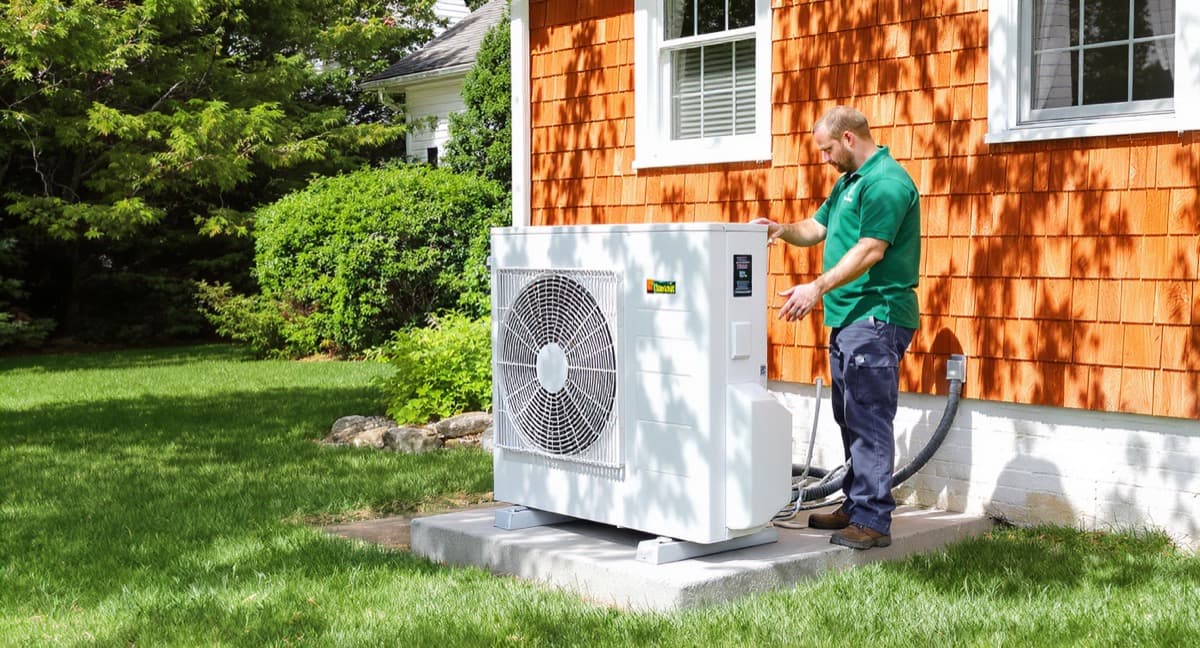
Somebody told you the new heat pumps can do hot water too, and you Googled it to find out if that was real or if they were confused. It is real. There is now a heat pump that also heats water, cools your home, and warms your home, all from one outdoor unit. Almost nobody on Long Island knows this is an option yet, which is exactly why you are reading about it instead of seeing it on a neighbor's lawn.
Here is the short version before the deep dive. One outdoor unit does three jobs. It replaces the boiler, the central AC, and the water heater. It keeps your existing radiators, baseboards, or ducts. And the engineering that lets one heat pump system do all of that is the most interesting thing to happen to home HVAC in a decade.
What "Heat Pump That Also Heats Water" Actually Means
The thing you are looking for has a name: an air-to-water heat pump. That word water is the whole story. Almost every heat pump an American homeowner has heard of is air-to-air. It pulls heat from the surrounding air and blows warm or cool air through ducts or a wall head. An air-to-water heat pump pulls heat from the outside air the same way, but it moves that heat into water instead. The water then does whatever you need it to do: running hot through your radiators, running chilled through a fan coil for cooling, and filling a tank for your showers.
That is why a combination heat pump and water heater is even possible. Once the system is making hot water anyway, sending some of that water to a storage tank instead of a radiator is a small step. An air-to-air unit can never do this, because air does not fill a bathtub. The water loop is what unlocks the all-in-one capability. If you want the longer explanation of the category, we wrote a plain-English piece on what an air-to-water heat pump is.
Is This the Same as a Heat Pump Water Heater?
Not quite, and this is the most common mix-up, so it is worth a minute. When most people search for a heat pump water heater, what comes back is a hybrid electric heat pump bolted to the top of a tank water heater, the kind that sits in a basement or garage and only makes domestic hot water. A hybrid electric heat pump water heater is a genuinely good product. It pulls heat from the ambient air around it, uses a fraction of the electricity of a standard electric water heater, carries an Energy Star rating, and falls back on electric resistance heating elements when you draw a lot of hot water at once. The Department of Energy lists it as one of the biggest cost savings upgrades a household can make. But it does exactly one job: water heating.
The all-in-one system in this article is bigger than that. It is a whole-home air-to-water heat pump that handles space heating, cooling, and domestic hot water from a single outdoor unit, then heats water in a dedicated storage tank as part of the same machine. Think of it as the difference between a heat pump water heater that only warms the tank and a heat pump system that warms the tank, the house, and runs your AC in summer. If all you need is to retire an old gas water heater or electric water heater, a standalone hybrid model may be all you want. If you are facing a dying boiler and aging AC on top of that, the all-in-one is the better answer.
The Three Jobs, One at a Time
A heat pump for heating, cooling, and hot water sounds like marketing until you see how each mode actually works. It is the same hardware doing three things.
Heating. The outdoor unit draws heat from the outside air, even cold air, and the indoor hydrobox transfers that heat into your water loop. The warm water circulates through whatever emitters you already own. The system reads the outdoor temperature and modulates, so it runs gently on a 40-degree day and ramps up on a 10-degree night instead of slamming on and off the way a fossil-fuel furnace does.
Cooling. In summer the cycle reverses. The system pulls heat out of the water loop and rejects it outside, sending chilled water to a fan coil or hydronic air handler. If your house is all radiators with no ductwork, you add a discreet unit in the rooms that need cooling. If you already have ducts and an air handler, the system ties right in.
Hot water. Inside the hydrobox there is a priority valve. When the storage tank drops below its setpoint, the valve quietly diverts heating capacity to the tank, brings the water back up to temperature, and then returns to whatever it was doing. You never notice the hand-off. There is no separate water heater and no gas line for it. The tank does have an electric backup element, the same as most integrated tanks do, but it is there as a booster for unusual demand and for the periodic high-temperature sanitizing cycle. Day to day the heat pump does the work, which is the whole point. A conventional electric water heater runs on resistance heat every single time you draw hot water; here the element is the exception rather than the rule.
Three jobs, one outdoor unit, and one monthly utility relationship instead of three.
Why a Single-Unit HVAC and Water Heater Only Just Landed Here
If this is so clever, why has nobody heard of it? Because it is genuinely new to the US market. Europe has run air-to-water heat pumps for over a decade. Their homes were built with radiators and underfloor loops, not ductwork, so they needed equipment that made hot water rather than warm air. The technology is mature over there, with millions of units installed.
What held it back in the States was cold-climate performance at the high water temperatures older American houses need. Cast iron radiators want hot water, and early air-to-water heat pumps could not deliver that and still run hard in deep winter. The current generation fixed that. The model we install, the Daikin Altherma 3 H HT, produces water hot enough for cast iron rads while running at full output well below freezing. The compressor and refrigerant cycle do the work that a furnace used to do with fire. That combination is the unlock for Long Island housing stock. We cover the specifics in our Daikin Altherma breakdown if you want the model-level detail.
What the All-in-One Heat Pump Replaces
This is where the all-in-one part earns its name. Line by line, here is what comes out of your basement.
It replaces your boiler. Oil or gas, the heat pump takes over space heating. Instead of burning fuel, it moves heat, which is why the operating cost drops for most oil-heated homes and why the greenhouse gas emissions drop along with it.
It replaces your central AC. The cooling mode handles what your condenser and air handler do now. If you have been running window air conditioners, those go in the garage for good.
It replaces your water heater. The dedicated tank takes over domestic hot water, whether you have a gas water heater, an electric water heater, or an indirect tank today. One appliance instead of two, and no second heating system to maintain.
And if you heat with oil, it lets you finally pull the oil tank. No more deliveries, no more watching the price per gallon, no more tank sitting in the yard or the basement.
What It Does Not Replace
Just as important is what stays. Your radiators stay. Your baseboards stay. Your radiant floor loops stay. Your ductwork stays if you have it. A heat pump that also heats water uses the hydronic distribution system already in your walls. The single biggest misconception we correct is that switching to a heat pump means tearing out your rads. It does not. If you have hydronic heat and a contractor told you otherwise, read how a heat pump works with existing radiators, because that advice is out of date.
Who This Actually Fits
An all-in-one heat pump system is not the right answer for every house, and we would rather tell you that now than after a sales pitch. It tends to make the most sense for a homeowner in one of three situations.
You are staring down two or three aging systems at once: a boiler on its last legs, an AC that is 15 years old, a water heater you are nervous about. You would rather solve all of it in one project than replace them one emergency at a time.
You want to get off oil or cut your gas dependence, but your house has radiators and you do not want a mini split head in every room.
You are tired of juggling three separate service relationships and three sets of parts, and you want one system, one contractor, one annual visit.
If two of those describe you, this is worth a real look.
The Honest Caveats
It is not magic. A home with a newer high-efficiency gas furnace and good ductwork may pencil out better with a conventional air-source system, or with a standalone heat pump water heater for the hot water alone. A house that only needs one or two rooms cooled may be fine with a mini split. And sizing matters enormously. We run a Manual J heat load calculation and walk the house before we recommend anything, because a system sized wrong is worse than the equipment you have now.
On cost and incentives, the honest 2026 picture is that the federal tax credit that used to help with this expired at the end of last year. What remains is the PSEG Long Island heat pump rebate, which is meaningful. Worth knowing that PSEG administers the NYS Clean Heat program out here, so that arrives as one rebate rather than two you add together. We will not throw a single headline number at you here, because the exact figures depend on your equipment and your situation, and getting that wrong helps nobody. The energy efficiency gains are the part you can count on: moving heat instead of generating heat is simply cheaper to run.
Lose the Boiler. Keep the Radiators.
That line is the whole idea. The all-in-one heat pump lets you retire the boiler, the AC, and the water heater while keeping the radiators and pipes you already own. It is one of the few authorized installs available on Long Island in 2026, and the homeowners who move early are the ones who get ahead of the next decade of energy costs.
The first step is a free assessment. We look at your piping, your emitter sizing, your panel, and your hot water setup, then run the numbers honestly. Call or text us at 631-209-7090 and we will tell you whether this fits your house or not.
Related Articles
Heat Pump vs Gas Furnace on Long Island: Pros, Cons, and Which Is Right for You
Heat pump vs gas furnace on Long Island: operating cost, comfort, cold-weather performance, and rebates compared, plus when a gas furnace still makes sense.
Best Pool Heat Pumps for Long Island (2026): Hayward vs Pentair vs AquaCal vs Raypak
The best pool heat pump brands for Long Island in 2026, compared by techs who service all four: Hayward, Pentair, AquaCal, and Raypak. Match the brand to your pool.
Ductless Mini Split vs Central Heat Pump: Your Next System Probably Is Not Ductless
Ductless mini split vs central air heat pump on Long Island? If your Suffolk County home has radiators, there is a third option most contractors never quote.