Ductless Mini Split vs Central Heat Pump: Your Next System Probably Is Not Ductless
Ductless mini split vs central air heat pump on Long Island? If your Suffolk County home has radiators, there is a third option most contractors never quote.
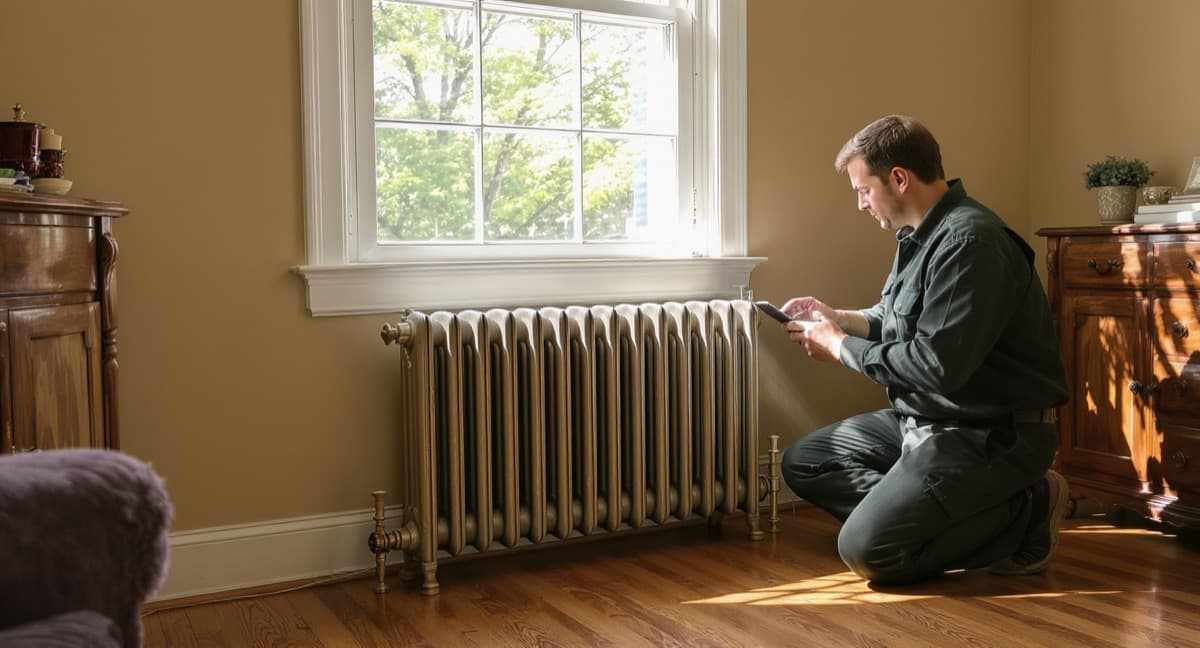
You have decided to get off oil. You called two or three contractors, and every one of them walked your Bellport or Sayville colonial, looked at the radiators, and said the same thing: your home has no ductwork, so you need ductless mini splits. Four indoor units, maybe six. Somewhere around four to six thousand dollars per head installed, plus a separate water heater when the boiler goes. And a wall unit in the living room, the dining room, and above the bed.
If you are asking whether you should get a ductless mini split or central heat pump, that question has a third answer now, and it is the one nobody quoted you.
Mini Split vs Central Heat Pump: The Short Version
Before the third option, here is the honest comparison you came for.
A traditional central air system is forced air: it moves conditioned air through ductwork from one indoor air handler. One thermostat, one central unit, cool air distributed throughout your home through the ducts and registers already in the walls. Central heat pumps do the same thing in reverse to heat and cool from the same equipment. If your home already has ductwork in decent shape, installing central is almost always the cheaper and simpler path, and the air filters in central AC systems give you one clean place to manage indoor air quality and humidity for the entire home.
A ductless mini-split system skips ducts entirely. One outdoor condenser feeds individual indoor units that blow air directly into each room, connected by refrigerant line sets. Every head is its own zone with its own setpoint. Energy efficiency is typically excellent because there is no duct loss, and a mini split heat pump can heat or cool one room without touching the rest of the house.
So: ductwork in place, go central. No ducts and no radiators, go ductless. That is the whole central air vs ductless mini split answer, and for most of Long Island it has been the end of the conversation about which cooling system is right for your home.
Why Ductless Became the Default for Radiator Homes
Your contractor is not steering you wrong out of ignorance. Until this year, mini-splits genuinely were the only way to get a heat pump into a Suffolk County house with no ducts. A conventional heat pump, central or ductless, is an air-to-air machine. It makes hot or cool air, and that air has to reach your rooms somehow. No ducts means no path, so the industry solved it by putting a small indoor unit in each room and running refrigerant lines through the exterior walls.
That works. It works well, actually. Adding new ductwork to a 1960s cape with plaster walls and no chases is brutally expensive, so ductless wins that comparison every time. It is also why a huge share of Long Island oil-to-electric conversions look like five wall heads and a fresh set of holes in the siding.
Three Homes Where Ductless Mini Splits Are Still the Right Call
We install ductless mini splits constantly, and we are not about to talk you out of one when it fits. Three situations where a mini-split system is clearly the better machine:
Room-by-room zoning. If the upstairs bedrooms run hot and the den runs cold, a multi-zone ductless system with independent thermostats per room fixes that in a way no single central system can.
Additions, garages, and ADUs. A finished attic or a converted garage almost never has existing ductwork worth extending. A single-zone mini split is the cheap, clean answer, and we say so constantly.
Supplementing what you already have. Got a central air conditioner that handles most of the house but one stubborn room? One head beats redesigning a duct system.
If your house has no radiators, no baseboard, and no ducts, ductless is probably still your system. Nothing below changes that.
What Changed in 2026: Whole Home Comfort Without Ducts
Here is the part your contractor may not have gotten to yet. There is a second family of heat pumps, common in Europe for two decades, that only reached the US market this year through a small set of authorized installers: the air-to-water heat pump.
Instead of blowing air, it heats water. Water hot enough to run the cast-iron radiators and baseboard loops already sitting in your walls. The system PHA installs is the Daikin Altherma 3 H HT, and it is an all-in-one unit: it replaces the boiler, produces your domestic hot water, and adds whole home cooling, all from a single outdoor unit.
Your radiators stay. Your pipes stay. The boiler, the oil tank, and the old furnace bills go. We covered the plumbing side in detail in our post on whether a heat pump can work with your radiators, and the short version is yes, if the water temperature is high enough, which is exactly what this equipment was built to do.
Where the All-in-One Option Actually Fits
Be honest about your house. The hydronic route makes sense if you check most of these boxes:
- You have working radiators or baseboard you would rather keep
- You do not want an indoor unit on the wall of every room
- Your boiler or furnace is aging out anyway
- You want central cooling for the entire home, not window units
- Your water heater is also on borrowed time
Miss most of those and mini splits are still your answer. Hit most of them and you owe yourself a second quote.
Cost and Electric Bill: Central Air vs Mini Split vs Hydronic
We are not going to hand you a fake number in a blog post, because hydronic projects vary more than air-to-air ones do. But the shape of the math is worth understanding.
The mini split path is five or six indoor units, plus a replacement water heater when the boiler comes out, plus whatever you do about the old boiler and tank. The all-in-one path is one outdoor unit, a buffer and hot water tank, and connections to the piping you already own. Equipment plus labor lands in roughly comparable territory for many Long Island homes, except the hydronic version absorbs the hot water replacement into the same project and adds cooling through fan coils or a hydronic indoor air handler.
On the electric bill, all three approaches beat oil badly. Ductless holds a small energy efficiency edge over ducted central air in raw numbers because there is no duct loss, though a well-sealed duct system narrows that fast. Running low-temperature water through big cast-iron emitters is efficient in its own right, which is why Europe standardized on it.
Rebates matter here too. PSEG Long Island heat pump rebates and NYSERDA programs apply to qualifying air-to-water installs, and in some cases they can be combined. We will not quote you a combined total, because the amounts depend on your household and the programs move. What we will do is sit at your kitchen table with the current numbers.
One thing to be clear about: the federal 25C tax credit expired at the end of 2025. Anyone still building your quote around it is working off old information.
The Disruption Nobody Mentions Until Install Day
Six mini split heads means six penetrations through your exterior wall, six line sets, and a condensate path from each one. It is manageable and good installers make it look clean, but it is real work on the outside of your house and it changes how rooms look inside. Filtration is per-head too, so indoor air quality gets managed at six separate filters instead of one.
The hydronic conversion reuses piping that is already run. Most of the disruption happens in the basement where the boiler lives. For a lot of homeowners in Patchogue and Medford, that difference alone decides it.
What to Ask the Next Contractor
If the next quote is mini-splits-only, ask three questions. Do you install air-to-water heat pumps? Can my existing radiators be reused with a high-temperature system? What does this quote assume about my domestic hot water?
You will learn a lot from the answers. Most Long Island contractors are not certified on this equipment yet, which is a fair reason to only quote what they know. It is not a reason for you to stop asking.
Which Cooling System Is Right for Your Home?
Compare mini split, central, and hydronic against what your house already owns, not against a spec sheet. Home already has ductwork? A central air conditioner or heat pump is usually the right heating and cooling system for your home. No ducts, no radiators? Mini split heat pumps, and mini splits are great at it. Radiators or baseboard and an aging boiler? The all-in-one air-to-water route deserves a quote before you decide.
Is a mini split cheaper than central air? With no existing ductwork, yes, and it is not close, because installing new ductwork costs more than the ductless equipment does. If you already have ducts, central air is the cheaper way to cool your home.
Can one mini split heat and cool a whole house? Not well. A single indoor unit conditions the room it is in. Moving air throughout your home with ductless means one indoor unit per zone, which is why those quotes climb.
Do heat pumps work with a furnace? Yes, a central heat pump pairs with a gas furnace as a dual-fuel system. That is a fine ducted setup and does nothing for a radiator house.
Get a Straight Answer About Your House
We will tell you when ductless is the right machine, because sometimes it is. But if you have radiators and an aging boiler, you deserve to see both quotes before you commit to holes in every exterior wall. We do free home assessments across Nassau and Suffolk: a look at your heating system, your emitters, your ductwork if you have any, and your electrical panel, then a real recommendation with real numbers. Call or text Patchogue Heating and Air Conditioning at 631-209-7090, or request an assessment.
Related Articles
Can a Heat Pump Work With My Radiators?
Most heat pumps can't drive Long Island radiators. One new system can. Here's how heat pumps work with existing radiators and what's actually changed in 2026.
What Size Heat Pump Do You Need for a Long Island Winter?
Heat pump size on Long Island: what size heat pump do you need for your home, and why BTUs at 17 degrees matter far more than the ton printed on the label.
Your Heat Pump Is Rated at 47 Degrees. Long Island Winters Are Not.
A cold climate heat pump loses heating capacity as it gets colder. What Long Island homeowners should check at 17 degrees before signing any proposal.