What Size Heat Pump Do You Need for a Long Island Winter?
Heat pump size on Long Island: what size heat pump do you need for your home, and why BTUs at 17 degrees matter far more than the ton printed on the label.
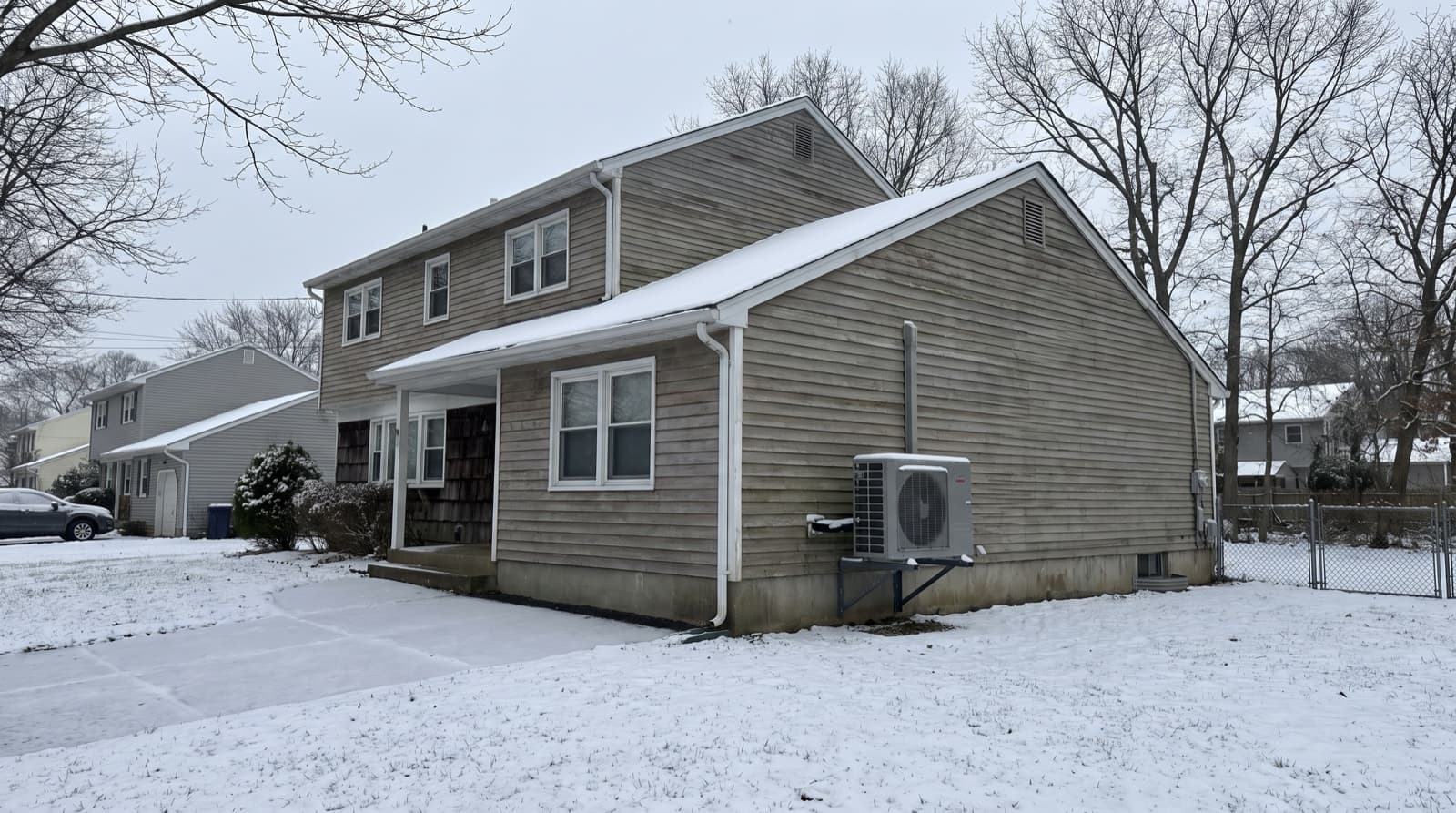
What size heat pump do you need? Heat pump size starts with BTUs at 17 degrees
Most Long Island homes land on a 2 to 4 ton heat pump, but the nameplate ton is the wrong number to shop on. What matters when choosing the right size heat pump is BTUs of heat output at 17 degrees outdoor temperature, for the exact outdoor unit and coil quoted.
Here is why the ton misleads. One ton is 12,000 BTU of cooling at 95 degrees, and a heat pump carries a second rating taken at 47. Neither tells you what it does on a 17 degree morning in Patchogue. Heat pumps absorb heat from outdoor air, so capacity falls as that air gets colder, and how fast varies by model. Two heat pump models both sold as 3 ton are very different machines. An Amana AZV9SA361CA lists 34,200 BTU rated heating capacity at 17 degrees, 43,200 maximum. A Bosch IDS Ultra of the same nominal size lists 36,600, rated and maximum identical. Roughly 9,000 BTU apart, same label. More on rated versus maximum in what your heat pump makes at 17 degrees.
Shop heat pump capacity at 17, not the ton.
Choosing the right size heat pump starts with heating, not cooling
Central air gets sized on the hottest afternoon. A heat pump has to heat and cool your home with one compressor, and out here the winter number is the bigger one. Your house loses more heat in January than it gains in July, so the heating load selects the equipment and the cooling load is the check afterward.
That makes design temperature the most important assumption in the proposal, and it is not one number across the Island. Brookhaven Calabro runs 16 degrees, Farmingdale Republic 17, Gabreski out east 10. Design temperature is the 99 percent number, not the record low, so it is the coldest condition your primary heat source is expected to cover without help. Seven degrees between stations is a whole equipment size on the identical house, which is the argument in how design temperature varies by weather station.
The cooling side has a matching trap. The ASHRAE 1 percent cooling design for Suffolk County is 88 degrees. A heating and cooling load run at 95 overstates conduction-driven cooling by roughly 35 percent, which can make a heating-dominated house look cooling-dominated. That is backwards.
What a Manual J load calculation actually measures
Under Section N1103.7 of the 2020 Residential Code of New York State, a Manual J load calculation is mandatory, not a courtesy. The code calls for a room-by-room calculation, with equipment then selected per Manual S. Nobody should install a heat pump without one, yet most replacements out here are still sized off the label on the old unit. The long version is here.
A real calculation measures. Square footage and volume room by room. Attic and wall insulation, verified rather than assumed. Window count, orientation, U-value, and solar heat gain coefficient. Air infiltration. Duct location and duct losses, since ducts in an unconditioned attic dump heat energy straight outside. Additions, dormers, and finished basements the original system never covered. It ends with the amount of heat the house gives up per hour at design temperature, which is what your home needs the equipment to replace.
ACCA is explicit that no safety factor should be added, because the margin is already built into the assumptions. Adding 15 percent and then rounding up to the next half ton is two compounding fudges that turn a 2.8 ton load into a 4 ton system.
The 100 to 120 percent rule, where oversized heat pumps fail too
With the load in BTU, determining the appropriate size is a lookup, not an opinion. PSEG Long Island's energy efficiency program tests the NEEP listed maximum heating capacity at 17 degrees, and it has to land between 100 and 120 percent of your Manual J heating load.
Read the ceiling carefully. If the heat pump is oversized it fails the rebate exactly the way an undersized heat pump does. On a 40,000 BTU heating load the qualifying window is 40,000 to 48,000 BTU at 17 degrees, and a unit making 55,000 is out no matter how comfortable that sounds. That is the mechanism behind why an oversized heat pump fails the PSEG rebate. The band is a fair design target on its own. Below 100 percent you hand cold nights to backup heat. Oversized heat pumps short cycle, leave uneven temperatures throughout your home, and never run long enough to pull humidity out in August.
Backup strips are not capacity in a heat pump system
We install electric strips as backup on most systems. They are not capacity, and they never change which condenser gets selected.
Strips run at a COP of 1. Every watt in makes one watt of heat, roughly three times the operating cost of the heat pump doing the same work. Sizing a smaller outdoor unit and letting strips cover the gap looks cheaper on the proposal and quietly wipes out the savings case for the life of the new heat pump. It also fails the rebate, which gates on the selected heat pump's own NEEP listing and never counts installed backup. With solar it is worse, because winter strip runtime eats the array right when production bottoms out. More in backup strips are not capacity and solar and heat pumps.
Size the heat pump properly at 17 degrees and a house out here rarely drops below its balance point at all. It does not shut off when it does. Here is what actually happens below the rated temperature.
Three questions to ask before you size a heat pump for your home
Ask for the Manual J and check the Design Conditions block for the heating design temperature. If it reads 0, 5, or 32, the load is wrong before the first room was measured.
Ask which AHRI matched system is quoted, and for the NEEP maximum capacity at 17 degrees in writing. A model number for the outdoor unit alone is not an answer, because the indoor coil changes the number. That holds whether it is a ducted heat pump or a ductless heat pump.
Ask what percentage of the heating load that capacity represents. A contractor who did the work answers something like 112 percent without looking it up.
If you want that math run on your own house before you buy a heat pump, we do heat pump installation and ductless mini split work across Suffolk County, and we hand you the load calculation whether or not you buy from us. Current heat pump rebates are on our rebates and savings page. Give us a call or text at 631-209-7090 and we will get you on the schedule.
Frequently Asked Questions
On Long Island, a 2,000 square foot house usually shows between 36,000 and 54,000 BTU of heat loss at design temperature, which points to roughly a 3 to 4 ton unit. That is a starting range, not an answer. The square footage of your home gets you into the neighborhood, but a tight 2010 colonial and a leaky 1958 cape of the same size can be a full step apart, and the older one may need larger equipment than the number suggests. Selecting the right heat pump size for your home takes a room-by-room calculation, not a chart.
Neither. Undersize it and the electric strips carry the house on the coldest nights at roughly three times the operating cost. Oversize it and you get short cycling, uneven rooms, weak summer humidity control, and a unit that fails the PSEG rebate, which caps eligible capacity at 120 percent of the calculated load. Proper sizing means landing inside the band, not padding it.
For heating. One machine has to heat or cool the same house all year, and in Suffolk County the winter number is the larger of the two, so it selects the equipment. Size to the heating load first, then confirm the same unit does not badly overshoot the cooling load. If a proposal was built on cooling alone, winter was never actually checked.
For a whole-home system, yes. A cold-climate air-source heat pump is one NEEP lists with tested output down to 5 degrees, and that listing is what the rebate is checked against. A standard unit gives up too much output by the time it is 17 out to heat the home without leaning on strips. Ask for AHRI certified heat pumps and the NEEP entry for the matched indoor and outdoor pair, not a brochure claim.
Ask for three documents: the Manual J with your actual design temperature in the Design Conditions block, the AHRI certificate for the matched pair, and the NEEP listing showing maximum heating capacity at 17 degrees. If that capacity sits between 100 and 120 percent of the calculated heating load, the sizing is defensible. If any of the three does not exist, nobody knows whether the appropriate heat pump was chosen.
Yes, when it is sized to the load. Heat pump performance out here is mostly a sizing and setup question rather than a technology question, and a right-sized system will keep your home comfortable at design temperature on its own. Most of the complaints we hear after getting a heat pump installed trace back to a unit that was never matched to a real load calculation in the first place.
Related Articles
Heat Pump vs Gas Furnace on Long Island: Pros, Cons, and Which Is Right for You
Heat pump vs gas furnace on Long Island: operating cost, comfort, cold-weather performance, and rebates compared, plus when a gas furnace still makes sense.
Best Pool Heat Pumps for Long Island (2026): Hayward vs Pentair vs AquaCal vs Raypak
The best pool heat pump brands for Long Island in 2026, compared by techs who service all four: Hayward, Pentair, AquaCal, and Raypak. Match the brand to your pool.
Ductless Mini Split vs Central Heat Pump: Your Next System Probably Is Not Ductless
Ductless mini split vs central air heat pump on Long Island? If your Suffolk County home has radiators, there is a third option most contractors never quote.