Best Pool Heat Pumps for Long Island (2026): Hayward vs Pentair vs AquaCal vs Raypak
The best pool heat pump brands for Long Island in 2026, compared by techs who service all four: Hayward, Pentair, AquaCal, and Raypak. Match the brand to your pool.
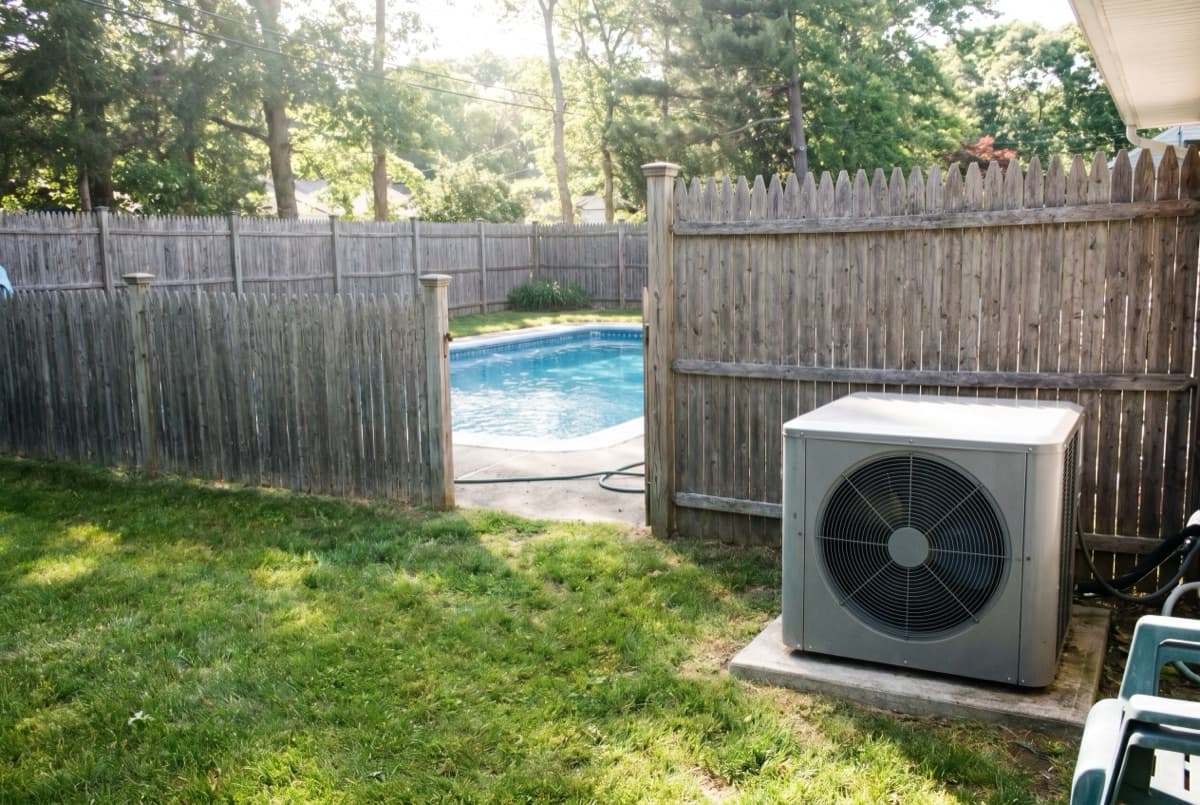
The honest answer on the best pool heat pump
There is no single best pool heat pump brand for every Long Island backyard. The four brands we service every week, Hayward, Pentair, AquaCal, and Raypak, are all good machines built around the same basic idea: a titanium heat exchanger, a refrigerant compressor, and a fan pulling heat out of the outside air to warm your pool water. The right one for you comes down to where your pool sits, what equipment you already run, and how fast you want the water warm.
We are the HVAC techs who actually open these units up and fix them, so this is not a spec sheet a manufacturer handed us. It is the view from the service truck after years of working on all four across Suffolk County. Here is how they really compare, and how to match a brand to your pool.
What actually matters in a pool heat pump on Long Island
Before the brand names, know what you are really buying. Every current pool heat pump uses a titanium heat exchanger, so the coil that touches your water is not where these brands separate. Titanium heat exchangers all resist chlorine and salt the same way, so the coil is not the difference. What separates them out here is everything around that coil.
Salt air is the big one. If you are near the Great South Bay in Bellport, Sayville, or Bayport, the cabinet, the screws, and the fan hardware take a beating from salt long before the titanium does. Brands that use better fasteners and coated cabinets simply last longer near the water. The compressor matters too: an inverter compressor that modulates output holds your temperature with less electricity than an older single-speed unit that just cycles on and off. As ambient air passes over the evaporator coil, the unit pulls heat from it, so an energy-efficient model with a higher coefficient of performance delivers more heat per dollar of electricity. Most current models also run an auto defrost cycle so they keep working on a cool morning. And parts availability matters more than people think, because a great unit that sits dead for two weeks waiting on a board in July is not serving you.
The other things a pool owner should weigh are the warranty, the control panel and whether you can control it via an app, and whether the model can heat or cool. Some units are reversible and can act as a chiller to cool your pool during a July heat wave, not just heat it. So the real comparison is corrosion resistance, compressor type, warranty, parts you can actually get, and how the brand talks to the rest of your pool equipment.
Hayward pool heat pumps
Hayward is the brand we see most across Long Island, and that is a real advantage. Parts are easy to source, the diagnostic codes are well documented, and almost any tech who works on pool heat pumps knows them cold. If something fails mid-season, a common Hayward part is usually the fastest to get back and running.
The current Hayward inverter models are efficient and quiet, and they tie cleanly into Hayward's OmniLogic automation if you run their controls. The control panel is straightforward and you can control it via the Hayward app. For a typical inground pool in Patchogue or Medford that is not right on the water, a Hayward inverter unit is a safe, sensible pick. The warranty is competitive and the auto defrost handles cool mornings well. The one caution is the same as any popular brand: closer to the bay, stay on top of rinsing the cabinet and coil so salt does not shorten its life.
Pentair pool heat pumps
Pentair makes the most sense when your pool already runs on Pentair. If you have an IntelliFlo variable speed pump and Pentair automation, a Pentair heat pump speaks the same language and the whole system works as one. That integration is the reason to choose them.
The build quality is strong and the inverter models are efficient. The Pentair UltraTemp line is the one we see most, and it is a high-performance unit that you can control via the same app that runs the rest of your Pentair pool equipment. The thing to know going in is that Pentair runs proprietary communication between its equipment, so the payoff comes when you are committed to a Pentair system. If your pad is a mix of brands, you lose part of that benefit. We service them all the time and they are solid units, just understand you are buying into an ecosystem, not only a heater. Some UltraTemp models also heat or cool, so they double as a chiller in peak summer heat.
AquaCal pool heat pumps
AquaCal built its reputation on durability in harsh, salty conditions, which is exactly what a lot of Long Island pools deal with. If your pool is on a salt-chlorine system or sits close to the water, AquaCal is one of the first brands we steer people toward. The way they build the cabinet and the water side tends to hold up against salt air better than average.
They are a pool-heat-pump specialist rather than a full pool-equipment company, and that focus shows in how the units are built for our climate. AquaCal makes models for both inground and above-ground pools, and several of their units heat and cool, working as a chiller when you want to take the edge off bathtub-warm water in August. For a bayfront pool in Bellport or a salt-system pool anywhere in Suffolk County, AquaCal earns a long look. Just keep your water chemistry balanced, since that is what protects any heat exchanger over the years. Parts are a touch less common than Hayward, but still very serviceable here.
Raypak pool heat pumps
Raypak is best known for tough, no-nonsense equipment built for rough outdoor conditions, and that carries into their heat pumps. They are a strong choice for an exposed pad that takes weather and salt, and the build leans rugged and straightforward.
If you want a workhorse and you are less focused on tying into a specific automation ecosystem, Raypak fits. The heavy-duty cabinet and a solid warranty back that up, and the units are easy enough to service. The company has a long track record in pool and spa heating, with both gas heaters and electric heat pumps. As with AquaCal, we make sure the parts pipeline for your specific model is reasonable before we put one in, but for most Long Island pools that is not an issue.
How to match the brand to your pool
Here is how we actually sort it on a site visit.
Near the bay or on a salt system: lean AquaCal or Raypak for corrosion resistance.
Already running Pentair automation and an IntelliFlo pump: Pentair, so the whole pad talks to itself.
Standard inland pool, want easy service and fast parts: Hayward is hard to beat.
Whatever you choose, get an inverter model and match the BTU output to your pool size, not to the lowest price. The size of the heat pump drives how fast it works: more BTUs means more degrees per hour and a shorter wait, while an undersized unit takes far longer to heat and runs nonstop. Most inground pools here want 110,000 to 140,000 BTU. Above-ground pools need less. Undersizing to save a few hundred dollars means the unit runs nonstop and still struggles on a cool Suffolk County night.
Plan the install around the electrical and the equipment pad. A new heat pump needs a dedicated 240V breaker and a qualified electrician to run the circuit, and the unit sits on a level pad downstream of your pump and filter. Get those right and the heat pump installation is clean. Pair any of these brands with a pool cover and you cut running cost dramatically through the summer months, which is the cheapest way of extending your swimming season into the cooler shoulder weeks. Long Island has a real cold-climate stretch, so if you want to swim into October, that is where a gas heater still beats a heat pump on speed. For most homeowners deciding gas or electric, though, the heat pump wins the season on total cost.
If you want to see how those choices affect the price, our breakdown of what a pool heat pump costs on Long Island walks through unit pricing, install, and monthly running cost. And if your current unit is acting up before you decide to replace, the pool heat pump troubleshooting guide covers the seven things to check first.
What our service POV adds that a spec sheet can't
A brochure will not tell you that the cheap unit corrodes in three seasons by the water, or that a particular board is backordered every July, or that the brand you love is a nightmare to get parts for in your model year. We see that pattern from the repair side, across every brand, every season.
That is also why our pool advice is honest: we are not a dealer pushing one label. We service, repair, and replace pool heat pumps across Suffolk County as refrigerant machines, the same kind of equipment we work on every day on home heat pumps and ductless mini splits. So when we tell you a brand fits your pool, it is because we fix them, not because we are trying to move a particular box.
Ready to pick the right pool heat pump?
If you are choosing a new pool heat pump, replacing a tired one, or just want a straight answer on which brand fits your pool and your panel, give us a call or text at 631-209-7090. Tell us where your pool is, what equipment is already on the pad, and how you like to use it, and we will point you to the right unit. That beats any online ranking, because the recommendation comes from your actual backyard.
Frequently Asked Questions
There is no single best brand for everyone. AquaCal and Raypak hold up best near the bay where salt air corrodes hardware, Pentair makes the most sense if your pool already runs on Pentair automation and an IntelliFlo pump, and Hayward is the easiest to get parts and service for fast. We service all four every week, so we match the brand to your pool, your panel, and how close you are to the water.
Every current Hayward, Pentair, AquaCal, and Raypak model uses a titanium heat exchanger, which is what lets them handle chlorinated and salt water without corroding. The differences that matter are in the cabinet, the fasteners, the compressor, and how well the brand resists salt air. On Long Island the cabinet and hardware are where a heat pump near the bay actually fails first, not the titanium coil.
For most Long Island pools, yes. An inverter model ramps the compressor up and down instead of cycling on and off, so it holds your water temperature with less electricity and runs quieter. It costs more upfront, but over a May to September season the lower running cost and the gentler wear on the compressor usually pay you back, especially if you keep the pool at a steady temperature with a cover.
Most inground pools out here land on a 110,000 to 140,000 BTU unit. Bigger pools, pools you want to heat fast, and pools you keep open into the cooler shoulder season need more BTUs. Undersizing to save money usually backfires, because the unit runs nonstop and still struggles to hold temperature on a cool Suffolk County night. We size off your actual pool, not a rule of thumb.
Ten to fifteen years is normal across all four brands with proper winterizing and balanced water. Near the bay, AquaCal and Raypak tend to hold up best because of how they build the cabinet and hardware against salt air. The single biggest factor is still maintenance: rinse the coil, keep the chemistry in line, and winterize properly, and any of these brands will go the distance.
We are not tied to one brand. We service, repair, and replace Hayward, Pentair, AquaCal, and Raypak, so our advice is about what fits your pool rather than what we are trying to move. If you want a straight recommendation for your setup, call or text us at 631-209-7090 and we will walk through it with you.
Related Articles
Heat Pump vs Gas Furnace on Long Island: Pros, Cons, and Which Is Right for You
Heat pump vs gas furnace on Long Island: operating cost, comfort, cold-weather performance, and rebates compared, plus when a gas furnace still makes sense.
Ductless Mini Split vs Central Heat Pump: Your Next System Probably Is Not Ductless
Ductless mini split vs central air heat pump on Long Island? If your Suffolk County home has radiators, there is a third option most contractors never quote.
Do Heat Pumps Work in Cold Weather? The Spec Sheet That Ended the Debate
Do heat pumps work in cold weather? For a Long Island winter the honest answer is yes, backed by the spec sheet, plus what changes if you still have radiators.