17 Degrees in Patchogue, 10 in Westhampton: The Long Island Heating Design Temperature
The Long Island heating design temperature is not one number. Brookhaven 16F, Farmingdale 17F, Gabreski 10F, and Suffolk County HVAC design conditions differ.
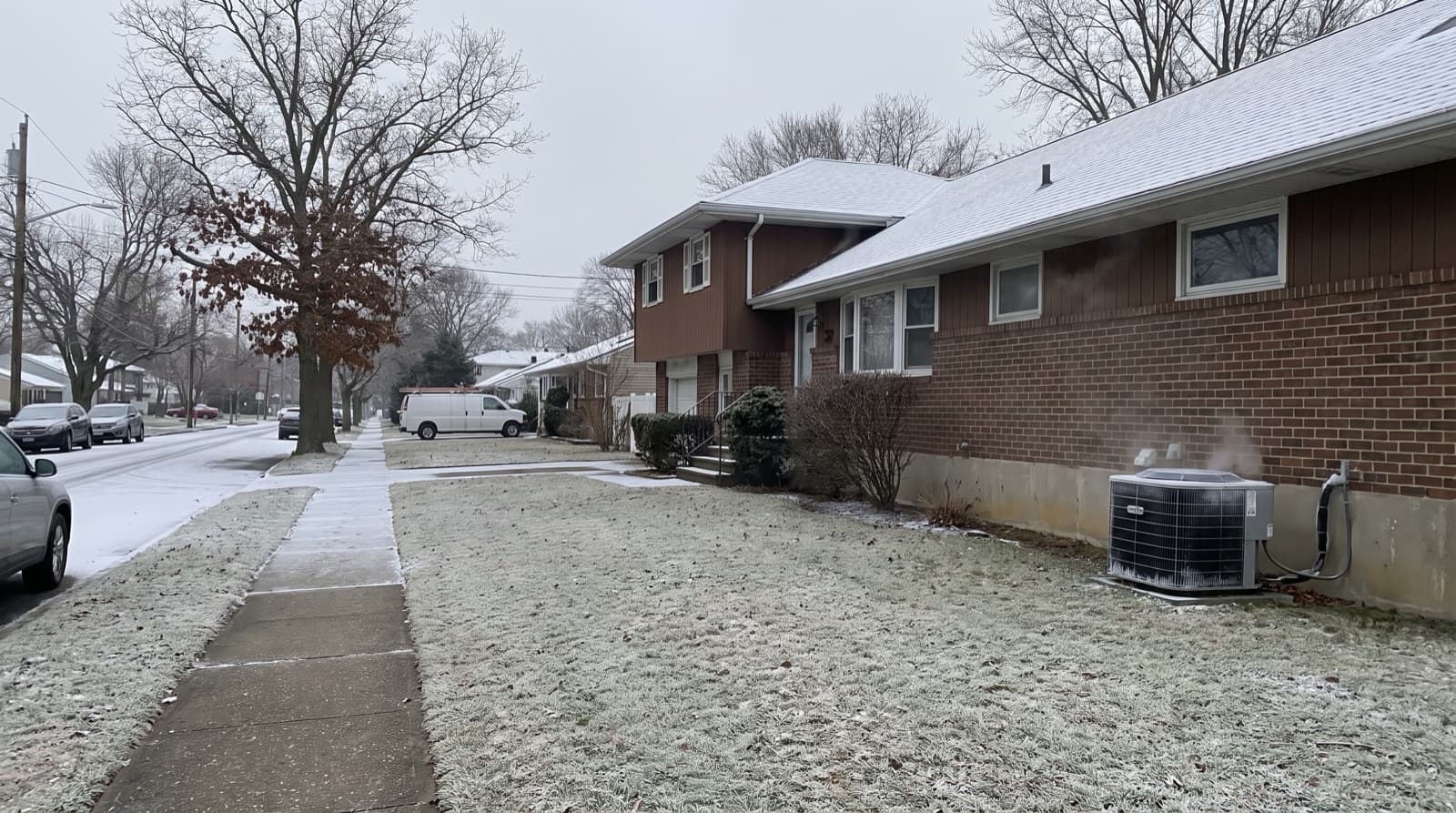
There is no single Long Island heating design temperature. Brookhaven Calabro Airport in Shirley is 16 degrees, Farmingdale Republic up by the Nassau line is 17, and Gabreski out at Westhampton is 10. Same island, seven degrees apart end to end.
Most homeowners never see that number. It sits in a small block at the top of a load calculation, it takes four seconds to type, and it quietly sets the capacity of every piece of HVAC equipment that goes in the house. Miss it by seven degrees and everything downstream is wrong by a whole size.
What the Long Island heating design temperature actually is
It is not the record low. It is the 99 percent number: the outdoor temperature your area stays at or above for 99 percent of the hours in a normal heating season. Roughly one percent of winter hours come in colder than that, and heating capacity alone is not expected to cover them.
That sounds like cutting corners. It is the opposite. Design every Suffolk County home around the coldest morning anybody remembers and you end up with a system enormously oversized for the 99 percent of winter that is not that morning. An oversized unit short cycles, temperature control gets sloppy, run times are too brief to move real airflow through the house, and humidity and indoor air quality suffer in the shoulder seasons. You paid more for all of it.
That design temperature limit is a deliberate statistical choice, not a shortcut. It is why a correctly sized system feels boring. It runs long and steady on a cold January night instead of slamming on and off.
Long Island is not one climate: design temperatures across Nassau and Suffolk counties
The weather stations HVAC contractors pull from out here do not agree, and they are not supposed to.
Farmingdale Republic, over in East Farmingdale near the Massapequa side of the Nassau line, sits at 17 degrees. Brookhaven Calabro in Shirley, the closest station to Patchogue and most of the south shore towns we serve, sits at 16. Gabreski at Westhampton sits at 10.
Seven degrees between those design temperatures, across roughly sixty miles. The western end runs warmer, closer to the built up Nassau County corridor. The east end is different territory: more open, and the stretch around Westhampton drops harder on clear, calm nights than anywhere else across Nassau and Suffolk counties.
So the honest answer to what the design temperature is on Long Island is: which part of it. A home in Babylon and a home in Quogue are not the same cold weather heating problem, and a contractor using one number for both is guessing on at least one of them.
Seven degrees is a whole equipment size on the same house
Take the identical home, same insulation, same windows, same everything, and run it at both ends of the island.
Heating load tracks the gap between the indoor design temperature, usually 70, and the outdoor one. At 17 degrees outside that gap is 53. At 10 it is 60. Same building, about 13 percent more heat loss.
Now stack the second effect on top of it. A heat pump makes less heat as it gets colder, so the same unit that covers the load at 17 is putting out less at 10. You need more capacity from a machine that is producing less of it. Those two move against each other, and 13 percent on the load side is often the difference between one model and the next one up in the lineup.
It is also why nominal tons tell you almost nothing. What matters is the rated heating capacity at 17 degrees for the specific matched system, which is the number behind how big a heat pump a Long Island winter really needs. That holds for ducted central air and for ductless mini-splits alike.
Heating and cooling: the summer outdoor number has the same trap
Everybody knows 95 degrees as the summer design condition. It is wrong for here. The ASHRAE 1 percent cooling design for Suffolk County is 88.
A load calculation left at 95 overstates the conduction driven part of the cooling load by roughly 35 percent. That is enough to flip the conclusion. A Long Island home that is genuinely heating dominated, meaning winter is what sets the size, can come out of the calculation looking cooling dominated. The HVAC system then gets selected around a summer condition that never happens, and the winter side, the side that actually needs the capacity, becomes the afterthought.
That is backwards for our housing stock, especially older Long Island homes with modest insulation and plenty of air leakage. None of this is a knock on any one tool or any one contractor. It is what happens when a default gets left alone or a familiar number gets typed in from memory instead of looked up.
How to check the design conditions on your HVAC installation proposal
Ask for the load calculation. Not the summary page, the actual report. Near the top there is a block labeled Design Conditions. Four things to look at.
Winter outdoor design temperature. It should land between 10 and 17 depending on where you live, and the report should name the weather station it came from.
Summer outdoor design. 88 degrees for Suffolk County. If it reads 95, ask why.
Indoor design. Normally 70 heating and 75 cooling.
The location itself. If the station is a hundred miles away or the field is blank, the rest of the report is built on sand.
If the block is missing entirely, you do not have a load calculation, you have a quote with a size on it. A real one follows ACCA Manual J 8th Edition and is required by New York code. Ask for it before anyone talks equipment, efficiency ratings, or a PSEG rebate, because an oversized system fails that rebate too.
What Long Island homeowners should ask before signing
Design conditions are the cheapest part of a heat pump project to get right and the most expensive to get wrong, because every number after them inherits the error, including your home energy bills for the next fifteen years. Five minutes of reading catches it.
If you want somebody to look at what you were handed, or a real load calculation run on your house before you commit to a heat pump installation or ductless mini splits, call or text us at 631-209-7090. We service the Suffolk County south shore, and once a system is in, our maintenance plans keep it at the efficiency and comfort level it was sized for. Happy to walk the numbers with you either way.
Related Articles
Heat Pump vs Gas Furnace on Long Island: Pros, Cons, and Which Is Right for You
Heat pump vs gas furnace on Long Island: operating cost, comfort, cold-weather performance, and rebates compared, plus when a gas furnace still makes sense.
Best Pool Heat Pumps for Long Island (2026): Hayward vs Pentair vs AquaCal vs Raypak
The best pool heat pump brands for Long Island in 2026, compared by techs who service all four: Hayward, Pentair, AquaCal, and Raypak. Match the brand to your pool.
Ductless Mini Split vs Central Heat Pump: Your Next System Probably Is Not Ductless
Ductless mini split vs central air heat pump on Long Island? If your Suffolk County home has radiators, there is a third option most contractors never quote.