Boiler vs. Furnace: Which Heating System Is Better for Your Home?
Boiler vs furnace for Long Island homes: how each heats, what each costs to run, and furnace repair prices in Suffolk County when something finally breaks.
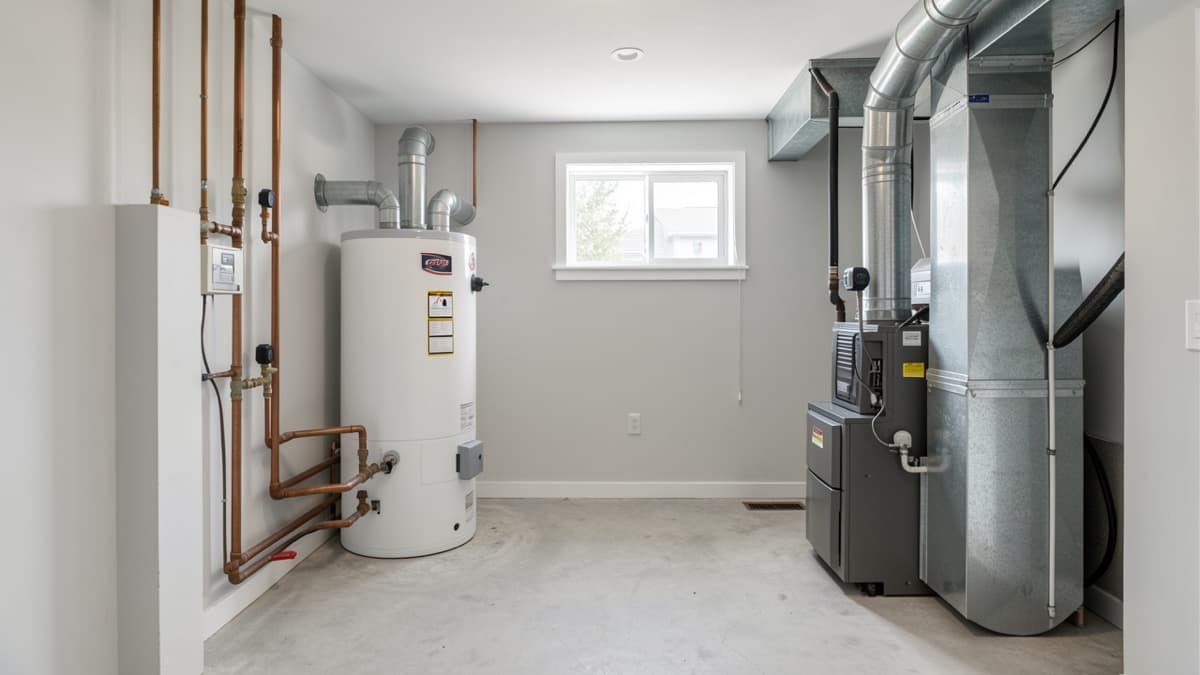
For almost every Long Island home, the better system is the one your house is already plumbed or ducted for. Converting a radiator house to forced air, or a ducted house to hydronic, runs $12,000 to $20,000 on top of the equipment itself, and the comfort gain almost never justifies that number.
That answer frustrates people, because the boiler or furnace question usually comes up at a bad moment. The boiler is 30 years old, it's late September, and somebody just quoted a replacement. So here is the honest comparison of the two heating systems, and the two situations where switching actually does make sense.
The difference is how the heat gets to you
A furnace heats air. Natural gas burns in the heat exchanger, a blower pushes house air across it, and warm air travels through ductwork to the registers in each room. A boiler heats water. That water, or steam in some of the oldest systems out here, circulates through cast iron radiators, baseboard, or radiant floor heating tubing, and the metal radiates heat into the room.
That single difference drives everything else. Ducts can carry cooling in the summer, so a furnace house gets central air on the same distribution. Water can't carry cooling to a radiator, so a boiler house almost always ends up with window units, a separate ducted system in the attic, or ductless heads on the wall.
The housing stock out here splits along those lines pretty cleanly. A lot of the older Patchogue, Bellport, and Sayville homes went up with hydronic heat and never had a duct in them. The 1970s and later developments in Medford and Holbrook are mostly forced air.
Comfort: steady heat versus fast heat
Hydronic heat is the more comfortable of the two, and it isn't close. Radiators hold their temperature, so the room doesn't swing. There is no blower kicking on, no draft across your ankles, no dust getting stirred up every cycle. People who grew up with radiators tend to hate forced air the first winter after they switch.
Forced air wins on speed and flexibility. A furnace can take a cold house up five degrees in twenty minutes, where a cast iron system needs an hour to come up to temperature. You also get filtration, humidification, and air cleaning options on a duct system that simply have nowhere to live in a hydronic house.
If comfort alone decided this, everyone would run radiators. Cooling and cost are what pull the other direction.
The key differences, side by side
Pros of a boiler: even radiant heat with no temperature swing, no blown dust or drafts, quiet operation, easy zoning, and a longer service life. Cons of a boiler: higher install cost, slow recovery from a setback, no path to air conditioning, and water where water can leak.
Pros of a furnace: lower install cost, fast heat, the same ductwork carries central air conditioning, and it gives you somewhere to put filtration and humidification. Cons of a furnace: drier air, dust movement, blower noise, and a shorter life than a boiler.
Neither heating system is efficient or inefficient by category. A modern boiler and a high-efficiency furnace both land in the same range. What separates them is comfort, cooling, and what your house is already built to accept.
What each one costs to install and run
A gas furnace replacement on Long Island runs roughly $5,500 to $9,500 installed, depending on capacity, efficiency, and how much sheet metal work the swap needs. A gas boiler replacement runs $9,000 to $16,000. Boilers cost more up front, period.
They give some of that back in lifespan. A furnace is a 15 to 20 year machine. A well-maintained boiler will go 25 to 35, and we still see cast iron sections out here older than that doing fine behind a modern burner.
On operating cost, the two are closer than people expect. Efficiency is rated the same way for both, in AFUE, or annual fuel utilization efficiency. A 95% AFUE condensing furnace and a 95% AFUE condensing boiler burn roughly the same natural gas for the same heat delivered, and the same holds if you are on propane. The real spread is between a modern unit and an old one: an 80% AFUE system is throwing about 20 cents of every gas dollar out the flue. If your equipment predates 2005, that gap is where your money is going, not the boiler-versus-furnace question.
Furnace repair prices versus boiler repair prices
Furnace repair prices on Long Island usually land between $200 and $600 for the common failures. A flame sensor is $150 to $275. A hot surface igniter runs $250 to $400. An inducer motor is $600 to $1,100, and a blower motor $700 to $1,400. The one repair that ends the conversation is a cracked heat exchanger, because that is a replacement, not a fix.
Boiler repairs skew a little higher per visit but happen less often. A circulator pump is $600 to $1,100. A zone valve runs $400 to $700. An expansion tank is $350 to $600 and an aquastat $350 to $550. Those are all water-side components, which is the work we do on boiler repair calls. Gas furnace troubleshooting falls under furnace and heating repair.
Worth saying plainly: we service gas equipment and the water side of hydronic systems. We do not service oil burners. If you are on oil and the burner itself is the problem, you need an oil company, not us. What we can help with is getting off oil entirely, which is a different and usually better conversation.
When switching actually makes sense
Two cases justify the conversion cost. The first is a radiator house where the owner wants real central cooling anyway. If you are already paying to run ductwork for AC, adding a furnace to that duct system is incremental, and the math changes completely.
The second is the electric path. An air-to-water heat pump can drive your existing radiators and baseboard without any ductwork at all, which sidesteps the whole problem. That technology was not practical here five years ago and now it is. We wrote up how heat pumps work with existing radiators if that is your situation. It also carries PSEG and NYSERDA incentives that no gas equipment qualifies for, since the rebates target electrification.
If you are replacing gas with gas, stay with what your house is built for. Take the efficiency upgrade and skip the distribution overhaul.
Still not sure which way to go
Have somebody look at what you actually have before you commit to anything. Pipe layout, duct condition, existing venting, and gas line capacity all move the number more than the boiler-versus-furnace choice does.
We do heating replacement quotes across Suffolk County at no charge, and we will tell you when the right answer is repairing what you have for another season. Give us a call or text at 631-209-7090 and we'll get you on the schedule.
Related Articles
Heat Pump vs Gas Furnace on Long Island: Pros, Cons, and Which Is Right for You
Heat pump vs gas furnace on Long Island: operating cost, comfort, cold-weather performance, and rebates compared, plus when a gas furnace still makes sense.
Best Pool Heat Pumps for Long Island (2026): Hayward vs Pentair vs AquaCal vs Raypak
The best pool heat pump brands for Long Island in 2026, compared by techs who service all four: Hayward, Pentair, AquaCal, and Raypak. Match the brand to your pool.
Ductless Mini Split vs Central Heat Pump: Your Next System Probably Is Not Ductless
Ductless mini split vs central air heat pump on Long Island? If your Suffolk County home has radiators, there is a third option most contractors never quote.