Do Heat Pumps Work in Cold Weather? The Spec Sheet That Ended the Debate
Do heat pumps work in cold weather? For a Long Island winter the honest answer is yes, backed by the spec sheet, plus what changes if you still have radiators.
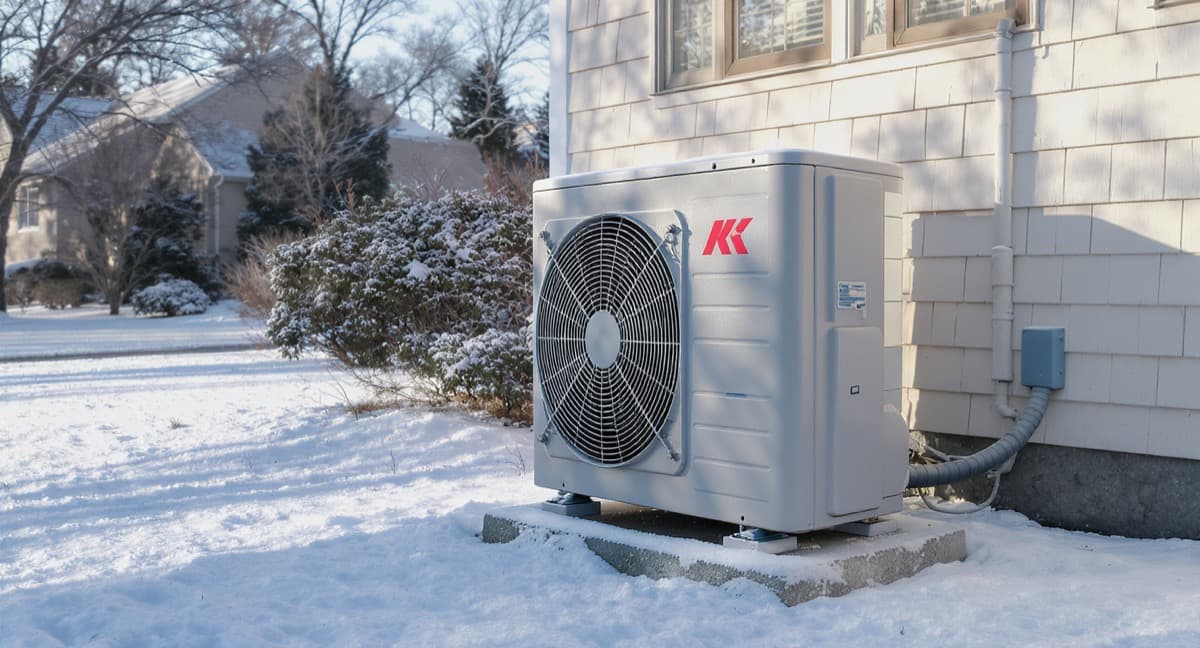
If you are thinking about replacing your boiler with a heat pump, there is one worry that stops most Long Island homeowners cold: what happens on a 5-degree morning in February? You have probably read that heat pumps quit when it gets really cold, or you remember one from years ago that struggled the moment the outdoor temperature dropped. That reputation is real, and it is also mostly out of date.
Here is the honest read on whether heat pumps work in cold weather, where the old worry came from, how a heat pump makes heat in the first place, and what the current spec sheet actually says for a house on Long Island that still has radiators or baseboards.
Where the "heat pumps don't work in the cold" story came from
The worry is not made up. It is just aging poorly. Heat pumps sold in the 1990s and 2000s genuinely did fall on their face in extreme cold. As the temperature dropped, they lost heating capacity right when you needed it most, and by the time it hit the 20s or teens they were leaning hard on electric resistance heat strips that ran up your bill and barely kept up. If your parents had one, or if a neighbor complained about one a decade ago, that memory is accurate for that equipment.
What changed is the compressor. A modern heat pump uses a variable-speed inverter compressor, and many of them now hold their full rated heating capacity all the way down to about 5 degrees. That is not a small tweak. It is the difference between a heat pump that fades in the cold and one that keeps working when the temperature drops.
How a heat pump makes heat when it's cold outside
It helps to know what a heat pump actually does, because the word makes people picture something burning fuel. It does not. A heat pump does not generate heat, it moves heat. Even when it is cold outside, there is usable energy in the outdoor air, and the refrigerant cycle inside the unit is built to extract heat from that air and transfer it into your home. Moving heat this way is why a heat pump can deliver several units of heating for every unit of electricity, something no furnace or boiler can do.
As the outdoor temperature drops there is less energy to pull from the air, so the system has to work harder, and that is exactly why cold weather performance became the whole debate. The engineering question is simple to state: can a modern heat pump still pull enough heat from the outside on a cold morning to keep your house warm? For today's cold-climate equipment, on Long Island, the answer is yes.
What "cold-climate rated" actually means
When a heat pump is labeled cold-climate, that is a specific claim, not marketing. The U.S. Department of Energy maintains a public cold climate heat pump database, and the Northeast Energy Efficiency Partnerships (NEEP) keeps its own cold-climate product list. Equipment on these lists has to prove it maintains meaningful heating capacity at low temperatures against AHRI-verified ratings. When you shop, you want to see the low-temperature capacity number, not just the mild-weather rating printed on the front of the brochure.
It is worth clearing up the types of heat pumps here, because they behave very differently in the cold. A ground-source, or geothermal, heat pump pulls heat from the ground and barely notices the air temperature, but it is expensive to install. An air source heat pump pulls heat from the outdoor air, and that is what almost everyone means by "heat pump" today. So when people ask whether heat pumps work in cold weather, they are really asking about a modern air-source heat pump, and that is exactly the equipment the cold-climate ratings cover.
The Long Island climate envelope
Now put those ratings against where you actually live. Long Island winters are not Minnesota winters, and the design numbers make that clear. The coldest official temperature on record for the area is around minus 5 degrees, and that is an outlier people still talk about. The heating design temperature on the South Shore, the cold number engineers actually size equipment around, sits in the 12-to-15-degree range. And almost every winter day here spends most of its hours above 25 degrees.
That matters because it means your heat pump spends the vast majority of the heating season operating in the temperature band where it is most efficient, not fighting for survival at the bottom of the dial. The 5-degree morning you are worried about happens a handful of times a year, if that. This is the same point we make in our comparison of a heat pump versus an oil furnace for Long Island homes: the equipment gets judged on its worst day, but it lives most of its life on average days.
The spec sheet: what the Altherma actually does in the cold
We install the Daikin Altherma 3 H HT, and it is worth walking through its cold-weather numbers because they answer the question directly. This is an all-in-one air-to-water heat pump, which means one outdoor unit that can replace your boiler, your central air conditioning, and your water heater while sending hot water to the radiators and baseboards you already have. One system covers heating and cooling and domestic hot water.
On the heat pump alone, it delivers full heating capacity down to about 5 degrees. Below that it keeps producing usable heat all the way down to roughly minus 18 degrees. At that extreme low, the system's built-in electric backup assists to reach the high water temperatures older radiators want, so it is honest to say the heat pump does not hit a 150-plus-degree water temperature completely unaided at minus 18. But notice where minus 18 falls relative to the Long Island climate envelope above: it is colder than the coldest temperature ever officially recorded here. On a normal Long Island winter day, that backup heater almost never engages at all.
This is a real difference in heat pump performance from the old days. In an early air-source system, supplemental heat meant electric resistance heat strips switching on early and often, which is why those systems were less efficient and expensive to run in winter. In the Altherma, that auxiliary heat is a safety net that mostly sits idle, because the heat pump itself carries the load across almost the entire Long Island heating season.
The efficiency numbers tell the same story. Coefficient of performance, or COP, is just how many units of heat you get out for each unit of electricity in. On radiators in deep cold, the Altherma runs a COP around 2 at 5 degrees, meaning you are still getting roughly two units of heat for every unit of electricity even on the worst morning of the year. In milder weather, and especially on lower-temperature emitters, that climbs into the 5-to-6 range. An oil boiler, by comparison, is always under 1 by this measure because some of the fuel energy goes up the flue.
The radiator-house wrinkle
There is a catch that matters if you are one of the many Long Island homeowners heating with cast iron radiators or baseboard. Most cold climate heat pumps on the market are air-to-air systems. They blow warm air through ducts or wall-mounted heads, and they cannot drive a radiator, because a radiator needs hot water, not warm air. So a lot of the cold climate performance data you read about does not translate to your house at all.
If you have radiators, you specifically need a high-temperature air-to-water heat pump, and that subset is a good deal smaller than the broader cold-climate list. This is exactly the problem we broke down in whether a heat pump can work with your existing radiators: for most of the last decade the answer for a radiator house was effectively no, and the honest fix was ripping in ductwork or hanging mini-split heads on every wall. The Altherma is the heating system that changed that answer, because it makes hot water hot enough for cast iron rads while still holding capacity in the cold.
The honest "but"
None of this means a heat pump is automatically right for your house, and any contractor who tells you the cold-weather spec is the only thing that matters is skipping the part that actually determines whether you will be comfortable.
Two things decide it. First, your building envelope. A drafty, under-insulated house loses heat faster than a tight one, and no HVAC system fixes that for free. Air sealing and insulation are boring compared to a shiny new heat pump, but they change what size system you need and how it performs on the coldest days.
Second, sizing. This is where corners get cut. A system sized purely to muscle through the worst February morning will be oversized for the other nine months, and an oversized system short-cycles in the summer, which hurts both comfort and humidity control. The answer is a proper Manual J load calculation for your specific house, not a rule of thumb off the square footage. Done right, it balances winter heating capacity against summer cooling performance instead of trading one for the other.
So, do heat pumps work in cold weather?
For a Long Island winter, yes, and the spec sheet is why. A properly chosen cold climate heat pump holds full capacity through the temperatures you actually see here, and the days cold enough to lean on backup heat are rare to the point of being a rounding error. The old reputation belongs to old equipment. If you have radiators, the additional requirement is a high-temperature air-to-water system, and there is now one that meets it.
If you have an aging boiler and you have been holding off on a heat pump because you were not sure it could handle the cold, this is worth a real look. We are one of the few Long Island contractors installing the Altherma, and we will run the actual load calculation for your house, tell you honestly whether your envelope needs attention first, and walk through what the PSEG and NYSERDA rebates land at for your situation. You can see how the whole system works on our Altherma page, or call us at 631-209-7090 to set up a free assessment.
Related Articles
Heat Pump vs Gas Furnace on Long Island: Pros, Cons, and Which Is Right for You
Heat pump vs gas furnace on Long Island: operating cost, comfort, cold-weather performance, and rebates compared, plus when a gas furnace still makes sense.
Best Pool Heat Pumps for Long Island (2026): Hayward vs Pentair vs AquaCal vs Raypak
The best pool heat pump brands for Long Island in 2026, compared by techs who service all four: Hayward, Pentair, AquaCal, and Raypak. Match the brand to your pool.
Ductless Mini Split vs Central Heat Pump: Your Next System Probably Is Not Ductless
Ductless mini split vs central air heat pump on Long Island? If your Suffolk County home has radiators, there is a third option most contractors never quote.