Backup Heat Strips Are Not Heating Capacity
Heat pump auxiliary heat and emergency heat are backup, not heating capacity. Why aux heat should never shrink the heat pump on a Long Island heating quote.
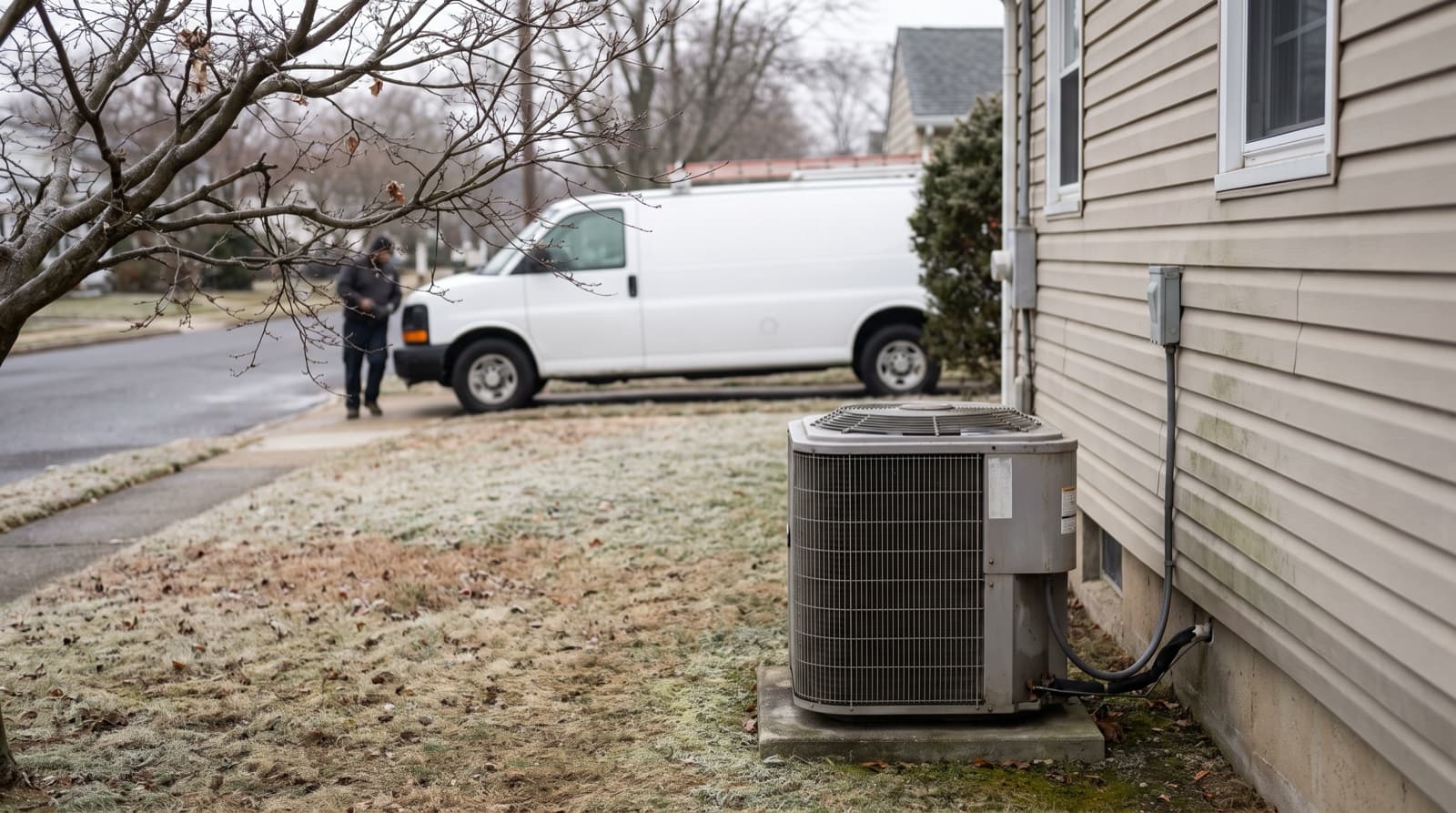
Backup heat strips are backup. They are not heating capacity. If a contractor sizes a smaller heat pump because the strips will cover the difference on the coldest nights, walk away from that quote.
Heat pump auxiliary heat is the most misunderstood part of a modern heating system out here on Long Island, and the confusion costs real money every heating season. We get called in behind proposals where the outdoor unit got shrunk a half ton because the worksheet counted 10 kW of strips as heating capacity. It does not work that way, and the heating bill shows it.
How auxiliary heat works, and how aux heat and emergency heat differ on the thermostat
Auxiliary or emergency heat: not the same thing, and your heat pump thermostat treats them differently.
Auxiliary heat is automatic. The electric strips in the air handler energize automatically when the heat pump alone cannot hold the setpoint, and the compressor keeps running the whole time, so the additional heat lands alongside the heat pump rather than instead of it. That is supplemental heating stacked on heat pump heating, with the primary heat pump still doing the work and the strips an auxiliary heat source. Most thermostats show an aux heat indicator when auxiliary heat activates.
Emergency heat is a mode you pick by hand. It locks the compressor out completely and runs the house on strips alone. That is the part people get wrong. During a cold snap a homeowner sees the house struggling, decides to use emergency heat because it sounds like the stronger setting, and switches off the only efficient heating they own. Switch to emergency heat for one situation only: a real problem with your heat pump, where the outdoor unit is broken and you are waiting on a part.
If your thermostat setting shows aux mode, what some brands call auxiliary mode, on a mild 40 degree day, something in the setup is wrong. That is a controls problem, not a heating capacity problem.
COP 1 is the whole problem, and auxiliary heat cost is roughly triple
Electric resistance heating runs at a COP of 1. One unit of electricity in, one unit of heating out. Nothing beats it, because it is a toaster element in your ductwork. Ten kilowatts of strips make about 34,100 BTU per hour of heating and pull ten kilowatt-hours off the meter for every hour they run.
A properly sized heat pump in our heating weather delivers a COP around 3 across the season. Same heating output, roughly a third of the electricity. Every BTU of heating you shift off the compressor and onto the auxiliary heater costs about three times what it should.
Run that through an undersized install. The contractor drops from a unit making 43,000 BTU of heating at 17 degrees to one making 30,000, and the electric auxiliary quietly covers the gap on every cold night in January and February. The homeowner did not buy a cheaper system. They bought an electric furnace with a heat pump bolted to it, and the whole operating cost case for electric heating is gone.
Why a smaller heat pump plus electric heat strips fails the PSEG rebate
The rebate math is where this stops being an opinion. The PSEG Long Island heat pump rebate gates on the heat pump's own performance, specifically the NEEP listed maximum heating capacity at 17 degrees for the exact AHRI match being installed. That number has to land between 100 and 120 percent of the Manual J heating load for the house. NYS Clean Heat on Long Island is that same single rebate flowing through PSEG, not a second one stacked on top.
Installed resistance heat is nowhere in that equation. Not the kilowatts, not the strip stages, not the air handler model. If the condenser is too small for the calculated heating load, the heating equipment fails eligibility no matter how much backup sits in the cabinet behind it. Undersize by a half ton to shave a little off the equipment cost and you can lose the rebate entirely, plus carry the higher heating cost for the next fifteen years.
Both ends of that band matter. Oversizing blows past 120 percent and fails too, which we covered in why an oversized heat pump fails the PSEG rebate. None of it means anything without a real Manual J heating load calculation and the 17 degree heating capacity number off the spec sheet. Current amounts are on our rebates and savings page.
What heat strips are legitimately for in a heat pump system
None of this means strips are bad. We install an auxiliary heat system on essentially every ducted heat pump we put in around Suffolk County. What that auxiliary system never does is change which condenser we select.
Three legitimate jobs for a backup heat source. First, the defrost cycle. Every hour or so in damp coastal cold, the heat pump reverses to melt frost off the outdoor coil, and for a few minutes it pulls heat out of the house instead of adding it. One strip stage tempers the supply air so nobody gets a blast of cold air out the registers. That is the most common thing aux heat does all winter.
Second, true failure backup. If the compressor dies on a Tuesday in January, the strips keep the pipes from freezing and the family in the house until the heat pump repair is done. Third, the genuine outlier, the once in several winters night that drops well below the design temperature the heating system was sized for.
That is the honest role of a secondary heat source: defrost tempering, emergency backup, and the rare outlier. Sized right, the house almost never has to use auxiliary heat. Sized wrong, they run all heating season. Counting them as heating capacity is the most common HVAC sizing shortcut we see.
If you have solar, undersized heating capacity is even worse
Solar makes this mistake more expensive, not less. A rooftop array produces the least electricity in December and January, exactly when heating demand peaks on Long Island. A right-sized heat pump near COP 3 keeps winter heating consumption low enough that net metering credits banked over the summer can carry it. Lean on resistance heat instead, triple the winter heating kilowatt-hours, and you burn through the credit bank and start buying power at retail in February. The whole tradeoff is in solar and heat pumps on Long Island.
The fix is the same either way: size the heating equipment to the heating load. Our full walkthrough is what size heat pump you need for a Long Island winter, and the controls side, including aux heat lockouts, is in what happens below your heat pump's rated temperature.
If you have a proposal in hand and want a second set of eyes on the heating numbers, send it over. We will tell you what the heat pump actually makes at 17 degrees and whether the strips are doing a real job or covering for a shortcut. Call or text us at 631-209-7090, or reach us through our heat pump installation page.
Related Articles
Heat Pump vs Gas Furnace on Long Island: Pros, Cons, and Which Is Right for You
Heat pump vs gas furnace on Long Island: operating cost, comfort, cold-weather performance, and rebates compared, plus when a gas furnace still makes sense.
Best Pool Heat Pumps for Long Island (2026): Hayward vs Pentair vs AquaCal vs Raypak
The best pool heat pump brands for Long Island in 2026, compared by techs who service all four: Hayward, Pentair, AquaCal, and Raypak. Match the brand to your pool.
Ductless Mini Split vs Central Heat Pump: Your Next System Probably Is Not Ductless
Ductless mini split vs central air heat pump on Long Island? If your Suffolk County home has radiators, there is a third option most contractors never quote.