Why an Oversized Heat Pump Fails the PSEG Rebate
PSEG heat pump rebate requirements are a band, not a floor. Why an oversized heat pump fails to qualify on Long Island, plus the rest of the checklist.
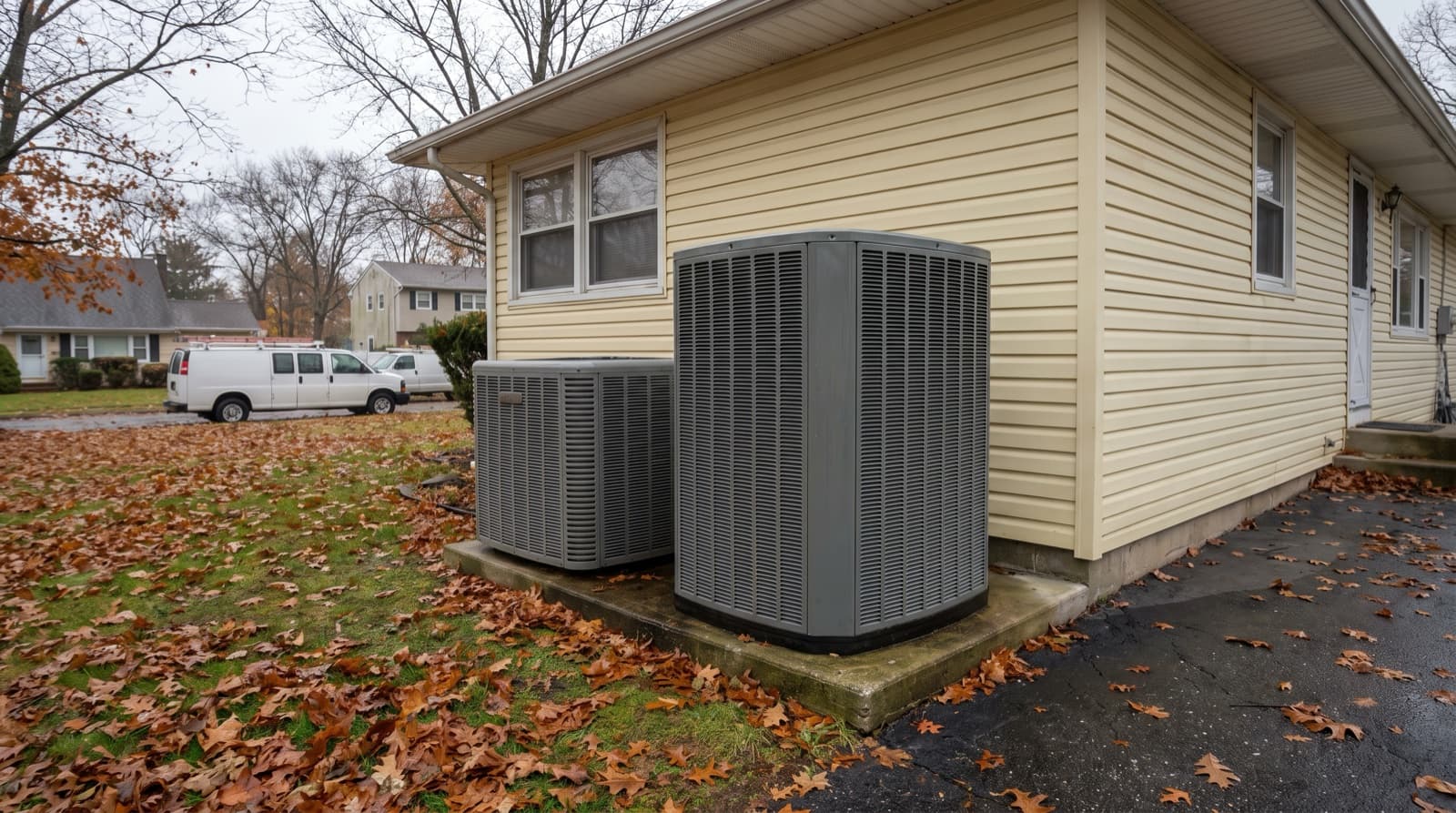
The PSEG heat pump rebate requirements are written as a band, not a floor, so an oversized heat pump fails to qualify for the same reason an undersized one does. PSEG Long Island compares the NEEP listed maximum heating capacity at 17 degrees for your exact air source heat pump match against the house's Manual J heating load, and it has to land between 100 and 120 percent of that load. Under 100 percent, no incentive. Over 120 percent, no incentive.
That catches people off guard, because most of us grew up believing a little extra capacity is cheap insurance. Out here it is a disqualification, and a worse system to live with.
Bigger Is Not Safer, and PSEG Wrote It Into the Rebate Math
The old rule of thumb was to round up. If the load came out at 2.8 tons you put in 3.5, because an oversized gas furnace just shut off sooner and gas was cheap.
A heat pump does not work that way, and PSEG runs this through its energy efficiency programs, not as an equipment giveaway. The rebate exists because a correctly sized heat pump cuts home energy use against what it replaced. An oversized one does not deliver that, so the program will not pay for it.
So the heat pump must clear a range with two walls. Your contractor has to show the heating load from a real Manual J and the NEEP listed maximum capacity at 17 degrees for the specific outdoor and indoor match. Not the nominal tonnage, not the 47 degree rating. Longer version here: what your heat pump actually makes at 17 degrees.
The 100 to 120 Percent Band, With a Worked Example
Say a house in Patchogue comes back from a load calculation at 34,000 BTU. The qualifying window runs 34,000 to 40,800. Anything inside that range is eligible on capacity.
Now take two units a salesperson would both call three tons. The Amana AZV9SA361CA lists 43,200 BTU maximum at 17 degrees. Against a 34,000 load that is 127 percent, over the ceiling, so it does not qualify. The Bosch IDS Ultra lists 36,600 at 17 degrees, which works out to 108 percent and sits comfortably inside the band. Same house, same nominal tonnage, one qualifies and one does not.
Two things follow. First, the load number has to be real, because the window is calculated off it and an inflated Manual J drags the band up with it. See why the Manual J is the number that matters. Second, backup electric heat strips do not enter the calculation. The rebate gates on the heat pump's own capacity and its NEEP listing, so you cannot install a smaller condenser, lean on strips, and expect the paperwork to clear. More in backup heat strips are not capacity.
What an Oversized Heat Pump Costs You on Your Energy Bill
The band is not arbitrary. An oversized heat pump satisfies the thermostat fast, shuts down, and restarts minutes later. That is short cycling, it is hard on the compressor and contactor, and the equipment spends its life in startup instead of the steady state where energy costs are lowest.
Summer is where you feel it. A Long Island August is humid, and dehumidification happens over long, low-speed runtime across the coil. A unit that blasts the house cold in nine minutes never pulls real moisture out, so you sit at 72 and clammy.
There is also a part load problem. Variable speed heating and cooling equipment is built to modulate down and hold a temperature for hours. Oversize it and you push the house below its minimum turndown, forcing it back to on and off operation. You bought an inverter and run it like a single stage.
The Rest of the PSEG Heat Pump Rebate Requirements
Capacity is what people trip on, but eligibility does not end there. The equipment has to be a cold climate air source heat pump on the NEEP list, since that listing is where the 17 degree number is read from. Heat pump systems not on it cannot be checked against the band:
- The property has to be a one to four unit residential building. Larger multifamily runs under different programs.
- Homes heated by natural gas only are generally not eligible for rebates here. This incentive targets homes on delivered fuels and electric resistance heat.
- Heat pump to heat pump replacements do not qualify. Swapping a fifteen year old system for a new one is not the fuel switch the program pays for.
- The work has to be done by a participating contractor. This is the one homeowners cannot fix afterward, because rebates from PSEG are filed by the contractor, not by you. Hire an HVAC company not on the list and the money is gone. PHA is a participating contractor and files the paperwork as part of the job.
- Ask about on-bill repayment. On qualifying upgrades the financed balance rides on your PSEG energy bill instead of going through an outside lender, so ask what terms apply to your project.
- Income-qualified customers and moderate-income households may qualify for separate programs on Long Island with their own rules and their own paperwork. Ask your contractor what applies to your home before the proposal is written.
Rate 580, Instant Rebate Mechanics, and the Boiler Removal Bonus
Two things genuinely add to the deal, and one thing that sounds like it does, does not.
The honest part first. There is one heat pump rebate on Long Island, not two. NYS Clean Heat is that same rebate flowing through PSEG, so if somebody quotes a Clean Heat number plus a PSEG number and adds them, that is one dollar counted twice. It is a flat tiered amount, not a percentage of total project costs, and most participating contractors apply it as an instant rebate on the invoice rather than making you wait on a check. Current tiers are in our rebate guide. Separately, the federal 25C tax credit expired on 12/31/2025, so it is not part of any Suffolk County quote written today.
What does stack is Rate 580. It is a rate discount, not a second rebate, and it takes 45 percent off electric usage above 400 kWh from October through May. That is the heating season, exactly when a heat pump pulls the most power, and it is ongoing. You have to be enrolled on the right rate, so confirm that happened.
There is also a boiler removal bonus of $250 when the old boiler comes out instead of staying in place as backup. Small, but real money. Ground source heat pumps, air to water heat pumps, and heat pump water heaters carry their own separate line items, so ask which one your project falls under.
If you are pricing a heat pump installation or a ductless mini split and nobody has shown you the load number and the 17 degree capacity side by side, ask before you sign. Our rebate and savings breakdown and the sizing guide cover the rest. Call or text 631-209-7090 and we will run the numbers on your house.
Related Articles
You Don't Need the Top-Tier Heat Pump to Get the Full PSEG Heat Pump Rebate
The cheapest heat pump that qualifies for a rebate is not the cheapest one sold. What clears the PSEG incentive list for Long Island homes, and what does not.
PSEG Long Island Heat Pump Rebates 2026: $4,000-$7,500
What the PSEG Long Island heat pump rebate pays in 2026, how your tier gets decided, and where Rate 580 and the boiler bonus fit for Suffolk County homes.