Solar and Heat Pumps: A Match Made in Heaven, With One Winter Catch
Solar and a heat pump pair well on Long Island, but solar panel output bottoms out in December when heating load peaks. The honest math on sizing both.
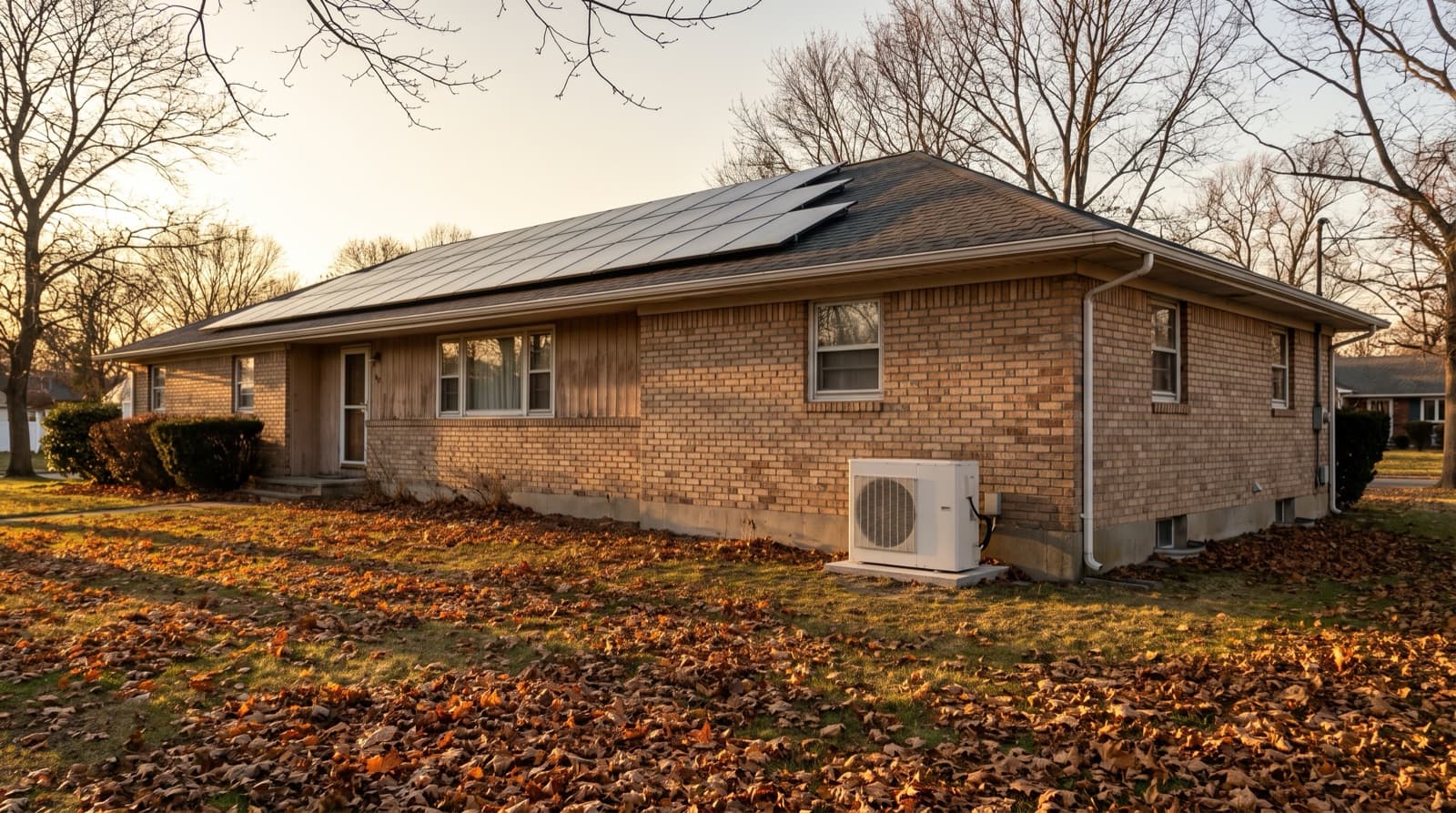
Yes, solar and a heat pump belong together, and the mechanism is simple. A heat pump turns a fuel bill into an electric bill, and solar power is the only thing that lets you prepay an electric bill for 25 years. Burn oil or propane and you buy heating fuel at whatever it costs the morning you need it. Move heating onto electricity and you can buy most of it up front, on the roof.
There is one catch, it lands in winter, and almost nobody selling solar panels leads with it. Here is the honest version.
How a solar powered heat pump actually works
There is no appliance called a solar heat pump that arrives on one truck. Pairing solar and heat pump equipment means two systems that meet at your electric meter.
An air source heat pump does not make heat, it moves it. It pulls heat out of ambient air and pumps it inside, so a heating system running on heat pump technology delivers roughly three units of heat per unit of electricity drawn. That ratio is the coefficient of performance, and COP 3 is about what an efficient heat pump does across a Long Island heating season.
A gas boiler or an oil boiler cannot be powered by a solar panel, ever. There is no wire between them. Convert the house and the entire heating load becomes electricity, the one form of home energy PV solar panels actually generate. The heat pump is what gives the array something worth covering, because space heating is usually the largest slice of energy consumption in the house. Solar thermal, the hot water panel, is different technology entirely.
The winter catch: solar output bottoms out when heating load peaks
Solar production here is lowest in December and January, exactly when heating demand peaks. Short days, low sun angle, clouds, snow on the glass. An array here makes well under half the electricity in December that it makes in June, while your heating load is at its annual maximum.
So solar panels do not power your heat pump in the moment on a 16 degree January night, and even on cloudy days in the shoulder season the output is a fraction of summer. Anyone telling you solar runs your heating in real time in cold climates is selling, not explaining.
What actually bridges it is annual net metering. The array overproduces from April through September, that excess solar energy banks as credits on your PSEG account, and those credits get drawn back down through the heating months when you are pulling grid power. Solar and grid are partners here, not alternatives.
Battery storage will not fix this, and one tax credit is already gone
People ask about battery storage next. Fair question, disappointing answer: a battery shifts electricity by hours, not seasons. It carries the house from sunset to sunrise, not a July surplus into a January deficit, and a bank big enough to try would cost more than the heating it covers. Batteries are for outages and time of use rates, not the winter gap.
The federal 25C tax credit for heat pumps expired on 12/31/2025, so any proposal still quoting it is working from old paperwork. The PSEG Long Island heat pump rebate is one flat tiered amount, and NYS Clean Heat on Long Island is that same rebate flowing through PSEG, not a second one stacked on top. Solar has its own separate incentives and your installer owns that side. We cover the heating side at rebates and savings.
Sizing decides whether solar panels can cover your heating
This is where these projects quietly fail, and it is a heat pump problem, not a solar problem.
A right sized unit runs near COP 3, so it uses roughly a third of the electricity that plain resistance heat uses for the same heating job. Backup electric heat strips run at COP 1. No multiplier, no energy efficiency, just a very large toaster. Every hour the house runs on strips instead of the heat pump, it burns about three times the electricity for the same heat.
Undersize the heat pump and the strips carry the difference all winter. That does not only raise your utility bills, it eats the array. A house that needed 7,000 kilowatt hours of heating electricity can need 15,000 or more once strips are doing real work, and no residential roof space out here absorbs that quietly. More here: backup heat strips are not capacity. If you are putting solar on the roof, correct sizing is not a nice to have, it is the entire economics.
Sizing the solar array to the heat pump system: the heating kWh number
Before anyone quotes panels, you need one number: how many kilowatt hours a year your heating will actually draw. Not square footage, not a guess off old oil deliveries.
It comes out of a real Manual J load calculation, the design temperature for your part of the island, and the equipment's own capacity data. Take a Suffolk County house with a 40,000 BTU per hour heating load at design and a properly selected cold climate unit. Over a heating season that lands somewhere near 7,000 kilowatt hours. At roughly 1,200 to 1,300 kilowatt hours per installed kilowatt of solar PV a year in this area, covering that heating takes something like five to six kilowatts of array, on top of whatever the rest of the home already uses.
Your numbers will differ with insulation, windows, design temperature, and equipment. But that is the shape of the calculation, and a solar quote built without it is a guess. See what size heat pump you need for a Long Island winter and design temperature by weather station.
We do not install solar. We size the heating load your array has to cover.
To be direct: PHA does not sell, install, or service solar. We are not a renewable energy company and we will not pretend that lane is ours.
What we do is the part the solar installer cannot. We run the load calculation, select the equipment against real capacity data at 17 degrees on a proper heat pump installation or ductless mini split, and produce the annual heating kilowatt hour number your array has to cover. Then we hand that number to whoever is quoting your panels, in writing. Most solar proposals we see size the array off last year's electric bills, which are bills from before the heat pump existed. That is how people end up with an array that covers the house and not the heating.
If clean energy and a smaller carbon footprint are why you are doing this, good, and getting off fossil fuels for heating and cooling is the biggest single move most homes can make. Just make the heating math honest first, because rising energy costs punish a guess.
Weighing solar and a heat pump for a house in Patchogue, Bellport, or Sayville? Call or text us at 631-209-7090. We will size the heating load first, and you can take that number to the panel people.
Related Articles
How to Get the Most Out of Your Pool Heat Pump This Summer
Improve pool heat pump efficiency on Long Island: covers, pump timing, and pool heating settings that cut what your pool heater costs to run each month.
Keeping Your Home Cool in a Long Island Heat Wave
Practical ways Long Island homeowners keep the house cool in a heat wave without blowing up the PSEG bill or burning out the air conditioner outside.
Best Thermostat Settings for LI Summer Efficiency
What temperature should you set your thermostat in summer? The right settings cut cooling costs and take real strain off your Long Island system.